Bariatric Surgery Recovery Timeline Canada: 2026 Guide
Published June 16, 2026

Bariatric surgery recovery in Canada follows a defined post-operative sequence: hospital discharge in 1–3 days, a return to desk work within 1–2 weeks, and full normal activity by roughly 6 weeks. This applies whether you have had a gastric sleeve, gastric bypass, or another weight loss procedure. The bariatric surgery recovery timeline in Canada is shaped not only by your surgery type but also by Canada’s public healthcare structure, regional program availability, and the long wait times that precede the operation itself. Knowing what to expect at each stage puts you in control from day one.
What is the typical week-by-week recovery timeline after bariatric surgery in Canada?
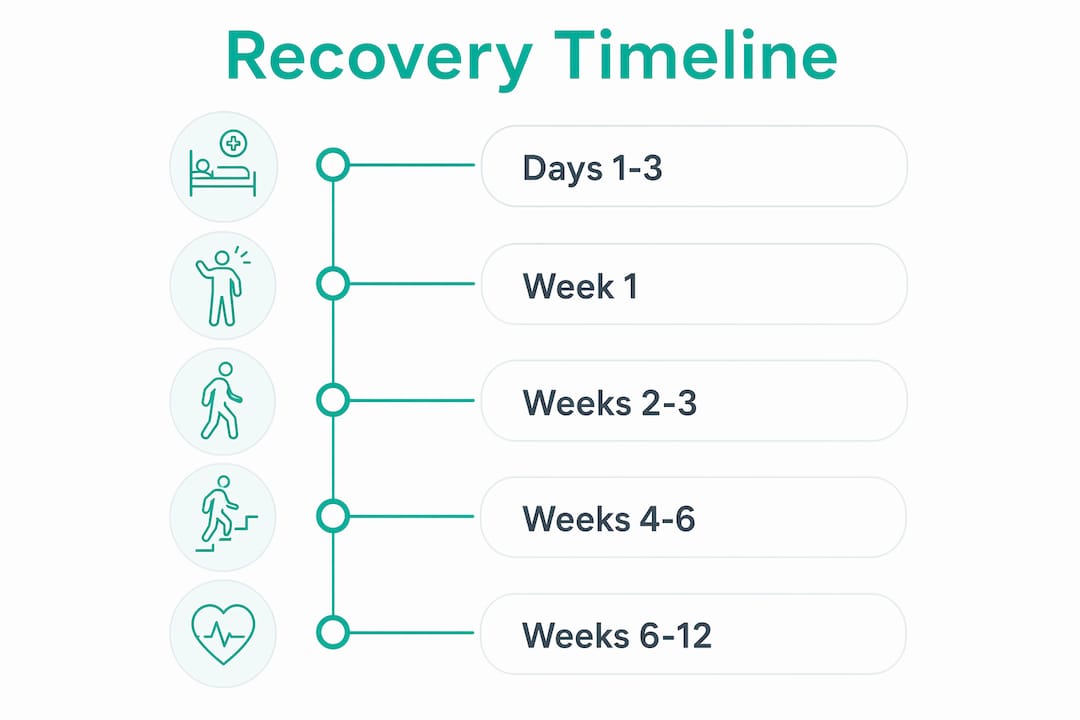
The bariatric surgery recovery timeline unfolds in predictable stages, though your pace through them will be your own. Here is what most patients experience from the operating table through the three-month mark.
1. Days 1–3: Hospital monitoring

You will wake up in a monitored ward where nurses track your vitals, manage pain, and get you walking within hours of surgery. Fluids come through an IV. Oral intake starts with small sips of clear liquids. Most patients are discharged after 1–3 days if no complications arise.
2. Week 1: Rest and hydration at home
Your primary job this week is to rest, sip fluids constantly, and avoid any lifting. Fatigue is normal. Your stomach is healing from a significant structural change, and your body is redirecting energy to repair tissue. Aim for at least 64 ounces of water daily, spread across the full day in small amounts.
3. Weeks 2–3: The energy crash phase
This is the phase most patients do not expect. An energy crash in weeks 2–3 is common because your caloric intake drops dramatically while your body is still healing. Protein intake becomes critical here. Patients who track hydration and protein during this window avoid most hospital readmissions. If your job is sedentary, many surgeons clear a return to desk work by the end of week 2.
Pro Tip: Log your protein and fluid intake in a free app like MyFitnessPal during weeks 2–4. Hitting your protein target, typically 60–80 grams per day, directly speeds tissue repair and reduces fatigue.
4. Weeks 4–6: Soft foods and light movement
Energy begins returning. Your diet transitions from pureed to soft foods. Short walks become a daily habit. You should still avoid lifting anything heavier than 10 pounds and skip strenuous exercise. Incision sites may still be tender, so clothing choices matter more than you think.
5. Weeks 6–12: Resuming normal life
Most patients resume nearly all normal activities by week 6. Structured exercise, including light resistance training and longer walks, typically begins here. Weight loss of 60–70% of excess body weight occurs within the first 12–18 months, with the fastest drop happening in this 6–12 week window. This is the phase where lifestyle habits either lock in or slip.
How do individual factors and job type influence your recovery pace?
Recovery varies significantly by individual and by the physical demands of your work. Two patients who had the same procedure on the same day can have very different timelines. Understanding why helps you plan without frustration.
Job type is the clearest dividing line. Desk workers typically return within 1–2 weeks. People in physically demanding roles, such as construction, nursing, or warehouse work, generally need 4–6 weeks before returning safely. Returning too early to a physical job risks incision strain, dehydration from exertion, and setbacks that extend total recovery time.
Several other factors shape your personal timeline:
-
Age and baseline health: Younger patients with fewer comorbidities tend to heal faster.
-
Surgery type: Gastric bypass involves more internal rerouting than a sleeve and typically requires a slightly longer recovery.
-
Pre-surgery fitness level: Patients who were more active before surgery often regain energy faster.
-
Adherence to nutrition guidelines: Hitting protein and hydration targets directly affects healing speed.
-
Mental health status: Anxiety, depression, and unrealistic expectations about weight loss speed can create emotional setbacks that feel physical.
Weight loss plateaus around the six-month mark are physiologically normal, not a sign of failure. Stalls at six months post-op are the body’s way of recalibrating. Patients who understand this in advance maintain their habits through the plateau instead of abandoning them.
Pro Tip: Plan your return-to-work date conservatively. It is far better to go back a few days early than to push through exhaustion and extend your recovery by weeks.
What are the dietary progression stages during recovery?
Nutrition after bariatric surgery follows a strict staged protocol designed to protect your healing stomach while keeping your body fueled. Skipping stages or rushing transitions is the most common cause of post-operative complications.
| Diet stage | Timing | What you eat |
|---|---|---|
| Clear liquids | Days 1–7 | Water, broth, diluted juice, sugar-free popsicles |
| Full liquids | Weeks 1–2 | Protein shakes, thinned yogurt, milk |
| Pureed foods | Weeks 2–4 | Blended proteins, soft scrambled eggs, smooth hummus |
| Soft foods | Weeks 4–6 | Soft fish, ground meat, cooked vegetables |
| Regular foods | Week 6 onward | Whole foods with gradual reintroduction |
Diet progression from liquids to regular foods takes 6–8 weeks. Each stage exists because your stomach’s new anatomy cannot handle solid textures until internal swelling resolves. A registered dietitian, typically part of your Canadian bariatric program’s multidisciplinary team, guides these transitions and adjusts them based on your tolerance.
Protein is the most critical nutrient throughout recovery. Most Canadian bariatric programs target 60–80 grams of protein per day from the first week onward. Protein preserves muscle mass as you lose weight rapidly, and it directly supports wound healing. Common challenges include food intolerances that were not present before surgery, nausea from eating too fast, and dehydration from forgetting to sip between meals.
Pro Tip: Separate eating and drinking by at least 30 minutes. Drinking during meals fills your small stomach with liquid instead of protein-rich food, which slows healing and increases hunger.
Long-term eating habits formed in the first six months tend to stick. Patients who work with their dietitian through the full bariatric procedures guide and follow staged reintroduction consistently report better weight loss outcomes at the one-year mark.
How do Canadian wait times affect your surgery and recovery planning?
Canada’s publicly funded bariatric system is effective but slow. Wait times range from 2 years in Quebec and Ontario to up to 5 years in Atlantic provinces, with initial specialist appointments sometimes exceeding 36 months. That gap is not dead time. It is your preparation window.
The Saskatchewan Health Authority’s bariatric program, for example, requires patients to make specific lifestyle changes while waiting. These include:
-
Quitting smoking before surgery
-
Eliminating carbonated beverages
-
Starting a food journal to track eating patterns
-
Attending pre-operative education sessions
These waiting-period lifestyle changes directly improve surgical outcomes. Patients who arrive at surgery having already modified their diet and quit smoking heal faster, experience fewer complications, and lose weight more consistently post-op.
The downside of long wait times is real. Prolonged waits contribute to worsening comorbidities including diabetes progression and hypertension in some patients. This is why many Canadians explore internationally accredited options in Tijuana, where wait times are measured in weeks rather than years, and costs run 60–75% lower than private Canadian rates.
Regional differences also affect post-operative support. Ontario and British Columbia have well-established multidisciplinary bariatric centers with dietitians, psychologists, and exercise specialists built into the program. Smaller provinces may offer fewer follow-up resources, which means patients in those regions need to be more proactive about building their own support network.
Key takeaways
The bariatric surgery recovery timeline in Canada requires 1–3 days in hospital, 1–2 weeks before returning to desk work, and approximately 6 weeks to resume full normal activity, with dietary and lifestyle adherence determining long-term success.
| Point | Details |
|---|---|
| Hospital stay is short | Most patients are discharged within 1–3 days if no complications occur. |
| Desk work returns quickly | Sedentary workers can typically return to their jobs within 1–2 weeks post-surgery. |
| Weeks 2–3 are the hardest | An energy crash during this phase is normal; protein and hydration prevent serious setbacks. |
| Diet stages protect healing | Moving through liquids, pureed, soft, then regular foods over 6–8 weeks is non-negotiable. |
| Wait times demand preparation | Canadian public system waits of 2–5 years are best used for lifestyle changes that improve outcomes. |
What I have learned about recovery that most guides skip
By Ariel
Most recovery guides give you a clean timeline and call it done. Real recovery is messier than that, and the patients who do best are the ones who accept that early.
The week 2–3 energy crash genuinely surprises people. You feel worse than you did in the hospital, and that feels wrong. It is not wrong. Your body is running on minimal calories while repairing major internal changes. The patients I have seen struggle most are the ones who push through fatigue instead of resting into it.
Clothing is a detail nobody talks about enough. Loose, soft-waistband clothing for the first 4–6 weeks is not a comfort preference. It is a medical one. Pressure on incision sites slows healing and increases discomfort in ways that affect your ability to walk, which is your most important early exercise.
The six-month plateau is the moment where I have seen patients give up on habits that were working. Understanding that a weight loss stall is physiological and not a personal failure changes how you respond to it. Keep the habits. The loss resumes.
My honest advice: stop comparing your timeline to anyone else’s. Your job type, age, surgery type, and pre-op health all create a recovery pace that is uniquely yours. Celebrate the week you walk 20 minutes without stopping. That milestone matters as much as the number on the scale.
— Ariel
Planning your next step with Weightlosssurgeryguide
If Canada’s 2–5 year wait times are not workable for your health situation, you have real alternatives worth evaluating carefully.

Weightlosssurgeryguide compares internationally accredited bariatric providers in Tijuana, where patients access the same procedures at 60–75% lower cost with wait times measured in weeks. The site covers procedure options including gastric sleeve, bypass, and newer magnetic procedures, alongside detailed recovery guidance for each. For patients weighing surgery against medication, the GLP-1 vs. bariatric surgery comparison breaks down long-term outcomes honestly. If cost is your primary concern, the provider rankings for 2026 show verified pricing, accreditation status, and patient outcome data side by side so you can make a decision grounded in evidence, not marketing.
FAQ
How long is the hospital stay after bariatric surgery in Canada?
Most patients stay 1–3 days in hospital following bariatric surgery. Discharge depends on vital stability, ability to tolerate liquids, and absence of complications.
When can I return to work after weight loss surgery?
Desk workers typically return within 1–2 weeks. Patients in physically demanding jobs generally need 4–6 weeks before returning safely to avoid incision strain.
What do I eat during bariatric surgery recovery stages?
Diet progresses from clear liquids through full liquids, pureed foods, soft foods, and finally regular foods over a 6–8 week period. A registered dietitian guides each transition.
How long are wait times for bariatric surgery in Canada?
Public system wait times range from approximately 2 years in Ontario and Quebec to up to 5 years in Atlantic provinces, with initial specialist appointments sometimes exceeding 36 months.
Is a weight loss plateau after bariatric surgery normal?
Yes. A weight loss stall around the six-month mark is a normal physiological response, not a sign that surgery has stopped working. Maintaining dietary and exercise habits through the plateau produces continued results.