Bariatric Surgery Savings for US Patients: 2026 Guide
Published June 29, 2026

Bariatric surgery is the most cost-effective long-term treatment for obesity available to US patients today. A study analyzing over 90,000 patients found that GLP-1 drug treatment costs roughly $17,000 more than sleeve gastrectomy over just two years. For US patients weighing bariatric surgery savings against ongoing medication, that gap is decisive. This guide breaks down every major procedure, payment path, and cost-cutting option available in 2026, so you can make a financially sound decision backed by real numbers.
How much do bariatric surgery savings add up for US patients?
The total cost of bariatric surgery in the US depends on how you pay. Cash-pay prices range from $15,000 to $30,000 or more depending on the procedure and facility. Insured patients typically pay $0 to $5,000 out of pocket after deductibles, and Medicare patients usually land between $1,500 and $3,500.
The cost breakdown behind those totals matters for planning. Surgeon fees run $3,000–$8,000, anesthesia adds $1,500–$3,000, hospital charges account for $8,000–$15,000, and pre-op testing adds another $1,000–$2,000. Each line item is negotiable when you pay cash or use a bundled package.
Payment options that reduce your out-of-pocket cost include:
- Private insurance: Most major plans cover bariatric surgery with a BMI of 35 or higher plus at least one comorbidity such as Type 2 diabetes or hypertension.
- Medicare: Part A and Part B cover approved bariatric procedures at accredited facilities, with patient costs typically in the $1,500–$3,500 range.
- Medical financing: Lenders like CareCredit and Prosper Healthcare Lending offer 12 to 60 month payment plans for self-pay patients.
- Employer benefits: Some large employers now include bariatric surgery in their benefits packages, particularly after the rise of GLP-1 drug costs.
Pro Tip: Verify your insurance coverage before scheduling any pre-op appointments. Some plans require documentation of a 6-month supervised weight loss program before they approve surgery, and starting that clock early saves months of waiting.
What are the main bariatric surgery types and how do they compare in 2026?
Gastric sleeve surgery accounts for 63% of all US bariatric procedures in 2026. That dominance reflects its balance of effectiveness, lower cost, and shorter operating time compared to alternatives.

| Procedure | US Cash-Pay Cost | Excess Weight Loss | Hospital Stay |
|---|---|---|---|
| Gastric sleeve | $15,000–$20,000 | 60–70% | 1–2 days |
| Gastric bypass | $20,000–$30,000 | 70–80% | 2–3 days |
| Duodenal switch (SADI-S) | $25,000–$35,000 | 80–90% | 2–4 days |
| Adjustable gastric band | $10,000–$18,000 | 40–50% | Outpatient |
Gastric bypass delivers stronger weight loss results but costs more and carries a longer recovery. The duodenal switch procedure produces the highest excess weight loss of any standard bariatric operation, making it the preferred choice for patients with severe obesity or multiple metabolic conditions. The adjustable gastric band has largely fallen out of favor due to lower long-term effectiveness and high revision rates.
Most patients achieve 60–80% excess weight loss within 12–18 months post-surgery, averaging 100–150 pounds depending on starting weight. That outcome is consistent across procedure types when patients follow post-surgical nutrition and lifestyle protocols.
Pro Tip: Choose your procedure based on your metabolic health profile, not the price tag. A cheaper sleeve that requires a costly revision two years later is never the better deal.
How does bariatric surgery compare financially with GLP-1 medications?
GLP-1 receptor agonists like semaglutide and tirzepatide have reshaped the obesity treatment conversation, but their costs accumulate fast. GLP-1 treatment costs roughly $17,000 more than sleeve gastrectomy over a two-year period. That same study found GLP-1 costs exceed gastric bypass by about $7,200 over the same window.
The financial gap widens after year two because medication costs never stop. Surgery is a one-time expense. GLP-1 drugs require indefinite monthly refills, and most patients regain significant weight if they stop taking them.
“Patients and providers should evaluate long-term economic burden, as bariatric surgery’s upfront cost is an investment leading to overall greater affordability than long-term medication.” — News Medical, 2026
Bariatric surgery reduces obesity-related comorbidities more effectively than GLP-1 receptor agonists, which lowers downstream healthcare costs for conditions like Type 2 diabetes, sleep apnea, and hypertension. Fewer specialist visits, fewer prescriptions, and fewer hospitalizations add up to real savings over a decade. You can use the GLP-1 cost calculator at Weightlosssurgeryguide to model your personal cost trajectory before making a decision.
What are the options for affordable bariatric surgery outside the US?
Mexico bariatric surgery packages typically cost 50–70% less than US cash-pay prices. A sleeve gastrectomy in Tijuana runs $5,500–$8,500 all-inclusive, compared to $15,000–$20,000 in the US. Gastric bypass packages in Mexico range from $7,500–$11,000 versus $20,000–$30,000 stateside.
Most Mexico packages bundle surgery, anesthesia, hospital stay, pre-op labs, and limited post-op follow-up into a single price. That transparency makes budgeting straightforward for self-pay patients. Tijuana is the most common destination for US patients because of its proximity to San Diego and the concentration of accredited bariatric facilities.
The trade-offs are real and worth understanding before you book:
- Follow-up care: Your US primary care doctor or bariatric team must manage your long-term nutrition, labs, and complications. Not all US providers are willing to do this.
- Complication management: If a complication arises after you return home, a US emergency room handles it. That cost falls on you or your US insurer.
- Accreditation: Facilities certified by JCI, SRC, or ISO meet international safety standards. Choosing an accredited bariatric facility is non-negotiable for safe outcomes.
- Surgeon credentials: Verify board certification and procedure volume independently. Package price alone tells you nothing about surgical quality.
Mexico bariatric tourism transfers follow-up risk back to the US patient, which can affect total cost and health outcomes. The savings are genuine, but they require active planning to protect.
How to maximize your weight loss surgery savings in 2026
Smart financial planning starts before you contact a surgeon. These steps reduce cost without compromising care quality.
- Confirm insurance eligibility early. Call your insurer and ask specifically which bariatric procedures are covered, what BMI threshold applies, and whether a supervised weight loss program is required. Insurance approval typically requires a BMI of 35 or higher with comorbidities and a 6-month supervised program. Starting that program immediately cuts months off your timeline.
- Match procedure to medical need. A gastric sleeve costs less upfront, but a patient with severe acid reflux or Type 2 diabetes may get better metabolic results from a gastric bypass. Revisions cost $20,000 or more, so getting the right procedure the first time is the real savings strategy.
- Compare bundled pricing carefully. Whether you choose a US center or a Mexico package, ask for an itemized quote. Hidden fees for anesthesia, labs, or post-op visits can add thousands to a quoted price.
- Use medical financing strategically. Monthly payments through CareCredit or Prosper Healthcare Lending can make a $15,000 procedure manageable at $250–$400 per month. Review the bariatric financing options at Weightlosssurgeryguide before committing to any payment plan.
- Plan for post-surgical support. Long-term weight loss depends more on lifestyle commitment and nutritional support than on surgery type alone. Budgeting for a dietitian and behavioral health support after surgery protects your investment.
Pro Tip: Ask your surgeon’s office for a single-case agreement if your insurer is out of network. Hospitals negotiate these regularly, and they can cut your out-of-pocket cost significantly.
Key takeaways
Bariatric surgery costs less than two years of GLP-1 medication and delivers more durable weight loss, making it the stronger long-term financial and clinical choice for most eligible US patients.
| Point | Details |
|---|---|
| Surgery beats medication on cost | GLP-1 drugs cost roughly $17,000 more than sleeve gastrectomy over two years. |
| Procedure choice affects total cost | Gastric sleeve is cheapest; bypass and SADI-S cost more but deliver stronger results for complex cases. |
| Insurance cuts out-of-pocket costs sharply | Insured patients typically pay $0–$5,000 versus $15,000–$30,000 cash-pay. |
| Mexico saves 50–70% upfront | Tijuana packages run $5,500–$11,000 but require active planning for follow-up care. |
| Long-term savings require post-op commitment | Nutritional and behavioral support after surgery protects the financial investment. |
Why price alone is the wrong way to choose bariatric surgery
I have spent years reviewing bariatric surgery decisions, and the pattern I see most often is patients anchoring on the lowest quoted price. That instinct is understandable. Surgery is expensive, and the savings from Mexico or a discount US center look compelling on paper.
The problem is that bariatric surgery is not a commodity. A $6,000 sleeve in a facility without proper accreditation carries risks that a $9,000 sleeve in a JCI-certified Tijuana hospital does not. The difference in price is not the difference in value. The difference in accreditation, surgeon volume, and post-op support is where outcomes actually diverge.
What I tell patients is this: calculate the total cost of your obesity over the next five years, including medications, specialist visits, lost productivity, and quality of life. Surgery almost always wins that comparison. But only if you choose a qualified provider and commit to the post-surgical work. The patients who regret bariatric surgery almost always skipped one of those two things.
The financial case for surgery is strong. The clinical case is stronger. Use both to make your decision, and do not let a $2,000 price difference push you toward a provider you cannot verify.
— Ariel
Find your best bariatric surgery option with Weightlosssurgeryguide
Weightlosssurgeryguide evaluates accredited bariatric hospitals and surgeons in Tijuana for US patients, with savings of 60–75% compared to US cash-pay prices.
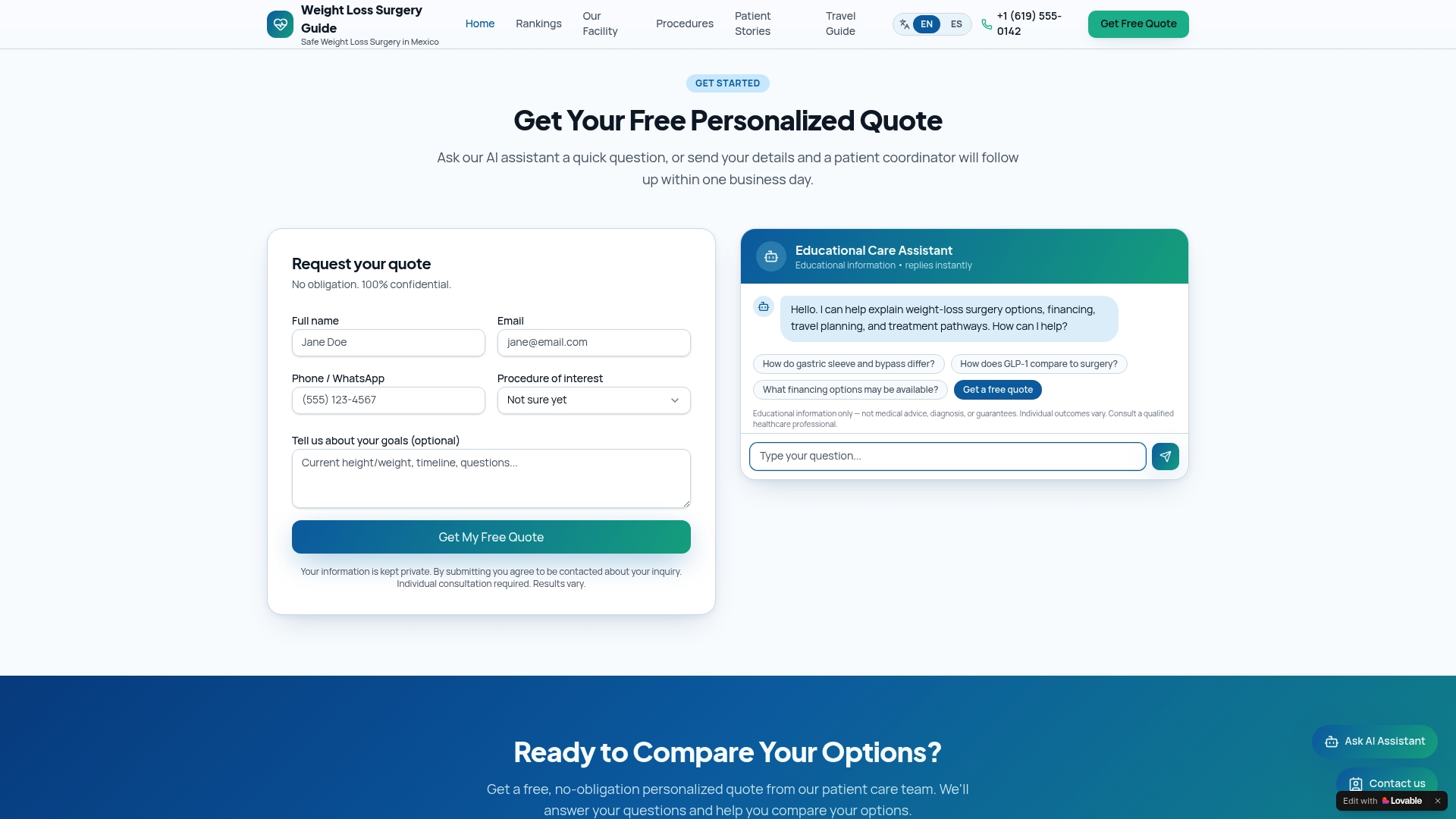
Start with the 2026 Tijuana provider rankings to compare verified surgeons and facilities side by side. Each listing includes procedure pricing, accreditation status, and patient outcome data. If you are still weighing surgery against medication, the GLP-1 vs. bariatric surgery comparison page walks through the full clinical and financial picture. Weightlosssurgeryguide also provides a bariatric travel guide covering logistics, safety checklists, and what to expect from care in Tijuana. Get your free personalized quote and know your real numbers before you decide.
FAQ
How much can US patients save with bariatric surgery vs. GLP-1 drugs?
GLP-1 drug treatment costs roughly $17,000 more than sleeve gastrectomy over two years, based on a study of over 90,000 patients. The savings grow every year medication costs continue.
Does insurance cover bariatric surgery for US patients?
Most major US insurers cover bariatric surgery for patients with a BMI of 35 or higher plus at least one comorbidity. Out-of-pocket costs for insured patients typically range from $0 to $5,000.
What is the most affordable bariatric surgery type in 2026?
Gastric sleeve surgery is the least expensive major bariatric procedure, with US cash-pay prices starting around $15,000 and Mexico packages starting around $5,500.
Is bariatric surgery in Mexico safe for US patients?
Surgery at JCI or SRC-accredited facilities in Tijuana meets international safety standards. The primary risk involves follow-up care after returning home, which requires coordination with a US provider.
How long does it take to see financial savings after bariatric surgery?
Most patients begin seeing reduced medication and healthcare costs within the first year post-surgery, as obesity-related comorbidities like Type 2 diabetes and hypertension improve or resolve.