Flying Post-Op Bariatric Surgery Safely: 2026 Guide
Published June 30, 2026

Flying Post-Op Bariatric Surgery Safely: 2026 Guide
Flying post-op bariatric surgery safely requires surgeon clearance, procedure-specific timing, and disciplined in-flight care to avoid complications like deep vein thrombosis, dehydration, and staple line stress. Most bariatric patients can fly within 7–14 days after a laparoscopic gastric sleeve, but complex procedures or long-haul routes push that window to 6–8 weeks. The risks of flying too early are real and serious. Blood clots, wound complications, and internal pressure changes at altitude can derail an otherwise successful recovery. This guide gives you the exact timelines, in-flight protocols, and warning signs you need to travel with confidence.
When is it safe to fly after bariatric surgery?
The answer depends on your procedure, your recovery progress, and the length of your flight. Surgeons recommend waiting 7–14 days for standard laparoscopic cases like the gastric sleeve before boarding any flight. Complex procedures, including gastric bypass or the duodenal switch, typically require 6–8 weeks before long-haul travel. That gap exists because your body is still managing significant internal healing even when your external incisions look fine.
Your surgeon's clearance is not a formality. Before approving travel, most bariatric clinical teams assess whether you can walk without assistance, tolerate fluids without vomiting, and maintain stable vital signs. A written "fit to fly" certificate is the standard documentation you need. Without it, airlines and travel insurers may refuse to assist you if a medical emergency occurs mid-flight.

Domestic short-haul flights carry less risk than international routes. A two-hour flight from San Diego to Phoenix places far less physiological stress on your body than a ten-hour transatlantic crossing. Flying without clearance increases the risk of blood clots, dehydration, staple line stress, and wound complications. The table below summarizes minimum wait times by procedure and flight type.
| Procedure | Short-haul (under 4 hours) | Long-haul (over 4 hours) |
|---|---|---|
| Laparoscopic gastric sleeve | 7–14 days | 4–6 weeks |
| Gastric bypass | 3–4 weeks | 6–8 weeks |
| Duodenal switch (SADI-S) | 4–6 weeks | 6–8 weeks |
| Endoscopic sleeve (ESG) | 5–7 days | 2–3 weeks |
Pro Tip: Ask your surgeon for a written fit-to-fly letter that includes your procedure date, current medications, and emergency contact details. Carry it in your hand luggage, not your checked bag.
Essential in-flight precautions for post-op air travel
The cabin environment works against post-op bariatric patients in specific ways. Altitude causes gas inside your abdomen to expand, which stresses internal staples and fresh suture lines. Cabin air is also dry, accelerating dehydration faster than most patients expect. Sitting still for hours in a pressurized tube is the exact opposite of what your surgical team prescribed for recovery.
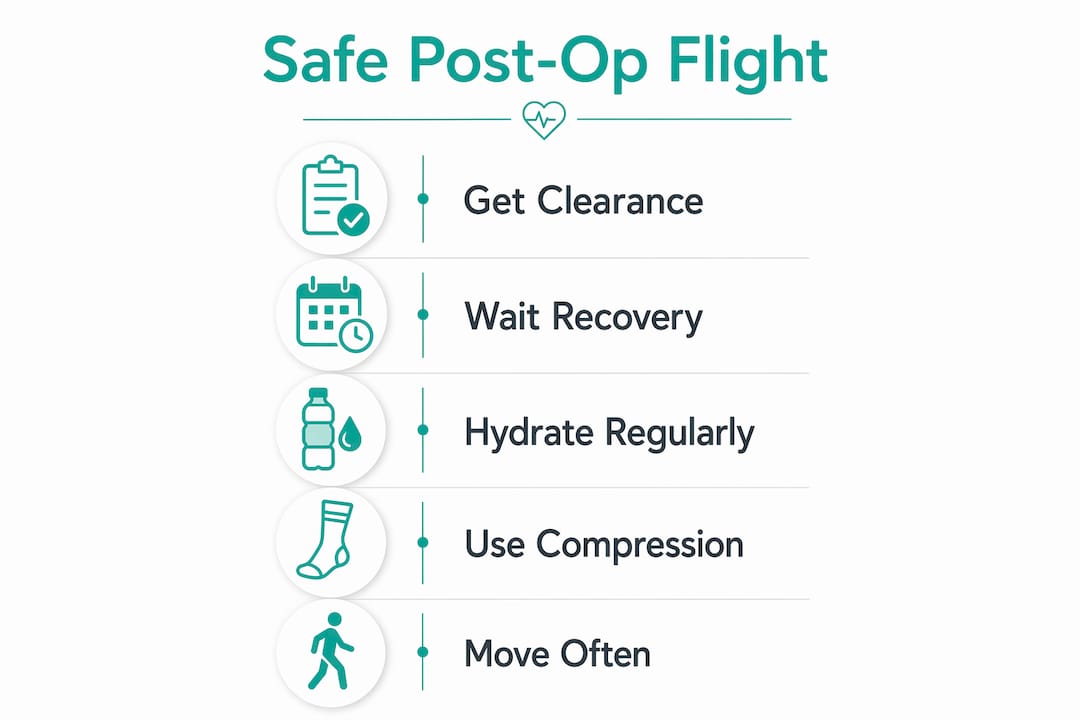
The following precautions are clinically supported and non-negotiable for safe air travel after weight loss surgery:
- Compression stockings: Wear graduated compression stockings rated at 15–20 mmHg or higher as directed by your surgeon. Compression is the mechanical half of clot prevention.
- Movement schedule: Walk the aisle every 60–90 minutes. When you cannot stand, perform 20 ankle pumps every 15 minutes to keep blood circulating in your legs.
- Hydration discipline: Sip approximately 150 ml of water per hour steadily throughout the flight. Never try to catch up by drinking large amounts quickly. Rapid intake causes nausea and vomiting in post-op patients, which can stress your surgical site.
- Medication management: Keep all anticoagulants, pain medications, and anti-nausea drugs in your carry-on bag. Never pack them in checked luggage. Take medications on schedule regardless of time zone changes during the flight.
- Seat selection: Book an aisle seat. Aisle seats let you stand and move without disturbing other passengers, which means you will actually do it.
- Avoid alcohol and sedatives: Both cause dehydration and mask symptoms that could signal a serious complication. A glass of wine at 30,000 feet is not worth the risk.
- Food and snacks: Pack surgeon-approved protein shakes and low-carb snacks. Do not experiment with airport food or airline meals. Your post-op digestive system is not ready for unknown ingredients or portion sizes.
The dual-layer defense against blood clots combines compression stockings with prescribed anticoagulant medication. Walking alone is not sufficient without medication adherence. Both layers must be active simultaneously.
Pro Tip: Set a phone timer for every 60 minutes as your movement reminder and every 30 minutes as your hydration reminder. Do this before takeoff so you do not rely on willpower alone.
What warning signs mean you should not fly?
Certain symptoms require you to cancel or immediately stop your flight. These are not minor discomforts. They are signals of potentially life-threatening complications that demand urgent medical attention.
Postpone or stop flying immediately if you experience any of the following:
- One-sided calf pain, swelling, or redness (possible deep vein thrombosis)
- Chest pain or tightness (possible pulmonary embolism)
- Shortness of breath that is new or worsening
- Fever above 101°F (38.3°C)
- Severe or sharp abdominal pain
- Uncontrolled vomiting or inability to keep fluids down
- Wound drainage, redness, or unusual odor at incision sites
Clinical note: The risk of blood clots is highest within the first six weeks after surgery. Internal gas expansion at altitude places additional stress on fresh staple lines. If any of the above symptoms appear before your flight, do not board. If they appear mid-flight, notify the crew immediately and request emergency assistance upon landing.
Carry your surgical reports, discharge summary, and medication list in your carry-on at all times. If you need emergency care at a foreign hospital, this documentation allows physicians to understand your anatomy and recent surgical changes quickly. A post-bariatric stomach is structurally different from a standard stomach, and that information is critical in an emergency.
Preparing for your post-op flight: practical steps
Preparation before you reach the airport reduces in-flight risk significantly. Follow these steps in order:
- Confirm surgical clearance. Get written fit-to-fly approval from your bariatric surgeon. Confirm it covers the specific flight duration and destination.
- Organize your medical documents. Pack surgical reports, discharge summaries, your medication list, and your surgeon's contact number in a dedicated folder in your carry-on.
- Dress for recovery, not fashion. Wear loose, comfortable clothing and your compression stockings from the moment you leave home. Tight waistbands create pressure on your abdomen and restrict circulation.
- Arrive at the airport early. Post-op patients move more slowly and tire faster. Extra time removes the stress of rushing, which can spike blood pressure and increase discomfort.
- Choose your seat deliberately. Book an aisle or bulkhead seat when you check in. Bulkhead seats offer more legroom for movement and are easier to exit quickly.
- Prepare your food and fluids. Fill a reusable water bottle before boarding. Pack two to three servings of your prescribed protein shakes and approved snacks. Do not rely on the airline for nutrition.
- Manage your medications proactively. Take anti-nausea medication before boarding if your surgeon has prescribed it. Set alarms for every scheduled dose during the flight.
- Stick to your diet phase. Your post-op diet phase does not pause for travel. If you are on pureed foods, you eat pureed foods on the plane. Deviating from your prescribed diet phase during travel is one of the most common causes of post-op nausea and vomiting mid-flight.
Patients who carry complete medical documentation and communicate with their bariatric team before departure consistently report smoother travel experiences. Check in with your clinical team by phone or message the day before your flight. Confirm your medications, your hydration plan, and any last-minute concerns.
Key takeaways
Safe post-op air travel requires surgeon clearance, procedure-specific timing, and active in-flight management of hydration, movement, and medication to prevent serious complications.
| Point | Details |
|---|---|
| Wait for clearance | Most patients need 7–14 days minimum; complex surgeries require 6–8 weeks before long flights. |
| Move and compress | Walk the aisle every 60–90 minutes and wear compression stockings to prevent blood clots. |
| Sip fluids steadily | Drink approximately 150 ml per hour. Never catch up with large amounts at once. |
| Carry your documents | Surgical reports, fit-to-fly letters, and medication lists belong in your carry-on, not checked bags. |
| Know your red flags | Calf pain, chest pain, fever, or severe abdominal pain require immediate medical attention and flight cancellation. |
What I've learned watching patients fly too soon
The biggest mistake I see post-op patients make is treating the flight home as a reward rather than a medical event. They have just had major abdominal surgery. Their body is managing internal trauma, fluid shifts, and a completely restructured digestive system. Then they board a five-hour flight, skip the water because they do not want to use the airplane bathroom, and sit motionless because they feel tired.
That combination is how preventable complications happen. Flying is an active recovery phase that demands the same discipline as your diet and medication schedule. The patients who do it well are the ones who treat the flight like a clinical protocol, not a commute.
There is also a compliance dimension that most people do not talk about. Long-term surgical success depends on follow-up appointments, lab work, and consistent self-care. How you manage your first post-op flight is an early signal of how you will manage the next two years of recovery. Patients who cut corners on travel tend to cut corners elsewhere. The ones who follow the protocol tend to follow through on everything else too.
My honest advice: plan your travel logistics with the same rigor you used to plan your surgery. Choose your surgeon carefully, get your clearance in writing, book the aisle seat, set your timers, and do not touch the airline pretzels. The flight is just one more thing to do right.
— Ariel
Planning safe bariatric travel starts with the right provider
Choosing an accredited bariatric surgeon is the foundation of a safe recovery, including safe travel home. Weightlosssurgeryguide evaluates and ranks bariatric providers in Tijuana so US patients can make informed decisions before surgery, not after a complication.

The 2026 Tijuana bariatric surgery rankings include accreditation status, patient safety records, and post-op support quality for each listed provider. Patients who select accredited facilities receive structured discharge protocols, fit-to-fly documentation, and follow-up care coordination that directly supports safe travel. Weightlosssurgeryguide also provides the ASMBS medical tourism safety checklist to help you verify your provider meets international standards before you commit. Your recovery deserves a provider who prepares you for every phase, including the flight home.
FAQ
How long after bariatric surgery can I fly?
Most patients can fly 7–14 days after a laparoscopic gastric sleeve. Complex procedures like gastric bypass or duodenal switch typically require 6–8 weeks before long-haul flights.
What is the biggest risk of flying after weight loss surgery?
Deep vein thrombosis is the primary risk. Prolonged sitting reduces blood flow in the legs, and post-op patients already have elevated clot risk within the first six weeks after surgery.
Do I need a doctor's note to fly after bariatric surgery?
A written fit-to-fly certificate from your surgeon is the standard requirement. It protects you with airlines, travel insurers, and emergency medical teams if a complication occurs during travel.
What should I eat and drink on a flight after bariatric surgery?
Sip approximately 150 ml of water per hour throughout the flight. Pack surgeon-approved protein shakes and snacks from home. Do not eat airport food or airline meals that fall outside your prescribed diet phase.
Can I fly internationally right after bariatric surgery in Mexico?
No. Patients traveling from Mexico to the US after surgery should wait for full surgical clearance before flying. Short domestic flights may be approved within 7–14 days, but international or long-haul routes require a longer recovery window of 4–8 weeks depending on the procedure.