US Doctor Coordination After Bariatric Surgery
Published June 27, 2026

US Doctor Coordination After Bariatric Surgery
US doctor coordination after bariatric surgery is the process of organizing ongoing communication between patients and their full medical team to protect recovery and long-term health. Bariatric programs across the US treat surgery as one part of a comprehensive plan that includes nutrition guidance, lab monitoring, and coordinated follow-up care. Without active coordination between your surgeon, primary care provider (PCP), dietitian, and behavioral specialist, critical gaps in medication management and nutrient monitoring can develop quickly. The multidisciplinary model is not optional. It is the clinical standard for safe, lasting results.
What does US doctor coordination after bariatric surgery actually involve?
Coordinated post-bariatric care means every provider on your team knows what the others are doing. Your surgeon monitors surgical recovery and complications. Your PCP manages chronic conditions, orders labs, and adjusts medications as your weight changes. Your dietitian tracks nutritional intake and supplementation. A psychologist or behavioral counselor supports the lifestyle changes that determine whether surgery succeeds long-term.
The coordination challenge is real. These providers often work in separate offices, use different electronic health record systems, and rarely communicate unless a patient pushes them to. Multidisciplinary, long-term follow-up is the core of every accredited US bariatric program, but the execution depends heavily on the patient acting as the link between providers.
Nurse navigators are one of the most underused resources in this process. Nurse navigators in revision and primary bariatric programs coordinate follow-up appointments, answer clinical questions, and serve as a centralized contact between patients and their care teams. If your program offers one, use them from day one.
The key providers and their specific roles
- Bariatric surgeon: Monitors wound healing, surgical complications, and procedural outcomes at scheduled post-op visits.
- Primary care provider: Manages blood pressure, diabetes, and other chronic conditions; orders and reviews lab panels; adjusts medications as weight loss progresses.
- Registered dietitian: Creates individualized supplement and nutrition plans; monitors protein intake, hydration, and micronutrient levels.
- Psychologist or behavioral specialist: Addresses emotional eating, body image, and adherence to lifestyle changes that surgery alone cannot fix.
- Nurse navigator or care coordinator: Schedules appointments, relays clinical updates between providers, and flags warning signs for early intervention.
Pro Tip: Ask your bariatric program for a written care coordination checklist at discharge. This document should list every provider's name, contact, and responsibility so you can track who owns each part of your care.
What does the post-op follow-up schedule look like?

Standard follow-up appointments occur at 7–10 days, 4 weeks, 2 months, 5 months, 8 months, and then annually for life. That first-year schedule is dense by design. Your body is changing rapidly, your medications may need adjustment at every visit, and nutritional deficiencies can appear within weeks if labs are not monitored.
Obesity is a lifelong disease, and annual lifetime visits exist to catch nutrient gaps early and recalibrate medications as your weight stabilizes. Missing even one annual visit can allow a deficiency like iron, vitamin B12, or vitamin D to go undetected for months. The downstream effects, including anemia, bone loss, and fatigue, are preventable with consistent monitoring.
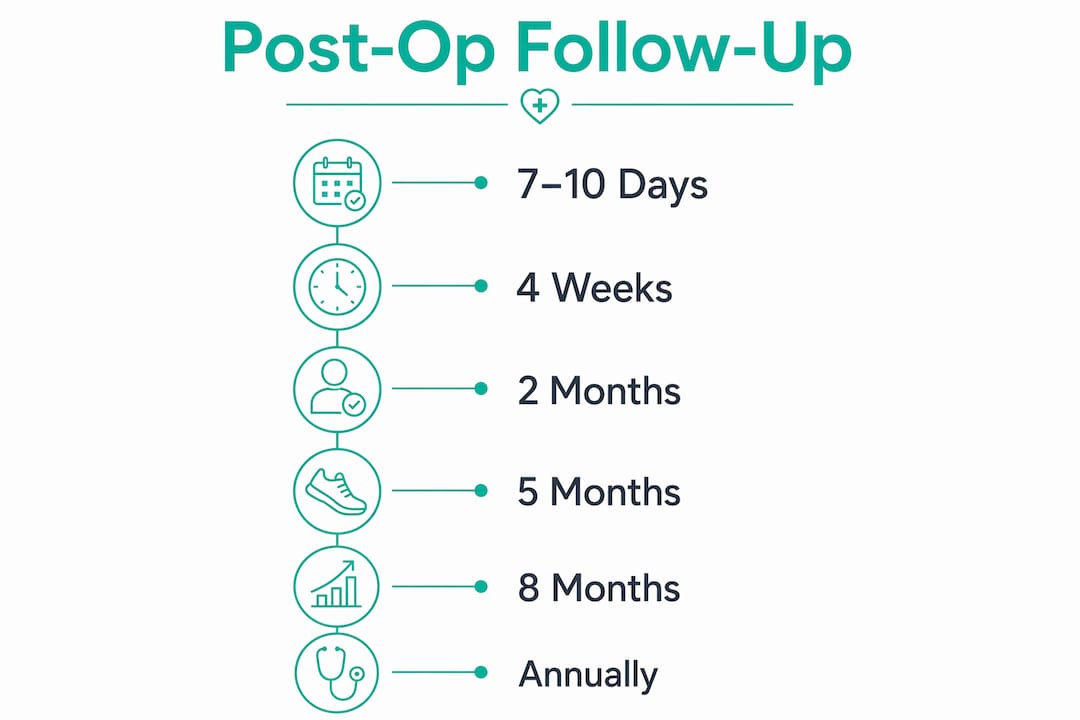
| Visit timing | Primary focus | Key labs or actions |
|---|---|---|
| 7–10 days post-op | Wound check, hydration, pain management | Clinical exam, no labs typically required |
| 4 weeks | Dietary progression, early weight loss | Basic metabolic panel, protein intake review |
| 2 months | Medication reassessment, nutrition adherence | HbA1c (if diabetic), iron, B12, folate |
| 5 months | Weight loss trajectory, supplement compliance | Vitamin D, calcium, zinc, copper |
| 8 months | Behavioral check-in, ongoing med adjustments | Full micronutrient panel, thyroid if indicated |
| Annual (lifelong) | Long-term weight, nutrition, chronic disease | Complete panel: B12, D, iron, folate, thiamine, selenium |
Pro Tip: Set calendar reminders for every scheduled visit the day you leave the hospital. Patients who schedule appointments proactively are far less likely to fall through the cracks during the critical first year.
Lab monitoring responsibilities must be explicitly divided between your bariatric team and your PCP. Testing intervals for folate, thiamine, B12, vitamin D, calcium, copper, iron, zinc, and selenium vary by procedure type and individual risk factors. Thiamine testing, for example, is triggered by specific symptoms and risk factors rather than a fixed calendar date. That conditional logic requires direct communication between your bariatric team and PCP, not an assumption that someone else is handling it.
How do you coordinate medication management between your surgeon, PCP, and specialists?
Bariatric surgery changes how your body absorbs medications. Pharmacokinetic changes after surgery affect drug absorption and dosing for nearly every medication class, which means the doses that worked before surgery may be too high, too low, or in the wrong formulation after it. This is not a minor administrative detail. It directly affects safety.
Diabetes medications require the most urgent attention. HbA1c reassessment at 3 and 6 months post-op is the clinical standard for patients with type 2 diabetes. Blood pressure medications often need dose reductions within weeks as weight drops. Psychiatric medications, including antidepressants and mood stabilizers, may need reformulation from extended-release to immediate-release versions because the altered gut anatomy changes absorption rates.
"Failure to synchronize medication management can cause complications. A written timeline tied to lab checks is vital." — PMC review on medication adjustment after bariatric surgery
Medication continuity gaps are most common with diabetes and psychiatric medications when clinicians do not share a timing and dosing plan. The fix is straightforward: request a written medication adjustment timeline at discharge that lists each drug, the expected change, and the lab trigger that prompts the change. Share this document with every provider on your team.
Common pitfalls in medication coordination include:
- Assuming the surgeon handles all medication changes. The PCP owns chronic disease medications; the surgeon owns surgical recovery medications.
- Not updating your pharmacist. Your pharmacist can flag dangerous interactions when formulations change post-op.
- Skipping labs before a medication adjustment. Lab results should drive dose changes, not just elapsed time.
- Failing to loop in your psychiatrist or endocrinologist. Structured medication adjustment plans that integrate the surgeon, endocrinologist, and PCP produce better outcomes and less confusion than siloed management.
What practical steps keep communication from breaking down?
Patients who treat themselves as the project manager of their own care consistently do better. That means keeping a centralized health record, not relying on providers to share information automatically.
- Create a single health binder or digital folder. Store your discharge summary, medication list, lab results, and every provider's contact information in one place. Bring it to every appointment.
- Confirm appointments 48 hours in advance. Cancellations happen. A quick confirmation call prevents a missed visit from becoming a two-month gap in care.
- Ask three questions at every visit: What changed since my last visit? What do you need from my other providers? What should I watch for before my next appointment?
- Report warning signs immediately. Persistent vomiting, severe fatigue, numbness, or rapid unexpected weight regain are not symptoms to wait on. Contact your care team the same day.
- Use reminder apps for supplements and medications. Adherence to daily supplements is one of the most common failure points in post-operative weight loss support. A simple phone alarm prevents a deficiency that takes months to reverse.
- Request a nurse navigator if your program offers one. Nurse navigators substantially improve appointment adherence and communication by acting as a centralized point for your logistical and clinical questions.
Behavioral adherence peaks at one month post-op and declines over the following two years. That pattern is well-documented. Scheduling behavioral booster visits proactively at 6 months and 12 months, rather than waiting until habits slip, is the most effective way to stay on track. You can review how to evaluate a bariatric program to understand what strong follow-up protocols look like before you commit to a provider.
Key Takeaways
Effective post-bariatric care requires patients to actively link their surgeon, PCP, dietitian, and behavioral team through shared written plans, scheduled labs, and proactive communication.
| Point | Details |
|---|---|
| Follow-up schedule is fixed | Visits at 7–10 days, 4 weeks, 2, 5, 8 months, then annually for life are the clinical standard. |
| Labs need explicit ownership | Divide micronutrient testing responsibilities in writing between your bariatric team and PCP. |
| Medications change post-op | Pharmacokinetic shifts require written adjustment timelines tied to specific lab results. |
| Behavioral support is not optional | Adherence declines after one month; schedule booster visits proactively at 6 and 12 months. |
| Patients drive coordination | A written care checklist and centralized health record prevent the most common communication gaps. |
What I've learned from watching coordination fail
The most common failure I see is not a bad surgeon or a negligent PCP. It is a patient who assumed the system would handle itself. Bariatric care coordination in the US is genuinely fragmented. Providers work in separate systems, speak different clinical languages, and rarely pick up the phone to compare notes unless something goes wrong.
The patients who do best are the ones who show up to every appointment with a written list of questions, hand their PCP a copy of their discharge summary on the first post-op visit, and call their nurse navigator when something feels off rather than waiting for the next scheduled appointment. That is not heroic effort. It is a repeatable habit.
The behavioral piece is the one most patients underestimate. Surgery changes your anatomy. It does not change the patterns, stress responses, and emotional triggers that drove weight gain in the first place. Sustained behavioral adherence requires psychological support and regular booster sessions. Patients who skip the psychologist after the first few months almost always report it as their biggest regret at the two-year mark.
A written symptom-trigger list shared between your bariatric team and PCP is the single most underused coordination tool available. Documented triggers like plateaus, reflux, or protein intake issues allow your PCP to act without waiting for a specialist referral. That speed matters when a deficiency is developing.
— Ariel
Planning your care with the right provider from the start
Choosing a bariatric program with strong coordination infrastructure built in changes everything about your post-op experience. Weightlosssurgeryguide evaluates accredited bariatric providers in Tijuana for US patients, with a focus on programs that include dietitian support, nurse navigation, and structured follow-up protocols.
US patients who work with internationally accredited programs through Weightlosssurgeryguide save 60–75% compared to domestic costs while accessing the same multidisciplinary care model. The 2026 provider rankings compare programs on follow-up structure, accreditation status, and patient support services so you can choose a team built for long-term coordination, not just the surgery itself. If you want to understand what accreditation standards actually require from a care team, the bariatric accreditation guide breaks down JCI, SRC, and ISO standards in plain language.
FAQ
What providers are part of a bariatric care team?
A standard bariatric care team includes a surgeon, primary care provider, registered dietitian, psychologist or behavioral specialist, and often a nurse navigator who coordinates communication between all parties.
How often should I see my doctor after bariatric surgery?
Follow-up visits are scheduled at 7–10 days, 4 weeks, 2 months, 5 months, 8 months, and then annually for life to monitor weight, nutrition, and chronic disease management.
Which labs need monitoring after bariatric surgery?
Key micronutrients to test include B12, folate, thiamine, vitamin D, calcium, iron, zinc, copper, and selenium, with testing intervals determined by procedure type and individual risk factors.
Why do medications need adjustment after bariatric surgery?
Surgery alters gut anatomy and changes how drugs are absorbed. Pharmacokinetic shifts affect dosing for diabetes, blood pressure, and psychiatric medications, requiring reassessment at 3 and 6 months post-op.
What is the biggest risk when care coordination breaks down?
The most common consequence is undetected nutritional deficiency, particularly iron, B12, or vitamin D, because lab responsibilities were never clearly assigned between the bariatric team and the PCP.