Weight Loss Surgery Checklist for Americans: 2026 Guide
Published July 1, 2026

Weight Loss Surgery Checklist for Americans: 2026 Guide
A weight loss surgery checklist for Americans is defined as a structured set of medical, behavioral, insurance, and recovery requirements that every patient must complete before and after bariatric surgery. Skipping any item on this checklist raises the risk of surgical complications, insurance denial, or poor long-term outcomes. Clinical standards set by organizations like the American Society for Metabolic and Bariatric Surgery (ASMBS) establish the baseline for eligibility, while insurance carriers layer on their own documentation demands. This guide walks you through every major requirement so you can approach surgery with clarity and confidence.
1. What medical criteria must Americans meet for weight loss surgery?
Standard clinical eligibility requires a BMI of 40 or higher, or a BMI of 35 or higher with at least one significant obesity-related condition. Some insurance plans now accept a BMI of 30–35 when a patient has specific metabolic conditions and has failed conservative treatment attempts. That lower threshold reflects growing evidence that surgery benefits patients at moderate obesity levels, not just severe ones.

Qualifying obesity-related conditions include Type 2 diabetes, hypertension, obstructive sleep apnea, non-alcoholic fatty liver disease, and osteoarthritis. Your surgeon and insurer will require documented proof that these conditions exist and are linked to your weight.
Required medical screenings include:
- Complete blood count, kidney and liver function panels, blood sugar, and cholesterol
- Thyroid function and vitamin levels, including B12 and vitamin D
- Clotting studies and imaging tailored to your health history
- H. pylori screening and nutritional assessment
- Cardiac clearance if you have a history of heart disease
Smoking and active substance use disorders disqualify most candidates. Unmanaged psychiatric conditions also disqualify candidates, which is why a psychological evaluation is a required step, not an optional one. The evaluation screens for mental health disorders and assesses whether you can realistically adhere to post-surgery lifestyle demands.
2. How to prepare behaviorally before bariatric surgery
Behavioral preparation is not a formality. Starting lifestyle changes early signals motivation to your surgical team and improves both short-term and long-term outcomes. Patients who demonstrate consistent effort before surgery tend to lose more weight and maintain it longer after the procedure.
Key behavioral steps to complete before surgery:
- Begin a preoperative diet as directed, which often includes a liver-reducing phase of high-protein, low-carbohydrate eating for 2–4 weeks before surgery
- Stop smoking at least 2–3 months before your procedure. Smoking raises the risk of ulcers, breathing complications, and impaired wound healing
- Start a gentle exercise routine, even 20–30 minutes of walking daily, to improve cardiovascular fitness before surgery
- Attend all required psychological and psychiatric appointments and be honest about your mental health history
- Cut out alcohol completely, as most programs require documented sobriety before approval
Psychological readiness is the most underestimated part of preparation. Surgery changes your relationship with food permanently. Patients who enter surgery without addressing emotional eating, depression, or anxiety often struggle more in recovery. Use the pre-surgery period to work with a therapist or counselor who specializes in bariatric patients.
Pro Tip: Keep a daily log of your food intake, exercise sessions, and weight. This documentation serves double duty: it demonstrates compliance to your surgical team and builds the paper trail your insurer may require.
3. Insurance and documentation steps before surgery approval
Insurance approval for bariatric surgery is one of the most time-consuming parts of the process. Verifying your coverage early prevents costly delays and surprises. Call your insurer before your first surgical consultation and ask specifically about bariatric surgery benefits, not just general surgical coverage.
Follow these steps in order:
- Contact your insurance company and request the exact criteria for bariatric surgery approval, in writing if possible
- Obtain a referral from your primary care physician documenting your BMI, comorbidities, and prior weight loss attempts
- Complete the required supervised weight loss program, which most insurers set at 3–6 months of documented visits with a physician or dietitian
- Gather records of all nutritional counseling sessions, exercise logs, and medical appointments
- Submit negative tests for smoking and alcohol use if your plan requires them
- Request pre-authorization from your insurer before scheduling surgery
Medicaid requirements vary by state. Some state Medicaid programs cover bariatric surgery with fewer documentation hurdles, while others require extensive supervised weight loss periods. Check your specific state plan directly.
Incomplete documentation is the leading cause of insurance denial. A missing counseling record or a gap in your supervised weight loss visits can push your approval back by months. Treat every appointment as a required step, not an optional check-in.
Pro Tip: Create a dedicated folder, physical or digital, for every document related to your surgery. Label files by date and category. When your insurer asks for proof, you can respond within hours instead of weeks.
4. What to expect during your hospital stay
Most patients undergoing sleeve gastrectomy or gastric bypass stay in the hospital for 1–2 nights. That short window surprises many patients who expect a longer recovery period. Discharge happens quickly because both procedures are now performed laparoscopically, which reduces trauma to surrounding tissue.
During your hospital stay, the nursing team monitors your vital signs, pain levels, fluid intake, and early mobility. You will begin sipping clear liquids within hours of surgery. Walking the hallway on the day of surgery is standard practice and reduces the risk of blood clots.
Before discharge, your care team will review your diet progression schedule, medication changes, and the signs of complications to watch for at home. Know the warning signs: fever above 101°F, severe abdominal pain, inability to keep fluids down, or redness and swelling at incision sites all require immediate medical attention.
5. Post-operative care and follow-up schedule
Post-surgery follow-up appointments typically occur at 2 weeks, then at 3, 6, and 12 months, and annually after that. Each visit monitors your weight loss progress, nutritional labs, and overall health. Missing these appointments is one of the most common mistakes patients make after surgery.
Post-operative care checklist:
- Consume 60–90 grams of protein daily to prevent muscle loss and support tissue healing
- Drink at least 64 ounces of water daily, sipping slowly throughout the day rather than drinking large amounts at once
- Take all prescribed bariatric vitamins, including a multivitamin, calcium citrate, vitamin D, and B12
- Attend every scheduled follow-up appointment and complete all lab work ordered by your surgeon
- Monitor your blood pressure and temperature at home during the first weeks of recovery
Post-surgery follow-up schedule:
| Timeframe | Purpose |
|---|---|
| 2 weeks post-op | Wound check, diet progression review, early labs |
| 3 months post-op | Weight loss assessment, nutritional labs, medication review |
| 6 months post-op | Comprehensive labs, behavioral check-in, exercise review |
| 12 months post-op | Full metabolic panel, long-term weight trend evaluation |
| Annually | Ongoing monitoring for nutritional deficiencies and comorbidity resolution |
Maintaining hydration and vitamin supplementation throughout these follow-ups reduces the risk of complications like ulcers and nutritional deficiencies. Vitamin deficiencies after bariatric surgery are preventable. They only become a problem when patients stop taking supplements or skip lab work.
6. Setting up your home recovery space
Preparing your home before surgery shortens your recovery time and reduces stress during the first weeks. A proper home setup includes bariatric-specific vitamins, protein supplements, a thermometer, and a blood pressure cuff for monitoring vitals during early recovery. These are not optional extras. They are tools your surgical team expects you to use.
Stock your kitchen with protein-rich foods that fit the post-surgery diet progression: protein shakes, Greek yogurt, cottage cheese, and soft cooked eggs. Clear out high-sugar, high-fat foods before surgery so you are not tempted during recovery. Set up a comfortable resting area with easy access to your medications, vitamins, and water bottle.
Arrange for a support person to stay with you for at least the first 48–72 hours at home. You will need help with basic tasks, and having someone present reduces the risk of falls and ensures someone can recognize warning signs early.
Key takeaways
Bariatric surgery success depends on completing every item in the preparation checklist, from medical eligibility and behavioral readiness to insurance documentation and post-operative follow-up.
| Point | Details |
|---|---|
| BMI eligibility thresholds | Qualify at BMI 40+, or BMI 35+ with a documented comorbidity like diabetes or sleep apnea. |
| Smoking cessation timeline | Stop smoking at least 2–3 months before surgery to reduce complication risk. |
| Insurance documentation | Complete 3–6 months of supervised weight loss visits and keep detailed records to prevent denial. |
| Protein and hydration targets | Consume 60–90 grams of protein and at least 64 ounces of water daily after surgery. |
| Follow-up appointments | Attend check-ins at 2 weeks, 3, 6, and 12 months, then annually, to monitor labs and progress. |
What I've learned from watching patients succeed and fail
The patients who do best after bariatric surgery are not the ones who were most motivated on day one. They are the ones who treated preparation as seriously as the surgery itself.
The psychological evaluation is the step I see patients resist most. They worry it will disqualify them. In reality, it rarely does. What it does is identify gaps in support and coping strategies before surgery, when those gaps are still fixable. Patients who skip or rush through this step often hit a wall at 6–12 months post-surgery when the emotional side of weight loss becomes undeniable.
The insurance documentation piece is where I see the most preventable failures. Patients assume their surgeon's office will handle everything. They will not. You are responsible for knowing your plan's requirements, tracking your supervised visits, and following up when paperwork stalls. Treat it like a part-time job for 3–6 months.
Surgery is a tool. That phrase gets repeated so often it loses meaning. But it is true in a specific way that most articles miss: the tool only works if you change the behavior that created the problem. Patients who enter surgery expecting the procedure to do the heavy lifting almost always regain weight within 3–5 years. The ones who use the pre-surgery period to build new habits carry those habits into recovery and beyond.
Start your lifestyle changes now, not the week before surgery. Every week of behavioral practice before the procedure is a week of advantage after it.
— Ariel
Planning surgery abroad? Weightlosssurgeryguide has you covered
Americans who cannot afford domestic bariatric surgery costs or face long insurance delays are increasingly choosing accredited facilities in Tijuana, Mexico, where costs run 60–75% lower than U.S. prices.
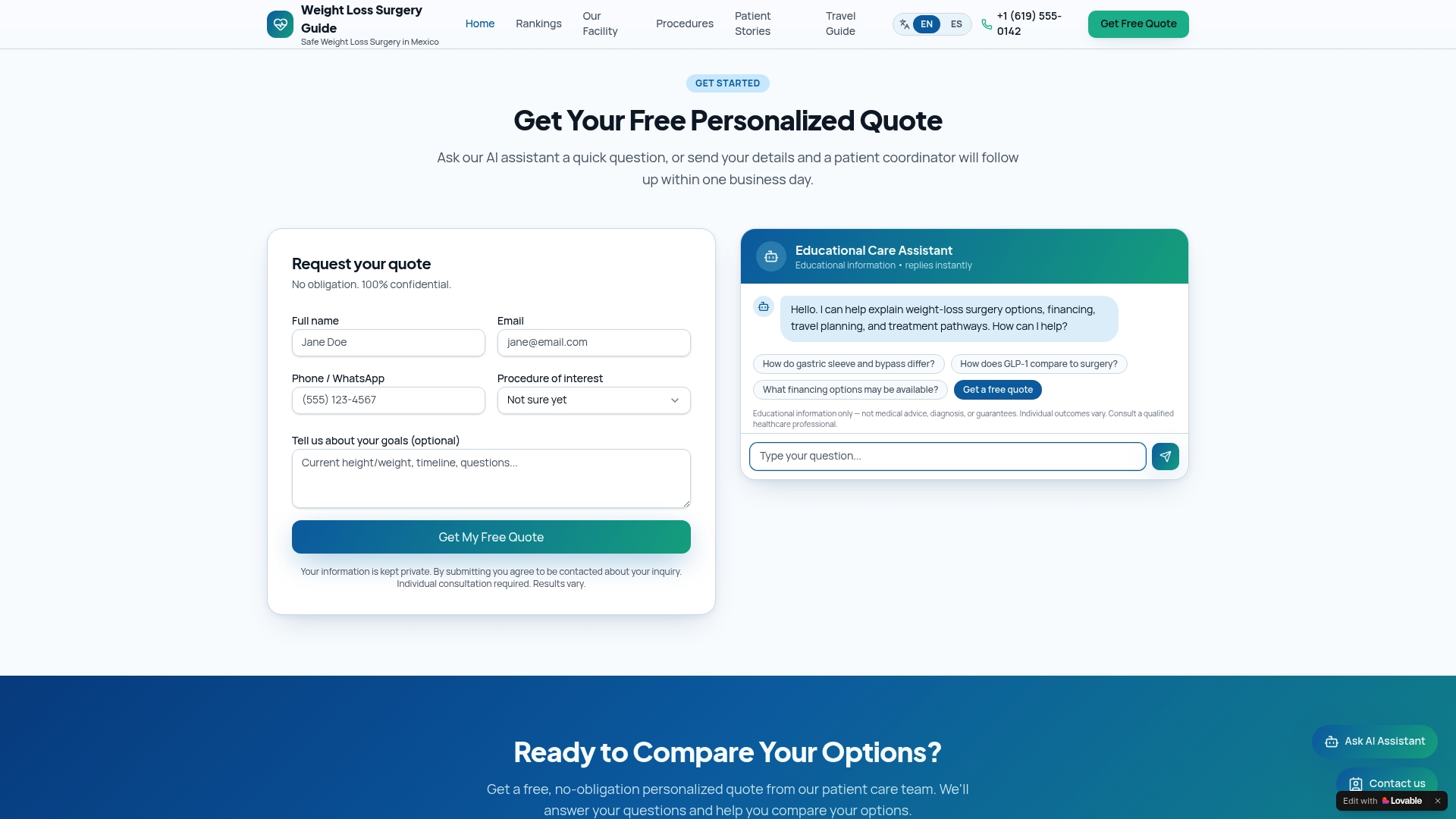
Weightlosssurgeryguide publishes the 2026 Tijuana bariatric provider rankings so you can compare surgeons and facilities using verified accreditation data, not marketing claims. The site also offers a dedicated financial planning guide covering payment options, insurance verification steps, and cost estimates for the most common procedures. If you are weighing surgical options or trying to understand what your checklist looks like for surgery abroad, Weightlosssurgeryguide is the starting point most U.S. patients use before making their decision.
FAQ
What BMI qualifies for weight loss surgery in the U.S.?
A BMI of 40 or higher qualifies without comorbidities. A BMI of 35 or higher qualifies with at least one significant obesity-related condition such as Type 2 diabetes or hypertension.
How long does insurance approval for bariatric surgery take?
Most insurance plans require 3–6 months of documented supervised weight loss before approving surgery. Starting the process early and keeping complete records shortens the overall timeline.
Do I need a psychological evaluation before bariatric surgery?
Yes. A psychological evaluation is a required step for virtually all bariatric programs. It assesses mental readiness and identifies any conditions that need to be addressed before surgery.
How soon after surgery do I go home?
Most patients are discharged after a 1–2 night hospital stay following sleeve gastrectomy or gastric bypass. Discharge depends on your ability to tolerate fluids and walk independently.
What vitamins do I need to take after weight loss surgery?
Bariatric patients require a daily multivitamin, calcium citrate, vitamin D, and vitamin B12 for life. These supplements prevent nutritional deficiencies that are common after surgery due to reduced food intake and absorption changes.