Bariatric Surgery Candidacy Explained for 2026
Published June 29, 2026

Bariatric surgery candidacy is defined by meeting specific body mass index thresholds and obesity-related health conditions, confirmed through a structured medical and psychological evaluation. The American Society for Metabolic and Bariatric Surgery (ASMBS) and the American Academy of Family Physicians both recognize BMI as the primary clinical benchmark, though comorbid conditions like type 2 diabetes, hypertension, and sleep apnea can qualify patients at lower thresholds. Bariatric surgery candidacy explained simply means: your weight and health history must meet clinical standards, and your body and mind must be ready for permanent change. This guide covers every layer of that process, from BMI cutoffs to insurance paperwork to what actually disqualifies candidates who look good on paper.
What are the detailed eligibility criteria for bariatric surgery?
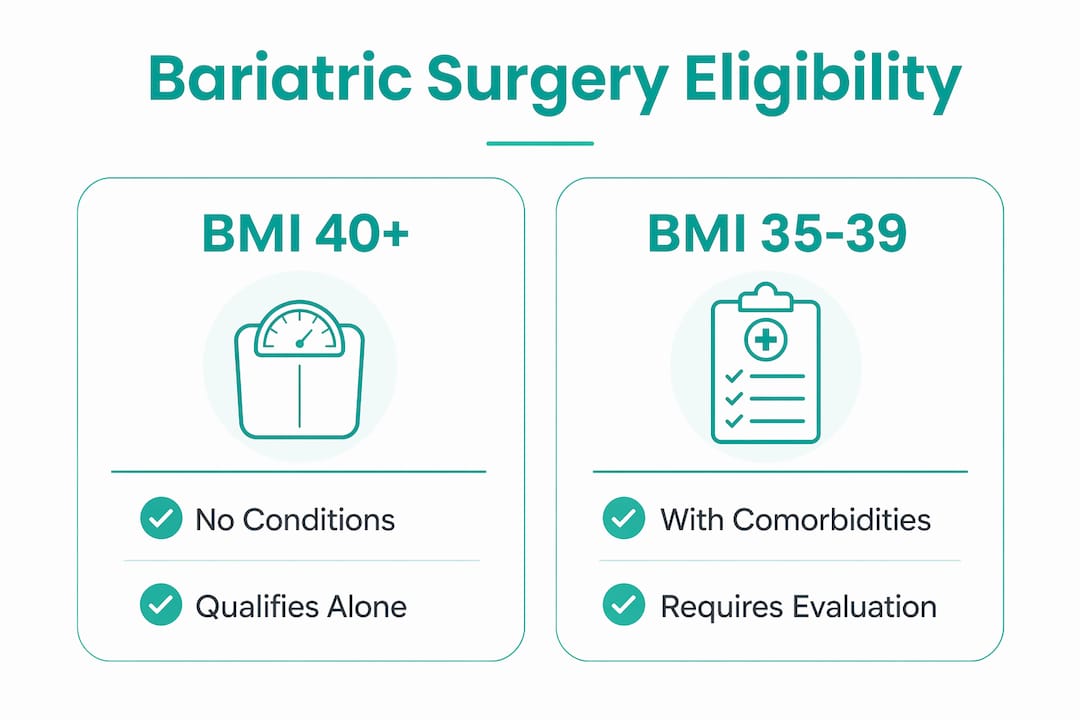
Standard eligibility for bariatric surgery is a BMI of 40 or higher, or a BMI of 35 or higher with at least one obesity-related comorbidity. That single rule covers the majority of candidates who qualify each year. Qualifying comorbidities include type 2 diabetes, hypertension, obstructive sleep apnea, and nonalcoholic fatty liver disease.
The 2022 ASMBS guidelines expanded bariatric surgery eligibility criteria beyond traditional thresholds. Surgery is now considered for patients with a BMI between 30 and 34.9 who have uncontrolled metabolic disease or who have failed other treatments. This shift reflects a broader clinical view: experts now treat bariatric surgery as a primary metabolic intervention, not a last resort.

Age is also a factor. Most programs accept adults 18 and older. Adolescent candidacy exists but requires additional criteria, including skeletal maturity and documented failure of supervised weight management programs. There is no universal upper age limit, though surgical risk increases with age and is evaluated case by case.
| BMI Range | Qualifying Condition | Notes |
|---|---|---|
| 40+ | None required | Qualifies without comorbidities |
| 35–39.9 | At least one obesity-related comorbidity | Diabetes, hypertension, sleep apnea |
| 30–34.9 | Uncontrolled metabolic disease or failed treatments | Per 2022 ASMBS updated guidelines |
| Under 30 | Not eligible under current guidelines | No approved surgical pathway |
Understanding bariatric surgery candidates also means recognizing what disqualifies someone at this stage. Active substance abuse disorders, uncontrolled psychiatric illness, and certain medical conditions that make anesthesia unsafe are automatic disqualifiers. Meeting the BMI number is necessary but not sufficient.
Pro Tip: If your BMI sits between 30 and 34.9, ask your physician specifically about the 2022 ASMBS metabolic criteria. Many patients in this range qualify and never know it.
What does the pre-surgery evaluation process involve?
Pre-surgery evaluation goes well beyond a single doctor’s visit. Evaluations include lab tests, nutritional counseling, and a psychological assessment to confirm medical and mental fitness for lifelong dietary changes. Each component serves a specific purpose in determining whether surgery is safe and appropriate for you.
The typical evaluation sequence looks like this:
- Lab work and medical testing. Blood panels, cardiac screening, and metabolic panels establish your baseline health. These results flag conditions that could complicate surgery or anesthesia.
- Reflux and gastrointestinal screening. Screenings for GERD and prior abdominal surgeries directly influence which procedure is recommended. A patient with severe GERD, for example, is typically steered away from gastric sleeve and toward gastric bypass.
- Nutritional counseling. A registered dietitian evaluates your current eating patterns and teaches the dietary framework you will follow after surgery. This is not optional. Programs at institutions like Northwell Health and UF Health require documented counseling sessions before approval.
- Psychological assessment. A licensed psychologist or psychiatrist evaluates your mental readiness, history of eating disorders, and ability to commit to permanent lifestyle changes. This step catches candidates who meet BMI criteria but are not psychologically prepared.
- Smoking and nicotine cessation. Active smoking is an automatic disqualifier in most programs. Nicotine elevates the risk of ulcers, poor wound healing, and serious postoperative complications. Most programs enforce a no smoking policy for several months before and after surgery.
The full evaluation process typically spans several weeks to months. Patients who try to rush it or skip components are routinely denied approval. Read more about what to expect from the full preoperative process.
Pro Tip: Bring a complete medication list and your full surgical history to your first evaluation appointment. Undisclosed prior abdominal surgeries are one of the most common reasons candidates face delays or procedure changes.
How do insurance and health system policies affect candidacy?
Insurance coverage for bariatric surgery varies significantly by plan and provider. Many insurance plans require a 6-month physician-supervised multidisciplinary weight loss program before approving surgery. That program must document diet changes, behavior management, and physical activity, typically 30–45 minutes of exercise, 3–5 times per week.
The administrative requirements alone can feel like a second job. Here is what most insurers demand:
- Documented weight loss attempts. You need a paper trail showing prior supervised efforts, not just self-reported dieting.
- Physician referral. Some plans require a referral from your primary care physician. Others allow self-referral directly to a bariatric program.
- Pre-authorization. Your bariatric team submits clinical documentation to your insurer for approval before any surgery date is set.
- Medicaid-specific rules. Medicaid candidates typically require a BMI of 35 or higher with comorbidities, or a BMI of 40 or higher without. State Medicaid programs vary, and some do not cover bariatric surgery at all.
| Requirement | Private Insurance | Medicaid |
|---|---|---|
| Supervised weight loss program | Usually 3–6 months | Varies by state |
| BMI threshold | 35+ with comorbidities or 40+ | 35+ with comorbidities or 40+ |
| PCP referral | Often required | Often required |
| Pre-authorization | Required | Required |
Financial planning is a real part of bariatric surgery requirements. Patients who cannot get insurance coverage often explore self-pay options, including surgery abroad. The financial planning guide at Weightlosssurgeryguide breaks down cost structures and payment options for US patients considering both domestic and international programs.
What lifestyle commitments determine long-term candidacy?
Bariatric surgery is not a procedure you recover from and return to your old life. Long-term success depends on sustained commitment to follow-up care and permanent lifestyle changes. Patients who treat surgery as a quick fix consistently show worse outcomes than those who engage fully with post-surgical support.
Clinical teams evaluate lifestyle readiness during the candidacy process. The following factors can disqualify candidates who otherwise meet BMI criteria:
- Unmanaged binge eating disorder. Surgery does not resolve the psychological drivers of disordered eating. Programs require evidence of treatment or management before approval.
- Lack of social support. Patients without a support system at home face higher rates of non-compliance and poor outcomes. Some programs require a support person to attend pre-surgery education sessions.
- Unwillingness to commit to follow-up. Post-surgical appointments, lab monitoring, and nutritional supplementation are lifelong. Candidates who signal they will not comply are denied approval.
- Preoperative weight gain. Gaining weight during the supervised pre-surgery period signals low commitment and can result in program dismissal.
Candidacy assessment is ongoing, requiring commitment to long-term multidisciplinary support for the best outcomes. That means working with a team that includes a surgeon, dietitian, psychologist, and primary care physician, not just showing up for the operation. The procedures guide at Weightlosssurgeryguide explains how different surgical options align with different patient profiles and lifestyle factors.
Metabolic and bariatric surgery can lead to remission of diabetes, hypertension, and sleep apnea, and may extend life expectancy by 5–9 years. That outcome depends entirely on the patient’s sustained engagement after surgery.
Key takeaways
Bariatric surgery candidacy requires meeting BMI and comorbidity thresholds, completing a full medical and psychological evaluation, and demonstrating a genuine commitment to permanent lifestyle change.
| Point | Details |
|---|---|
| Core BMI thresholds | BMI 40+ qualifies alone; BMI 35+ qualifies with at least one comorbidity like diabetes or sleep apnea. |
| Expanded 2022 criteria | Patients with BMI 30–34.9 may qualify if they have uncontrolled metabolic disease or failed other treatments. |
| Pre-surgery evaluation | Lab work, GERD screening, nutritional counseling, and psychological assessment are all required before approval. |
| Insurance requirements | Most plans require a 6-month supervised weight loss program with documented diet, behavior, and exercise compliance. |
| Lifestyle commitment | Smoking, unmanaged eating disorders, and unwillingness to follow up are disqualifiers regardless of BMI. |
What I have learned about approaching candidacy realistically
Candidacy is not a checkbox you clear once and move on. It is an ongoing process, and the programs that produce the best outcomes treat it that way.
The most common mistake I see prospective patients make is treating the evaluation as a hurdle to get past rather than a foundation to build on. The psychological assessment, the nutritional counseling, the supervised weight loss period: these are not bureaucratic obstacles. They are the infrastructure that determines whether surgery changes your life or just your weight for a year.
The second thing I want to be direct about: do not underestimate the smoking and nicotine requirement. Patients routinely assume they can taper off a week before surgery and pass screening. Programs at institutions like UF Health enforce verified cessation for months, not days. Nicotine testing is standard.
Choosing the right program matters as much as meeting the criteria. A multidisciplinary team that includes a bariatric surgeon, a registered dietitian, a psychologist, and a follow-up coordinator is the structure that produces durable results. If a program skips any of those components, that is a red flag. The program evaluation guide at Weightlosssurgeryguide gives you specific questions to ask before committing to any surgical team.
Candidacy is the beginning of the process, not the finish line. Treat it that way.
— Ariel
Find trusted bariatric surgery providers for 2026
Weightlosssurgeryguide is built for US patients who want clear, verified information before making a surgical decision.
The 2026 Tijuana bariatric rankings compare accredited surgeons and hospitals by procedure type, outcomes, and patient experience, so you can evaluate providers the same way you would evaluate any major medical decision. US patients who choose internationally accredited programs in Tijuana typically save 60–75% compared to domestic pricing without sacrificing clinical standards. If you are weighing surgery against GLP-1 medications, the GLP-1 vs bariatric surgery comparison gives you a direct, evidence-based breakdown of long-term outcomes for both paths.
FAQ
Who qualifies for bariatric surgery?
Patients with a BMI of 40 or higher qualify without additional conditions. Patients with a BMI of 35 or higher qualify with at least one obesity-related comorbidity such as type 2 diabetes, hypertension, or sleep apnea.
Can I qualify with a BMI under 35?
Yes. The 2022 ASMBS guidelines allow candidacy for patients with a BMI between 30 and 34.9 who have uncontrolled metabolic disease or who have not responded to non-surgical treatments.
Does smoking disqualify me from bariatric surgery?
Active smoking or nicotine use disqualifies candidates at most programs. Clinical teams require verified cessation for several months before surgery to reduce the risk of ulcers, poor wound healing, and other complications.
How long does the pre-surgery process take?
The evaluation and preparation process typically takes several months. Many insurance plans require a 6-month supervised weight loss program before approving surgery, which sets the minimum timeline for most insured patients.
Am I a candidate for bariatric surgery if my insurance denies coverage?
Yes. Patients who meet clinical criteria but face insurance denials can pursue self-pay options, including internationally accredited programs. Weightlosssurgeryguide covers financial planning options and provider comparisons for patients in this situation.