Bariatric Surgery Consultation Checklist: 2026 Guide
Published June 29, 2026

A bariatric surgery consultation checklist is a structured preparation tool that helps you gather critical medical information, confirm your candidacy, ask the right questions, and plan financially before your first appointment. Most patients arrive underprepared and leave with unanswered questions that delay their surgery by weeks. This guide gives you every item you need to walk into that consultation ready, organized, and confident. The checklist covers eligibility criteria, required documents, questions for your surgical team, insurance steps, and final pre-op instructions.
1. Key eligibility criteria to confirm before your consultation
Bariatric surgery eligibility follows NIH-based BMI thresholds: a BMI over 40, or a BMI over 35 with at least one obesity-related condition. Those conditions include type 2 diabetes, sleep apnea, high blood pressure, and gallbladder disease. Knowing where you stand before the consultation saves time and sets realistic expectations.
Psychiatric and substance use history also affects eligibility. Programs like Penn Medicine screen for active eating disorders, untreated depression, and recent substance use. Psychological screening is a required part of the pre-op interdisciplinary assessment, not an optional add-on. Clarifying how your program handles mental health and substance use history prevents surprises and delays.

The full pre-op process typically takes 3–6 months due to insurance requirements and required testing. That timeline includes nutrition education, psychological consultation, physical health assessments, and lifestyle coaching. Plan your work and personal schedule around this window from day one.
Eligibility checklist items to confirm:
- BMI measurement and classification (over 40, or over 35 with comorbidities)
- Documented obesity-related conditions: diabetes, sleep apnea, hypertension, or gallbladder disease
- Psychiatric clearance and psychological evaluation requirements
- Substance use and smoking screening policies at your program
- Insurance referral and pre-authorization criteria
Pro Tip: Ask your program coordinator exactly which tests are required for insurance approval before your first appointment. Getting this list early prevents you from repeating labs or missing a required screening.
2. What documents and medical records to bring
The first bariatric consultation is a comprehensive evaluation. The team reviews your medical history, chronic conditions, previous surgeries, and upcoming testing needs. Arriving with organized records makes that review faster and more accurate.
Bring a complete, current medication list with dosages. Include records of previous surgeries, hospitalizations, and any obesity-related diagnoses. Your weight and diet history should be detailed, not just raw numbers. Include which diets you tried, for how long, and what results you achieved. That detail helps the team tailor your pre-op and post-op plan.
Also bring documentation of sleep apnea diagnoses or reflux symptoms, since both affect procedure selection. Recent lab work, imaging results, and your insurance card round out the essentials. Bringing these records avoids duplicate testing and speeds up the insurance approval process.
Documents to organize before your appointment:
- Full medication list with dosages and prescribing physicians
- Records of previous surgeries and hospitalizations
- Detailed weight history and prior diet or weight-loss program attempts
- Recent lab results (within the past 6–12 months)
- Sleep apnea diagnosis, CPAP records, or reflux symptom history
- Insurance card and referral documentation
- Contact information for your primary care physician
Pro Tip: Organize your documents chronologically or by category in a folder or binder. Bring both physical copies and digital versions on your phone. Surgical teams move quickly during consultations, and easy access to your records keeps the conversation focused.
3. Essential questions to ask your bariatric surgeon
Asking the right questions is the most underused part of bariatric surgery preparation. NJ Advanced Surgery emphasizes that candid, personalized procedure discussion is the foundation of a productive consultation. Generic questions get generic answers. Specific questions get specific answers that help you decide.
Write your questions down before the appointment. Bring a notebook or use your phone to record answers. You will not remember everything said in a 45-minute consultation.
Questions to ask your surgeon and care team:
- Which procedure do you recommend for me specifically, and why?
- What weight loss outcomes are realistic for my BMI and health profile, and over what timeline?
- How will surgery affect my hunger, digestion, and conditions like type 2 diabetes or sleep apnea?
- What are the most common complications, and what are my personal risk factors?
- What does the hospital stay look like, and what is the typical recovery period?
- What vitamins, supplements, and nutritional changes will I need for life after surgery?
- How does your program handle follow-up care, and how often will I be seen after surgery?
- What does the post-surgery recovery timeline look like week by week?
- What are the insurance coverage details, and what costs will I pay out of pocket?
- Does your program require a psychological evaluation, and what does that process involve?
- How does your team handle patients who need revision surgery?
Understanding the full range of bariatric surgery procedures before your consultation helps you ask sharper questions about why one option fits your case better than another.
4. Financial, insurance, and logistical preparations
Insurance approval for bariatric surgery follows strict criteria tied to NIH eligibility standards. Most insurers require a referral from your primary care physician plus documented proof of prior weight-loss efforts. Documented weight-loss efforts typically need to span at least six months before insurers will authorize the procedure. Starting that documentation early is one of the highest-leverage steps you can take before your consultation.
Pre-authorization also requires specific lab tests, a psychological assessment, and often a smoking or drug screening. Each of these takes time to schedule and complete. Missing one item can push your surgery date back by weeks.
Insurance and financial preparation checklist:
- Confirm your insurance plan covers bariatric surgery and obtain your policy’s specific criteria
- Get a referral from your primary care physician before the consultation
- Start documenting weight-loss efforts immediately, including dates, programs, and results
- Schedule required pre-authorization tests: labs, psychological evaluation, and substance screening
- Request a cost estimate from the surgical program for out-of-pocket expenses
- Review bariatric surgery financing options if insurance coverage is partial or unavailable
- Confirm the program’s timeline for insurance submission and expected approval window
Patients traveling for surgery face additional logistical steps. The bariatric travel preparation checklist from Weightlosssurgeryguide covers scheduling, accommodation, and post-op travel timing for US patients heading to Tijuana.
5. Final pre-surgery checklist before hospital admission
The days immediately before surgery require precise preparation. Cleveland Clinic and Penn Medicine describe a staged liquid diet starting roughly two weeks before surgery. No solid food is allowed after midnight before your procedure. Clear liquids are typically permitted up to two hours before your scheduled arrival time. Follow your surgical team’s specific instructions exactly, since deviations can result in cancellation.
Arrive at the hospital 2–3 hours before your scheduled surgery time. Shower the night before and the morning of surgery using antibacterial soap, as directed by your team. This reduces infection risk. Leave jewelry, valuables, and unnecessary items at home.
Final pre-op checklist:
- Follow the liquid diet protocol starting on the date your surgeon specifies
- Stop eating solid food after midnight the night before surgery
- Shower with antibacterial soap the night before and morning of surgery
- Arrange transportation to and from the hospital (you cannot drive yourself home)
- Pack a hospital bag: loose comfortable clothing, phone charger, insurance card, and ID
- Arrange post-op care at home for at least the first week, including help with meals and mobility
- Report any fever, chest pain, blood sugar irregularities, or illness to your surgical team immediately
- Call the surgical team the day before to confirm your arrival time and last-minute instructions
Pro Tip: Write down your surgical team’s after-hours contact number and keep it accessible on your phone. If anything feels off in the 24 hours before surgery, call before assuming it is minor. Last-minute cancellations due to unreported symptoms are more common than patients expect.
Long-term success after bariatric surgery depends on ongoing lifestyle changes, including vitamin and supplement adherence and consistent follow-up care. The pre-op checklist is the foundation, but the commitment continues well past surgery day.
Key takeaways
A thorough bariatric surgery consultation checklist covering eligibility, documentation, questions, insurance steps, and pre-op instructions is the single most effective way to reduce delays and improve your surgical outcome.
| Point | Details |
|---|---|
| Confirm eligibility early | Know your BMI classification and comorbidities before your first appointment. |
| Bring organized records | Detailed weight history and medication lists help the team tailor your plan from day one. |
| Ask specific questions | Procedure recommendations, risks, recovery, and costs should all be addressed during consultation. |
| Start insurance documentation now | Six months of documented weight-loss efforts is a standard insurance requirement. |
| Follow pre-op instructions precisely | Liquid diet timing and fasting rules are non-negotiable and deviations can cancel your surgery. |
What I have learned from watching patients prepare for bariatric consultations
Most patients treat the first consultation like a doctor’s appointment. They show up, answer questions, and wait to be told what to do. That approach works for a routine checkup. It does not work for bariatric surgery.
The patients who move through the process fastest are the ones who arrive with a folder, a list of questions, and a clear understanding of their insurance requirements. They have already called their insurer. They know their BMI. They have written down every diet they tried in the past five years. The surgical team notices immediately, and the consultation becomes a planning session instead of an intake interview.
The biggest mistake I see is patients underestimating the psychological component. The interdisciplinary readiness review is not a formality. Programs use it to identify eating behaviors, emotional triggers, and mental health factors that directly affect long-term outcomes. Patients who dismiss it or try to rush through it often struggle more after surgery.
The second most common mistake is ignoring the timeline. The 3–6 month pre-op process catches people off guard when they have a vacation, a work deadline, or a family event in the middle of it. Map the full timeline before you commit to a start date. That single step eliminates most scheduling conflicts.
Preparation is not just about paperwork. It is about arriving at surgery mentally ready, physically prepared, and logistically organized. Patients who do that work before the consultation consistently report feeling more confident and less anxious on surgery day.
— Ariel
Weightlosssurgeryguide: resources to support your preparation
Preparing for bariatric surgery is a multi-month process with a lot of moving parts. Weightlosssurgeryguide exists to make that process clearer and less stressful for US patients considering surgery in Mexico.
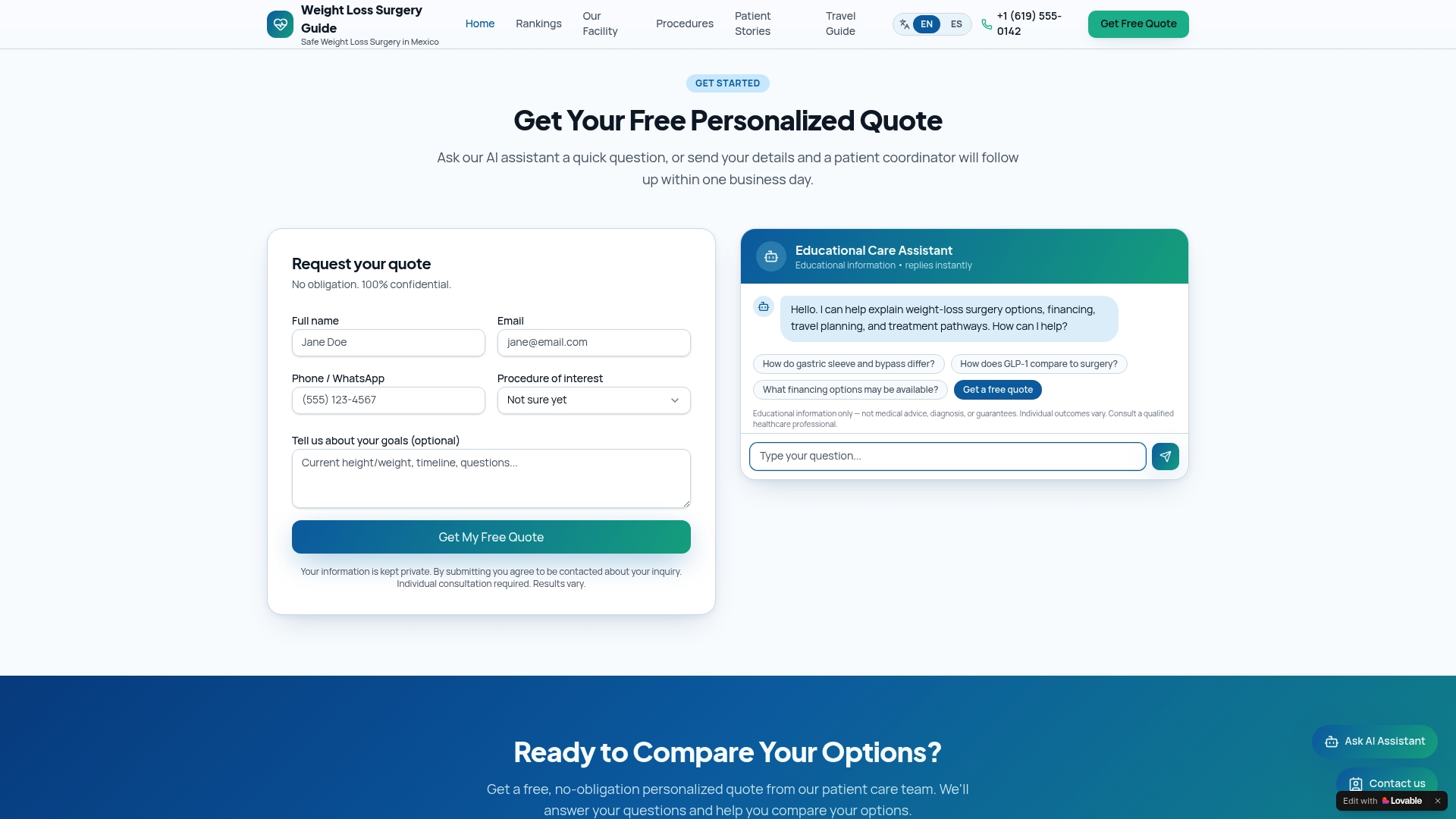
The site offers detailed procedure comparisons, accreditation explanations, and financial planning tools built specifically for patients weighing their options. For patients ready to compare providers, the 2026 Tijuana bariatric surgery rankings list accredited surgeons and hospitals with transparent patient-focused criteria. US patients traveling for surgery can save 60–75% compared to domestic costs while accessing internationally accredited care. Weightlosssurgeryguide gives you the information to make that decision with confidence.
FAQ
What is a bariatric surgery consultation checklist?
A bariatric surgery consultation checklist is a preparation guide that helps patients organize their medical records, confirm eligibility, prepare questions, and understand insurance and financial requirements before meeting with a surgical team.
How long does the bariatric surgery pre-op process take?
The pre-op process typically takes 3–6 months due to insurance requirements, required testing, and interdisciplinary team appointments including nutrition and psychological consultations.
What documents should I bring to my bariatric consultation?
Bring a full medication list, records of previous surgeries, detailed weight and diet history, recent lab results, sleep apnea or reflux documentation, and your insurance card and referral paperwork.
Do I need a psychological evaluation for bariatric surgery?
Yes. Psychological evaluation is a required component of the pre-op process at most accredited programs. It screens for eating disorders, substance use, and mental health factors that affect both eligibility and long-term outcomes.
What are the BMI requirements for bariatric surgery?
Standard eligibility requires a BMI over 40, or a BMI over 35 with at least one obesity-related condition such as type 2 diabetes, sleep apnea, high blood pressure, or gallbladder disease.