Follow-Up Care After Mexico Surgery: 2026 Guide
Published July 11, 2026

Follow-Up Care After Mexico Surgery: 2026 Guide
Medically reviewed by the Weightlosssurgeryguide editorial team | Last reviewed: june 2026
This article is for educational purposes only and does not constitute medical advice. Always consult your surgical team and a licensed healthcare provider for guidance specific to your condition.
Follow-up care after Mexico surgery is the structured process of monitoring your recovery, managing symptoms, and coordinating with healthcare providers after returning home to the US or Canada. Patients who skip or delay this care face a significantly higher risk of complications, including wound infections, blood clots, and nutritional deficiencies. The gap between your Mexican surgical team and your local doctor is real, but it is manageable with the right preparation. Weightlosssurgeryguide has compiled this guide specifically for American and Canadian patients navigating post-operative care after bariatric surgery in Mexico.
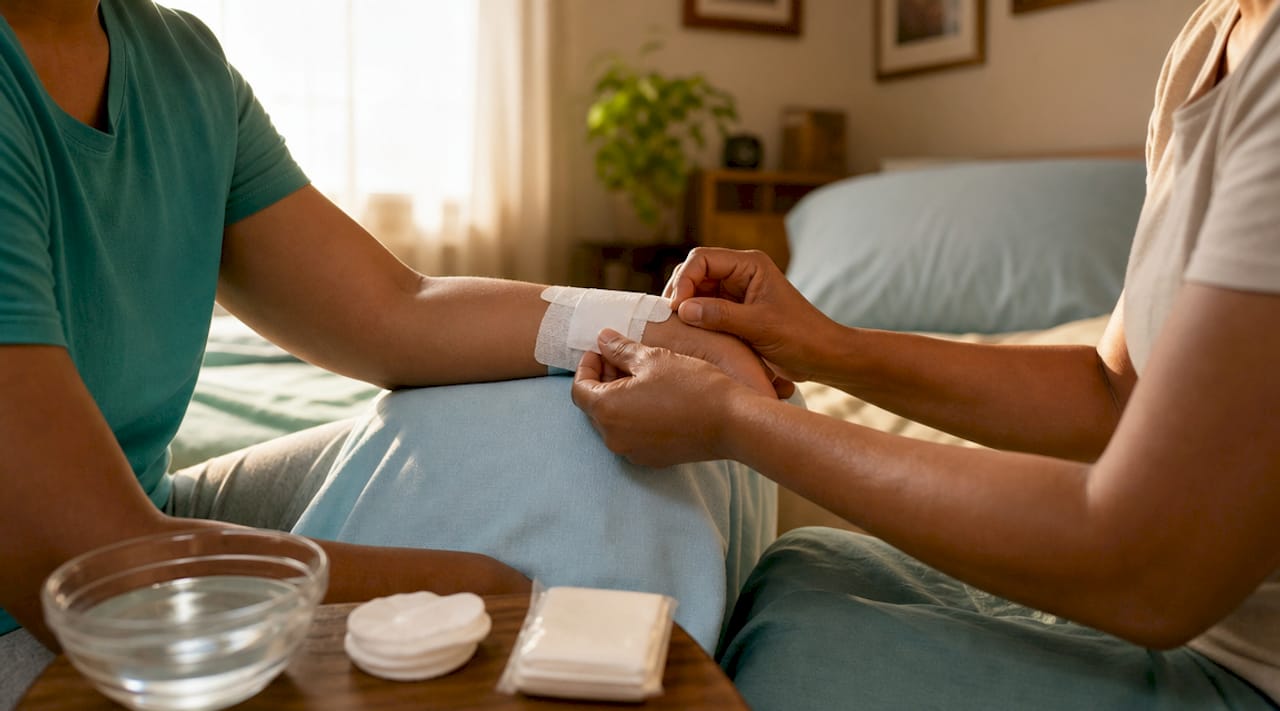
What follow-up care after Mexico surgery actually requires
Effective post-operative care after bariatric surgery in Mexico starts before you board your flight home. The single biggest mistake patients make is assuming their discharge paperwork is enough. Discharge summaries alone are insufficient for local follow-up. Full operative reports, including suture types, staple line details, and implant specifications, are what local surgeons actually need to manage complications or revisions.
What documents to collect before leaving Mexico
Request the following before you check out of your surgical facility:
- Full operative report (not just the discharge summary): includes the exact surgical technique, staple line reinforcement method, and any mesh or device used
- Anesthesia record: relevant if you experience unusual reactions or need future procedures
- Medication list with dosages: your Mexican team's prescriptions may differ from what local pharmacies stock
- Lab results: pre-op and post-op bloodwork gives your local doctor a baseline
- Hardware ID cards: if any implant or device was placed, local doctors need serial numbers and manufacturer details to manage revisions or complications
Pro Tip: Ask your surgical coordinator to provide all records in English, or request a certified translation before you leave. A document in Spanish alone will slow down your care at home.
Taking daily high-resolution photos of your incisions starting on day one creates a visual medical record no local provider can get any other way. These photos help your home doctor detect early infection signs that are invisible without a baseline comparison.
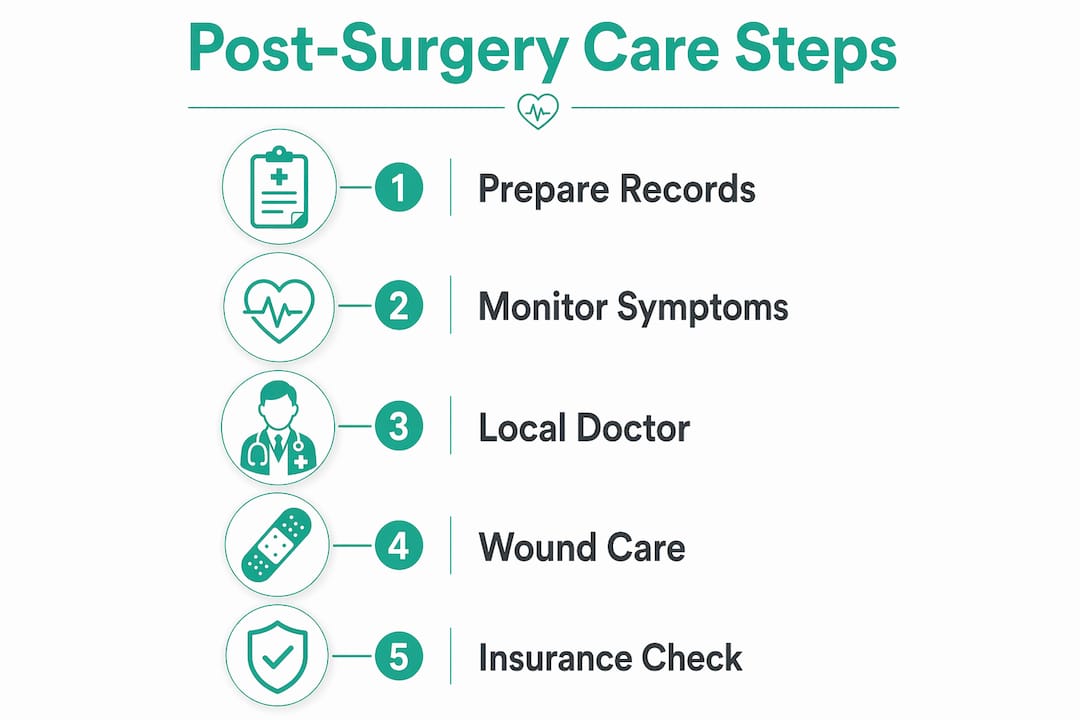
| Document | Why it matters |
|---|---|
| Full operative report | Lets local surgeons understand exactly what was done |
| Hardware ID card | Required for implant tracking and revision planning |
| Post-op lab results | Establishes nutritional and metabolic baseline |
| Medication list | Prevents dangerous drug substitutions at home |
| Incision photos (daily) | Creates objective visual record for remote assessment |
How do you monitor symptoms and detect complications after surgery?
Recognizing the difference between normal recovery and a warning sign is the most critical skill you can develop in your first two weeks home. Most patients feel some pain, fatigue, and mild swelling. Those are expected. What is not expected are the signs below.
Red flags that require immediate medical attention
- Fever over 101°F (38.3°C): a fever at this level signals possible infection or pneumonia and requires same-day evaluation, not a wait-and-see approach
- Spreading redness or warmth around the incision: this pattern suggests a wound infection that can escalate quickly
- Increased or foul-smelling drainage: clear fluid is normal; cloudy, yellow, or green discharge is not
- Severe or uncontrolled abdominal pain: pain that does not respond to prescribed medication warrants urgent evaluation
- Inability to keep fluids down for more than 24 hours: dehydration after bariatric surgery becomes dangerous fast
Blood clots are a leading cause of preventable death after surgery. Symptoms like calf swelling, leg pain, chest pain, or sudden shortness of breath require you to call 911 immediately. Early movement and hydration are the two most effective tools for reducing deep vein thrombosis risk during your recovery.
Wound care basics that prevent most infections
Proper incision care means keeping bandages dry, washing your hands before touching the area, and avoiding soaking in baths, pools, or hot tubs until your surgeon explicitly clears you. Infections are significantly more likely when bandages get wet or dirty. Change dressings on the schedule your surgical team provided, and never skip a change because the wound "looks fine."
Pain management also affects your safety. Keeping pain around a 3 out of 10 lets you move, breathe deeply, and stay hydrated. Patients who undermedicate often stay still too long, which raises blood clot and pneumonia risk. Take prescribed pain medication on a schedule, not only when pain becomes unbearable.
How to transition your care from Mexico to a US or Canadian provider
Returning home does not mean your surgical team disappears. The best outcomes come from bridging communication between your Mexican surgeon and your local provider. That handover requires active effort from you.
Steps to coordinate your local follow-up
- Find a local bariatric-experienced provider before surgery. Ideally, identify a surgeon or internist familiar with bariatric procedures before you travel. Many US and Canadian cities have bariatric centers that accept post-op patients from abroad.
- Schedule your first local appointment within one week of returning home. Bring your full operative report, medication list, and incision photos to this visit.
- Request a telemedicine consultation with your Mexican surgeon. Most accredited facilities in Tijuana offer remote follow-up. Use it. Your Mexican team knows exactly what they did and can advise your local provider directly.
- Share everything in writing. Email your operative notes and medication list to your local doctor before your first appointment. Do not rely on verbal summaries.
- Clarify suture removal timing. Some sutures dissolve on their own. Others require removal at 7–14 days. Confirm this with your Mexican team and communicate the timeline to your local provider.
Pro Tip: Use the bariatric surgery consultation checklist from Weightlosssurgeryguide to prepare for your first local follow-up appointment. It covers the exact questions your home doctor needs answered.
Understanding insurance for surgery abroad
Medical travel insurance designed for surgery abroad covers complications that arise either in Mexico or after you return home, within a defined post-procedure window. Standard domestic insurance in the US and Canada frequently excludes elective procedures performed outside the country. Review your policy before surgery, not after. If your domestic plan excludes international procedures, a medical travel policy is not optional.
Flying soon after surgery raises blood clot risk. Many bariatric surgeons recommend waiting 3–4 weeks before taking long flights. If you must fly sooner, stay hydrated, wear compression stockings, and walk the aisle every hour.
What are the best practices for diet, activity, and self-care at home?
Recovery at home is where most patients either protect their results or undermine them. The rules are straightforward, but they require consistency.
Physical activity during recovery
- Start walking the day you get home. Short, slow walks every few hours prevent blood clots and support digestion. Distance does not matter at first. Movement does.
- Avoid lifting anything over 10 pounds for at least four weeks. This protects your staple line and incisions from internal stress.
- Do not drive while taking opioid pain medication. Beyond the legal issue, impaired reaction time puts you at risk.
- Hold off on vigorous exercise for six weeks minimum. Running, cycling, and resistance training all create abdominal pressure that can disrupt healing.
Diet and hydration after bariatric surgery
Follow your surgeon's prescribed diet progression without shortcuts. Most gastric sleeve and bypass patients move through four stages: clear liquids, full liquids, pureed foods, and soft foods before reaching a modified solid diet. Skipping stages strains your new anatomy and raises the risk of leaks or strictures.
Hydration is non-negotiable. Aim for at least 64 ounces of water daily, sipped slowly throughout the day. Carbonated drinks, alcohol, and caffeine are off-limits during initial recovery. Alcohol in particular metabolizes differently after bariatric surgery and carries a higher addiction risk than before the procedure.
- Avoid smoking entirely. Smoking constricts blood vessels, slows wound healing, and raises the risk of ulcers at the staple line.
- Take all prescribed supplements. Bariatric surgery changes how your body absorbs vitamins. Skipping supplements leads to deficiencies in B12, iron, and vitamin D within months.
- Track your symptoms daily. Use a simple notebook or phone app to log pain levels, fluid intake, and any new symptoms. This record becomes valuable at your first local follow-up visit.
Key takeaways
Effective follow-up care after Mexico surgery requires complete documentation, active symptom monitoring, coordinated handover to a local provider, and strict adherence to diet and activity guidelines from day one.
| Point | Details |
|---|---|
| Collect full operative records | Discharge summaries are not enough; get the complete operative report before leaving Mexico. |
| Monitor for red flags daily | Fever over 101°F, spreading redness, or chest pain require immediate medical attention. |
| Bridge your care proactively | Schedule a local bariatric follow-up within one week and share all records in advance. |
| Follow diet stages exactly | Skipping post-op diet phases raises the risk of leaks, strictures, and poor weight loss. |
| Verify your insurance coverage | Standard domestic plans often exclude abroad procedures; medical travel insurance fills this gap. |
What I have learned about follow-up care after surgery abroad
Patients consistently underestimate how much work the post-op period requires. The surgery itself is the easy part. What happens in the six weeks after you land at home determines whether your results hold or unravel.
The most common pitfall I see is patients who arrive home without a local provider lined up. They assume their primary care doctor will handle it. Most primary care physicians are not equipped to manage bariatric post-op care, and they will tell you that directly. You need someone with bariatric experience, and you need them identified before you travel.
The second pitfall is documentation gaps. Patients hand their local doctor a one-page discharge summary and wonder why the doctor seems uncertain. A local surgeon managing a complication needs to know the exact staple height used, whether the staple line was reinforced, and what type of suture closed the skin. That level of detail does not appear on a discharge summary. It lives in the operative report. Get it.
The third thing I have seen make a real difference is photo documentation. Patients who photograph their incisions daily give their remote Mexican surgeon and local provider something concrete to evaluate. One patient I know avoided a second surgery because her daily photos showed a wound that was healing slowly but consistently. Her local doctor, seeing the trend, chose monitoring over intervention. That visual record was the deciding factor.
Advocate for yourself loudly and specifically. Bring your records, bring your photos, and bring a list of questions written down before every appointment. Doctors respond to prepared patients with more thoroughness. That is not a criticism of physicians. It is how the system works, and you can use it to your advantage.
— Ariel
Trusted resources for your bariatric surgery planning and recovery
Choosing a verified provider in Tijuana is the first step toward a recovery that goes smoothly. Weightlosssurgeryguide publishes the 2026 Tijuana bariatric rankings to help American and Canadian patients compare accredited hospitals and surgeons based on outcomes, accreditation status, and patient feedback.
Providers listed in the Weightlosssurgeryguide rankings are evaluated against international accreditation standards, including JCI and SRC criteria. You can review the accreditation standards explained to understand exactly what those credentials mean for your safety and follow-up support. Patients who choose accredited facilities consistently report better access to post-op telemedicine, English-language records, and coordinated care handover. That access makes the difference between a smooth recovery and a preventable complication.
FAQ
What documents should I get before leaving my Mexico surgical facility?
Request the full operative report, anesthesia record, post-op lab results, medication list, and any implant or hardware ID cards. A discharge summary alone does not give local providers enough detail to manage complications.
How soon should I see a local doctor after returning from Mexico?
Schedule your first local follow-up within one week of returning home. Bring your operative report, incision photos, and medication list to that appointment.
What are the warning signs of a blood clot after bariatric surgery?
Calf swelling, leg pain, chest pain, and sudden shortness of breath are all blood clot warning signs. These symptoms require calling 911 immediately, not a call to your surgeon's office.
Does my US or Canadian insurance cover complications from surgery in Mexico?
Standard domestic insurance frequently excludes elective procedures performed abroad. Medical travel insurance designed for surgery abroad covers complications both in Mexico and after you return home within a defined window.
How long should I wait before flying home after bariatric surgery in Mexico?
Many bariatric surgeons recommend waiting 3–4 weeks before long flights to reduce blood clot risk. If you must fly sooner, wear compression stockings, stay hydrated, and walk the aisle regularly during the flight.
Sources: Midlands Clinic, TravellerMD, University of Utah Health, Avia Protect, Acibadem International Hospitals. Full references available at Weightlosssurgeryguide references.
This content is educational and does not replace personalized medical advice from a licensed provider. Consult your surgical team before making any decisions about your recovery.