Gastric Sleeve Outcomes Mexico: What the Data Shows
Published July 20, 2026
Gastric Sleeve Outcomes Mexico: What the Data Shows
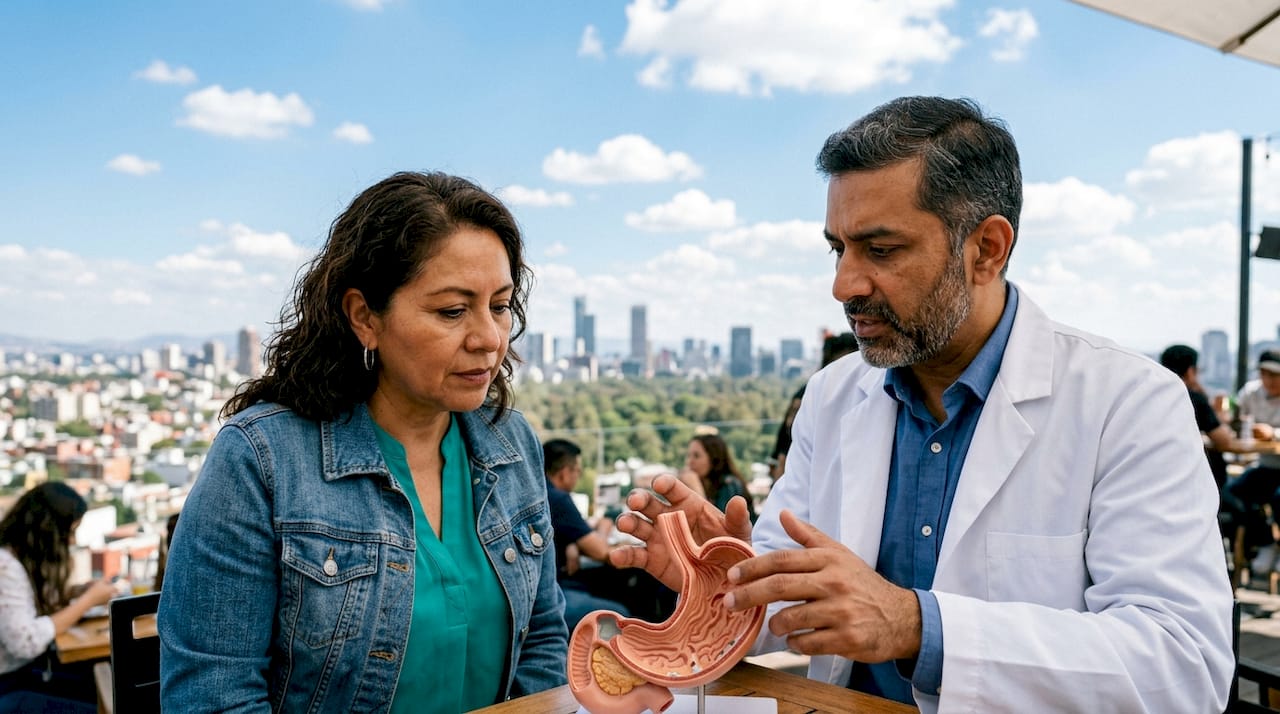
Gastric sleeve surgery in Mexico is defined as a laparoscopic procedure that removes roughly 80% of the stomach, reducing capacity and cutting hunger hormone levels by up to 90%. Patients at accredited Mexican centers lose 60–70% of excess body weight within the first year, with sustained results at five years. The surgery also triggers measurable metabolic improvements, including type 2 diabetes remission in up to 70% of patients. Understanding gastric sleeve outcomes Mexico requires looking at weight loss data, complication rates, and metabolic benchmarks together, not just the price tag.
1. What is the average weight loss after gastric sleeve surgery in Mexico?
Patients lose approximately 58–62% of excess body weight at the five-year mark after gastric sleeve surgery in Mexico. Some studies show up to 70% excess weight loss within the first 12 months. That early surge reflects both the stomach restriction and the dramatic drop in ghrelin, the hormone that drives hunger.

Three factors shape how much weight any individual patient loses: starting BMI, age at surgery, and adherence to post-op dietary guidelines. Patients with a BMI above 50 tend to lose a higher absolute number of pounds but a lower percentage of excess weight. Younger patients generally maintain results longer.
| Milestone | Average Excess Weight Loss |
|---|---|
| 6 months | 40–50% |
| 12 months | 60–70% |
| 3 years | 55–65% |
| 5 years | 58–62% |
Weight loss typically peaks around 12–18 months after surgery. Long-term maintenance depends heavily on dietary compliance. Research shows 10–30% of patients experience some weight regain after the 18-month nadir. That figure is not a failure rate. It is a reminder that surgery is a tool, not a permanent fix without lifestyle support.
Pro Tip: Ask your surgeon for their center's five-year excess weight loss data specifically, not just their one-year numbers. The gap between those two figures tells you a lot about their follow-up program.
2. How do gastric sleeve outcomes in Mexico compare to the US and Canada?
Mexico delivers outcomes comparable to US standards at a fraction of the cost. Accredited centers in Tijuana and Guadalajara report weight loss percentages and complication rates that match published benchmarks from American and Canadian programs. The cost difference, not the quality difference, is what drives North Americans across the border.
Key advantages for patients traveling from the US and Canada include:
- Cost savings of 60–75% compared to out-of-pocket pricing in the US or Canada, with all-inclusive gastric sleeve packages in Mexico typically covering surgery, hospital stay, and post-op support.
- Shorter wait times. Canadian patients face publicly funded wait lists that can stretch 12–24 months. Mexico offers scheduling within weeks.
- Bilingual care. Top Tijuana centers employ English-speaking surgeons and nursing staff, removing the language barrier that concerns many American and Canadian patients.
- Proximity. Tijuana sits minutes from the San Diego border crossing, making it the most accessible international surgical destination for patients from the western US.
- Comparable accreditation. Leading Mexican bariatric centers hold certifications from bodies such as CMCOEM, the Mexican Council of Bariatric and Metabolic Surgery, which sets standards equivalent to those used by the American Society for Metabolic and Bariatric Surgery (ASMBS).
The data does not support the assumption that lower cost means lower quality at accredited facilities. The gap exists because of lower operating costs, not lower standards.
3. What metabolic health improvements do patients experience?
Weight loss is the visible result. Metabolic improvement is the medical result, and it is often more significant for long-term health. Gastric sleeve surgery in Mexico produces measurable changes in multiple disease markers within months of the procedure.
Patients experience up to 70% remission of type 2 diabetes within 6–12 months after surgery. That remission often occurs before patients have lost their full target weight, which points to hormonal and gut-signaling changes beyond simple caloric restriction. Sleep apnea improves or resolves in over 80% of patients after significant weight loss. Blood pressure and cholesterol levels also drop substantially in most patients within the first year.
The mechanism behind these changes is partly structural and partly hormonal. Ghrelin reduction of up to 90% after surgery reduces appetite signals to the brain. That shift in gut hormones also improves insulin sensitivity independently of weight loss.
Pro Tip: If you are managing type 2 diabetes, bring your current medication list to your pre-op consultation. Many patients reduce or eliminate diabetes medications within the first few months post-surgery, and your prescribing doctor needs to know.
Key metabolic improvements documented after gastric sleeve surgery:
- Type 2 diabetes remission in up to 70% of patients within 12 months
- Sleep apnea resolution or significant improvement in over 80% of patients
- Reduction in LDL cholesterol and triglycerides
- Lower systolic and diastolic blood pressure
- Reduced cardiovascular disease risk markers
4. What are the safety outcomes and risks of gastric sleeve surgery in Mexico?
Safety at accredited Mexican bariatric centers is well-documented. The staple-line leak rate, the most serious technical complication in sleeve gastrectomy, sits at as low as 0.17% at high-volume centers. That figure comes from MBSAQIP registry analysis and reflects what top-tier programs achieve.
A Mexican cohort study of 500 bariatric surgery patients reported zero mortality, with early complications at 9.8% and late complications at 12.2%. Those numbers match US and European benchmarks. The data shows that facility selection, not geography, determines safety outcomes.
| Complication Type | Rate |
|---|---|
| Staple-line leak | 0.17% (high-volume centers) |
| Early complications | ~9.8% |
| Late complications | ~12.2% |
| Mortality | Near zero |
One risk worth knowing: patients with pre-existing severe GERD face a 10–16% chance of developing new or worsened acid reflux within five years of gastric sleeve surgery. For those patients, gastric bypass may be a better option. Weightlosssurgeryguide covers this distinction in its gastric bypass procedure guide.
Pro Tip: Use the ASMBS medical tourism safety checklist before committing to any center. It covers surgeon credentials, facility accreditation, emergency protocols, and follow-up care standards.
5. Which Mexican gastric sleeve centers deliver the best documented outcomes?
The best outcomes come from centers that combine high surgical volume, formal accreditation, and structured follow-up programs. Volume matters because surgeons who perform more procedures develop lower complication rates. Accreditation matters because it enforces standardized protocols for patient selection, surgical technique, and post-op monitoring.
Features that distinguish top-performing centers include:
- CMCOEM certification, the Mexican Council of Bariatric and Metabolic Surgery credential that signals adherence to national safety standards.
- International accreditation from bodies such as JCI (Joint Commission International) or equivalent, which applies the same standards used to evaluate US hospitals.
- 24/7 bilingual nursing support during the hospital stay and in the immediate post-discharge period, which directly affects complication detection and patient confidence.
- Structured follow-up programs covering nutrition counseling, lab work, and check-ins at 1, 3, 6, and 12 months post-surgery.
- Transparent outcome data, meaning the center can provide its own complication rates, excess weight loss percentages, and patient satisfaction figures on request.
Choosing a center based on price alone is the single biggest mistake patients make. The lowest-cost clinic in Tijuana and the highest-volume accredited center in Tijuana are not the same thing. Weightlosssurgeryguide's bariatric accreditation guide explains what JCI, SRC, and ISO certifications actually mean in practice.
Key Takeaways
Gastric sleeve surgery at accredited Mexican centers produces weight loss and metabolic outcomes that match US and Canadian benchmarks, at 60–75% lower cost, making facility accreditation the most important variable in the decision.
| Point | Details |
|---|---|
| Weight loss at 5 years | Patients lose 58–62% of excess body weight, with peak results at 12–18 months. |
| Metabolic benefits | Up to 70% of type 2 diabetes patients achieve remission within 12 months post-surgery. |
| Safety profile | Staple-line leak rates reach as low as 0.17% at high-volume accredited centers. |
| Cost vs. quality | Mexico delivers comparable outcomes to the US at 60–75% lower cost when accreditation is verified. |
| GERD risk | Patients with severe pre-existing GERD face a 10–16% risk of worsened reflux and should consider gastric bypass instead. |
Why I think most patients ask the wrong first question
Most people researching weight loss surgery in Mexico lead with "How much does it cost?" That question is not wrong. It is just the second question, not the first.
The first question should be: "What outcomes does this specific center document, and how do they verify them?" I have seen patients choose a clinic because it was $800 cheaper than the next option, then spend that savings and more managing a complication that a higher-volume center would have been better equipped to prevent.
The data on gastric sleeve outcomes Mexico is genuinely encouraging. Zero mortality in a 500-patient cohort. Staple-line leaks below 0.2% at top centers. Diabetes remission rates that rival pharmaceutical interventions. These are not marketing claims. They are published figures from accredited programs.
What the data also shows is that weight regain is real. Roughly 10–30% of patients see some regain after 18 months. Surgery changes your stomach and your hormones. It does not change your environment, your stress patterns, or your relationship with food. The patients who maintain their results long-term are the ones who treat surgery as the start of a structured program, not the end of a problem.
My honest advice: prioritize post-surgery follow-up care as seriously as you prioritize the surgery itself. The center you choose should have a documented follow-up protocol before you sign anything.
— Ariel
Comparing top-rated providers in Tijuana
Weightlosssurgeryguide evaluates bariatric surgery centers in Tijuana using accreditation status, documented complication rates, surgeon volume, and patient support infrastructure.
The 2026 Tijuana bariatric surgery rankings give you side-by-side data on the centers that meet verified safety and outcome standards. Each listing includes accreditation details, procedure options, and what is included in the surgical package. If you want to understand why thousands of Americans and Canadians choose Tijuana each year, the why patients travel to Tijuana page breaks down the clinical and logistical reasons with supporting evidence.
This article is for educational purposes only and does not constitute medical advice. Consult a qualified bariatric surgeon before making any surgical decision.
Medically reviewed by the Weightlosssurgeryguide editorial team. Last reviewed: 2026.
Sources: See Weightlosssurgeryguide Evidence Library for full references.
FAQ
What is a realistic weight loss expectation after gastric sleeve in Mexico?
Most patients lose 60–70% of their excess body weight within the first 12 months. Results stabilize at 58–62% excess weight loss by the five-year mark at accredited centers.
Is gastric sleeve surgery in Mexico safe for Americans and Canadians?
Yes, at accredited high-volume centers. A 500-patient Mexican cohort study reported zero mortality and complication rates matching US and European benchmarks.
How does the cost of gastric sleeve in Mexico compare to the US?
Gastric sleeve packages in Mexico cost 60–75% less than out-of-pocket pricing in the US, with all-inclusive packages typically covering surgery, hospital stay, and follow-up support.
Can gastric sleeve surgery reverse type 2 diabetes?
Up to 70% of patients achieve type 2 diabetes remission within 6–12 months after gastric sleeve surgery, often before reaching their full weight loss target.
What should I look for when choosing a Mexican bariatric center?
Prioritize CMCOEM certification, international accreditation such as JCI, documented staple-line leak rates, and a structured bilingual follow-up program over price alone.