How Bariatric Surgery Causes Weight Loss: 2026 Guide
Published June 26, 2026

How Bariatric Surgery Causes Weight Loss: 2026 Guide
Bariatric surgery causes weight loss by physically reducing stomach capacity and triggering hormonal changes that suppress appetite and alter digestion. These are not separate effects. They work together to reduce how much you eat and how hungry you feel. Understanding how bariatric surgery causes weight loss goes far beyond the idea of a "smaller stomach." The real story involves gut hormones like GLP-1 and PYY, changes to how nutrients move through your digestive tract, and metabolic shifts that medications alone cannot replicate. This guide explains the full picture, procedure by procedure, with evidence from 2026 research.
How bariatric surgery causes weight loss through anatomy
Every bariatric procedure works by changing the physical structure of your stomach or intestines. The change limits how much food you can eat at one sitting and, in some cases, how many calories your body absorbs.
Gastric bypass (Roux-en-Y) creates a small stomach pouch roughly the size of an egg and reroutes the small intestine so food bypasses the upper digestive tract. Sleeve gastrectomy removes about 80% of the stomach, leaving a narrow tube. Adjustable gastric banding places a silicone band around the upper stomach to create a small pouch without cutting or rerouting. Each approach restricts portion size, but the degree of anatomical change determines how much the procedure also alters hormone signaling.
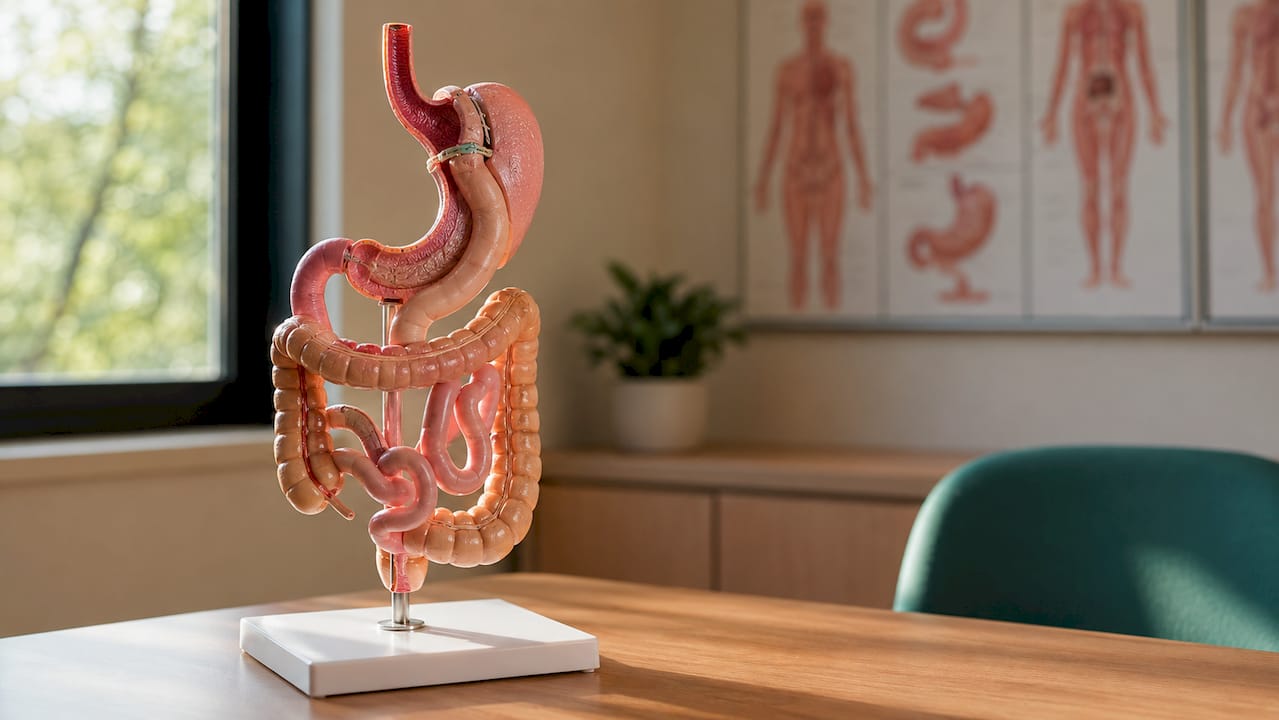
The table below compares the three most common procedures on the key anatomical changes that drive restriction.
| Procedure | Stomach change | Intestinal rerouting | Primary restriction type |
|---|---|---|---|
| Roux-en-Y gastric bypass | Small pouch (~30 ml) | Yes, bypasses duodenum | Restriction + malabsorption |
| Sleeve gastrectomy | ~80% removed | No | Restriction only |
| Adjustable gastric banding | Pouch via external band | No | Restriction only |
| Biliopancreatic diversion/duodenal switch | Sleeve + small pouch | Extensive bypass | Restriction + strong malabsorption |
Pro Tip: If you are comparing procedures, pay attention to whether the surgery reroutes the intestine. Rerouting changes hormone release patterns and produces metabolic benefits that restriction alone cannot deliver.
The procedures guide at Weightlosssurgeryguide breaks down each surgery in plain language if you want a deeper look at the anatomical differences.
What happens to gut hormones after surgery?
Anatomy explains part of the story. Hormones explain the rest. Bariatric surgery increases satiety hormones GLP-1 and PYY after meals while reducing the drive to eat. This is the mechanism that separates surgery from dieting.
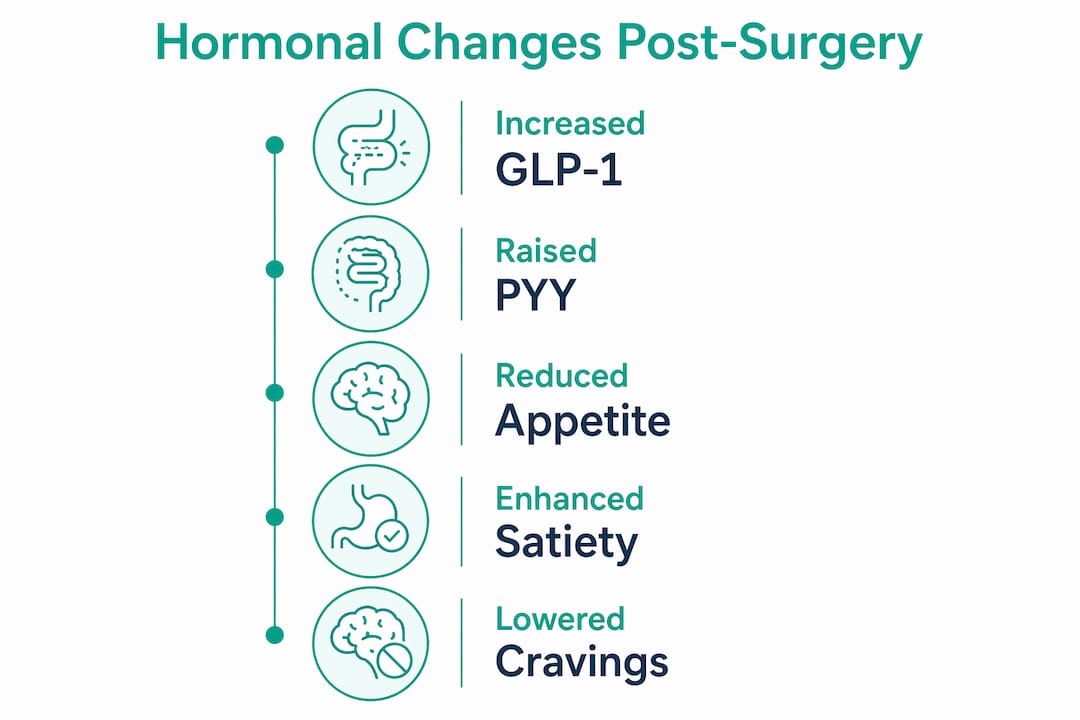
When you lose weight through a low-calorie diet, your body fights back. Ghrelin, the hunger hormone, rises. Your brain sends stronger signals to eat. Bariatric surgery disrupts this pattern. After a Roux-en-Y or sleeve gastrectomy, nutrients reach the distal small intestine faster than normal. That accelerated delivery triggers a surge in GLP-1 and PYY. You feel full sooner and stay full longer.
The key hormone changes after surgery include:
- GLP-1 (glucagon-like peptide-1): Rises sharply after meals, slows gastric emptying, and signals the brain to stop eating.
- PYY (peptide YY): Increases postprandially and reduces appetite through the hypothalamus.
- Ghrelin: Drops significantly after sleeve gastrectomy because the fundus, the part of the stomach that produces ghrelin, is removed.
- Insulin sensitivity: Improves rapidly, often before significant weight loss occurs.
Surgery deactivates central reward pathways toward food by increasing postprandial GLP-1 and PYY levels. That means cravings change, not just stomach size. Patients consistently report that food simply becomes less interesting after surgery. This is not willpower. It is a measurable neurobiological shift.
Pro Tip: GLP-1 medications like semaglutide mimic one piece of this hormonal picture. Surgery triggers the full cascade. For a direct comparison of long-term outcomes, see the GLP-1 vs bariatric surgery breakdown at Weightlosssurgeryguide.
Does surgery speed up your metabolism?
A common belief is that bariatric surgery boosts metabolism. The evidence says otherwise, and the distinction matters for setting realistic expectations.
Resting energy expenditure decreases after surgery in proportion to body weight loss. Your body burns fewer calories at rest because it is smaller. This is a normal physiological adaptation, not a failure of the surgery. The key finding from 2026 observational research is that resting energy expenditure does not independently predict how much weight you lose after surgery.
What does predict weight loss? Reduced calorie intake. Smaller meal sizes and early satiety are the primary clinical drivers of post-surgery weight loss. The surgery creates the conditions for you to eat less without constant hunger. Your metabolism adjusts to your new body size, but the weight loss itself comes from eating fewer calories, consistently, over time.
Practical focus areas for post-surgery success:
- Track meal portion sizes, not just food quality.
- Prioritize protein at every meal to preserve muscle mass as weight drops.
- Recognize early fullness signals and stop eating at that point.
- Avoid liquid calories, which bypass the restriction mechanism.
Long-term weight loss outcomes by procedure
Not all bariatric surgeries produce the same results over time. The differences come from how much each procedure changes hormone signaling, not just how much it restricts food.
A network meta-analysis of 10 randomized controlled trials with 1,004 participants measured total weight loss at 10 years across procedures. The results show a clear gradient based on how extensively the surgery reroutes the intestine.
| Procedure | 10-year total weight loss |
|---|---|
| Adjustable gastric banding | Lowest (data varies by study) |
| Sleeve gastrectomy | +17.73% total body weight |
| Roux-en-Y gastric bypass | +20.18% total body weight |
| Biliopancreatic diversion/duodenal switch | +28.87% total body weight |
The duodenal switch produces the greatest long-term weight loss because it combines restriction with the most extensive intestinal rerouting. That rerouting changes how and when nutrients trigger hormone release, producing a stronger and more sustained hormonal response than restriction alone. Anatomical reconstruction drives differing hormone profiles across procedures, which explains why outcomes diverge over a decade.
Roux-en-Y gastric bypass sits in the middle of this range but delivers strong metabolic benefits beyond weight loss. Altered nutrient delivery timing in gastric bypass triggers postprandial hormone responses that improve type 2 diabetes outcomes independent of weight loss. This is why gastric bypass remains the most studied and widely recommended procedure for patients with obesity-related diabetes.
How bariatric surgery affects health conditions beyond weight
Weight loss is the headline outcome. The effects on related conditions are often what change patients' lives most.
Type 2 diabetes: Gastric bypass produces diabetes remission in many patients within days of surgery, before significant weight loss occurs. The mechanism is hormonal. Altered nutrient flow to the distal intestine changes insulin secretion and sensitivity directly.
Obstructive sleep apnea: Surgery reduces peripharyngeal fat and improves metabolic and hormonal profiles linked to systemic inflammation. Both the mechanical and metabolic changes contribute to sleep apnea relief. Many patients reduce or eliminate CPAP use within months of surgery.
Hypertension: Blood pressure improves through multiple pathways, including reduced insulin resistance, lower circulating inflammatory markers, and decreased mechanical load on the cardiovascular system.
Joints: Reduced body weight directly lowers the mechanical load on knees, hips, and ankles. Patients with osteoarthritis often report significant pain reduction within the first year after surgery.
Cholesterol: Triglycerides and LDL cholesterol drop substantially after surgery, particularly after procedures with intestinal rerouting. HDL cholesterol typically rises.
GERD (acid reflux): Sleeve gastrectomy can worsen GERD in some patients due to increased intragastric pressure. Gastric bypass, by contrast, typically resolves GERD because the acid-producing stomach is largely bypassed.
Key Takeaways
Bariatric surgery causes weight loss primarily by reducing calorie intake through anatomical restriction and hormonal changes that suppress hunger, with long-term outcomes determined by how extensively each procedure alters intestinal nutrient flow.
| Point | Details |
|---|---|
| Hormones drive the result | GLP-1 and PYY rise after surgery, suppressing appetite beyond what dieting achieves. |
| Intake reduction is the mechanism | Resting energy expenditure drops with weight loss; reduced calorie intake is the real driver. |
| Procedure choice affects outcomes | At 10 years, biliopancreatic diversion produces 28.87% total weight loss vs. 17.73% for sleeve gastrectomy. |
| Benefits extend beyond weight | Diabetes, sleep apnea, hypertension, and joint pain all improve through hormonal and mechanical changes. |
| GERD response varies by procedure | Gastric bypass resolves acid reflux; sleeve gastrectomy can worsen it in some patients. |
What most patients get wrong about how surgery works
Most people walking into a bariatric consultation believe the surgery works because it makes their stomach smaller. That is true, but it is the least interesting part of what happens.
The hormonal shift is the real mechanism. I have seen patients who eat tiny portions but still struggle because they did not understand that the surgery was supposed to change their hunger signals, not just their stomach size. When those signals do not change as expected, or when patients drink high-calorie liquids that bypass the restriction, the results disappoint. Understanding the mechanism protects you from that outcome.
The procedure comparison data matters more than most patients realize. A sleeve gastrectomy and a duodenal switch are not just different in complexity. They produce fundamentally different hormonal environments over a decade. If you have type 2 diabetes or severe metabolic disease, the procedure that reroutes the most intestine is often the one that delivers the most durable benefit. That is a clinical decision worth having explicitly with your surgeon, not just a checkbox on a consent form.
My honest advice: go into your consultation knowing that you are choosing a hormonal and metabolic intervention, not just a stomach operation. Ask your surgeon specifically how each procedure changes GLP-1 and ghrelin in your case. The answer will tell you a lot about how well they understand what they are doing.
— Ariel
Weightlosssurgeryguide: your next step toward an informed decision
Knowing the science behind bariatric surgery is the foundation of a good decision. The next step is finding a surgeon and facility whose outcomes match what the research promises.

Weightlosssurgeryguide publishes the 2026 Tijuana Bariatric Surgery Rankings, comparing accredited providers on surgical outcomes, procedure options, and patient safety standards. US patients who choose internationally accredited care in Tijuana save 60–75% compared to domestic pricing without sacrificing quality. The rankings are built on verified outcome data, not advertising. If you are weighing procedure options or want to understand what real-world results look like from top providers, the rankings are the clearest starting point available.
FAQ
How does bariatric surgery reduce hunger long-term?
Surgery increases postprandial GLP-1 and PYY levels, which signal the brain to stop eating and reduce food cravings. This hormonal shift is more durable than the appetite suppression achieved through dieting alone.
Which bariatric procedure causes the most weight loss?
Biliopancreatic diversion with duodenal switch produces the greatest 10-year total weight loss at 28.87% of total body weight, followed by Roux-en-Y gastric bypass at 20.18%, according to a network meta-analysis of 10 randomized controlled trials.
Does bariatric surgery speed up metabolism?
No. Resting energy expenditure decreases after surgery in proportion to body weight loss. Weight loss is driven by reduced calorie intake, not an increase in how many calories the body burns at rest.
How does bariatric surgery affect type 2 diabetes?
Gastric bypass can produce diabetes remission within days of surgery, before significant weight loss occurs. The mechanism involves altered nutrient delivery to the distal intestine, which changes insulin secretion and sensitivity directly.
Can bariatric surgery worsen acid reflux?
Sleeve gastrectomy can worsen GERD in some patients by increasing pressure inside the stomach. Gastric bypass typically resolves acid reflux because the acid-producing portion of the stomach is largely bypassed.