Weight Loss Surgery Process Explained: 2026 Guide
Published July 2, 2026

Weight Loss Surgery Process Explained: 2026 Guide
Weight loss surgery, known clinically as bariatric surgery, modifies the stomach and intestines to restrict food intake, reduce nutrient absorption, or both, producing significant and lasting weight loss. The American Society for Metabolic and Bariatric Surgery recognizes bariatric procedures as the most effective long-term treatment for severe obesity and its related conditions. The weight loss surgery process explained here covers every stage: who qualifies, which procedures exist, what happens before and after the operating table, and what life looks like months later. The American Academy of Family Physicians recommends surgery for patients with a BMI of 35 or higher, or BMI ≥30 with type 2 diabetes. Getting this right from the start changes outcomes dramatically.
What are the main types of weight loss surgery and how do they work?
The most common bariatric procedures today fall into three categories: restrictive, malabsorptive, and combined. Each works differently inside the body, and each carries a distinct risk and benefit profile.
Vertical sleeve gastrectomy removes roughly 80% of the stomach, leaving a narrow tube. The smaller stomach limits how much food you can eat at one sitting. It also reduces ghrelin, the hunger hormone, which is why many patients report feeling less hungry after surgery. Sleeve gastrectomy accounts for 58% of all bariatric procedures performed today. That dominance reflects its balance of effectiveness and relatively lower complication risk compared to more complex operations.
Roux-en-Y gastric bypass creates a small stomach pouch and reroutes the small intestine to connect directly to it. Food bypasses most of the stomach and the upper small intestine, reducing both capacity and calorie absorption. Gastric bypass represents 22% of procedures and remains the gold standard for patients with severe acid reflux or type 2 diabetes. The metabolic effect on blood sugar is often visible within days of surgery, before significant weight loss occurs.

Gastric banding places an adjustable silicone band around the upper stomach to create a small pouch. It is the least invasive option and fully reversible, but it also produces the slowest weight loss and requires frequent follow-up adjustments. The gastric balloon is a non-surgical alternative: a saline-filled balloon placed endoscopically in the stomach for 6 months to reduce hunger and portion size. It suits patients who do not yet qualify for surgery or who want a lower-risk first step.
| Procedure | Mechanism | Typical hospital stay | Best suited for |
|---|---|---|---|
| Sleeve gastrectomy | Stomach reduction | 1–2 nights | Most candidates; GERD-free patients |
| Gastric bypass | Restriction + malabsorption | 3–4 nights | Diabetes, severe reflux |
| Gastric banding | Adjustable restriction | Day case | Lower BMI, reversibility needed |
| Gastric balloon | Temporary restriction | Outpatient | Pre-surgical or lower BMI patients |
Nearly all of these procedures use a laparoscopic approach, meaning surgeons operate through small incisions using a camera. Laparoscopic technique reduces blood loss, shortens hospital stays, and speeds recovery compared to open surgery.
What does the weight loss surgery process involve before, during, and after surgery?
Preparing for weight loss surgery takes weeks, sometimes months. Surgeons require a full medical workup, a psychological evaluation, and at least one nutritional counseling session before clearing a patient for the operating room. These steps exist to confirm that surgery is safe for you and that you understand the lifelong commitment ahead.
The pre-surgery checklist typically includes:
- Medical evaluation: Blood panels, cardiac clearance, and a review of current medications. Patients with sleep apnea may need a sleep study.
- Psychological assessment: A licensed counselor screens for eating disorders, depression, and unrealistic expectations about outcomes.
- Nutritional counseling: A registered dietitian reviews your current diet and teaches the post-op eating protocol before surgery day.
- Pre-op diet: Most surgeons require a 2-week high-protein, low-calorie diet to shrink the liver, which sits directly over the stomach and must be moved during surgery.
- Insurance or financial approval: For patients using insurance, prior authorization can take several weeks. Patients traveling to Tijuana for surgery often move faster through this step.
On surgery day, the procedure itself takes 1–3 hours depending on the operation. You will be under general anesthesia. The surgical team monitors vitals continuously, and most patients move to a recovery room within an hour of the final incision.
Hospital stays vary by procedure: gastric banding is often a day case, sleeve gastrectomy requires 1–2 nights, and gastric bypass typically means 3–4 nights. Pain is managed with IV medication initially, then oral options as you progress. The nursing team will have you sitting up and walking within hours of waking from anesthesia.
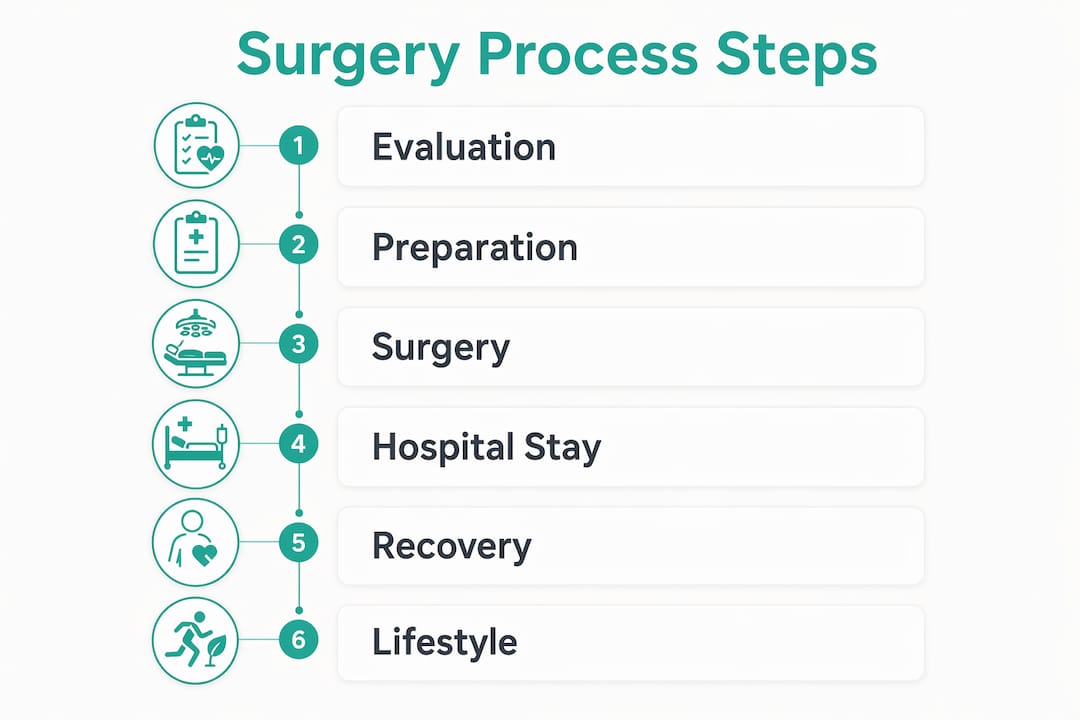
Early mobility after surgery, specifically short walks every 1–2 hours, reduces blood clot risk and improves circulation. This is not optional. Patients who stay in bed longer than necessary face higher complication rates.
Pro Tip: Pack a small protein shake and a measured water bottle for your hospital bag. Nurses will encourage sipping from the first day, and having your preferred brand on hand makes hitting your fluid targets easier.
What does recovery look like over the weeks and months after surgery?
Recovery from bariatric surgery follows a predictable arc, but the first month is the hardest. Your stomach is healing, your appetite signals are disrupted, and your body is adjusting to a dramatically different intake level.
Diet progression timeline
The standard post-op diet moves through four stages over 4–6 weeks:
- Week 1: Clear liquids only. Water, broth, and diluted protein drinks in small sips.
- Weeks 2–3: Full liquids, including protein shakes, thinned yogurt, and cream soups.
- Weeks 3–6: Soft foods. Protein-rich soft options like scrambled eggs, soft fish, and cottage cheese become the focus.
- Week 6 onward: Gradual return to solid foods, with texture introduced slowly and chewing thoroughly at every meal.
Patients must consume at least 60g of protein daily while keeping fluids separate from meals. Drinking during meals fills the small stomach pouch with liquid, leaving no room for protein-dense food. This single habit separates patients who heal well from those who struggle.
| Recovery phase | Diet stage | Key focus |
|---|---|---|
| Days 1–7 | Clear liquids | Hydration, small sips |
| Weeks 2–3 | Full liquids | Protein shakes, 60g+ daily |
| Weeks 3–6 | Soft foods | Tender protein-rich foods |
| Week 6+ | Solid foods | Texture progression, chewing |
Dehydration is the leading cause of emergency room visits in the first month after bariatric surgery. The stomach's reduced capacity makes it hard to drink enough, especially when nausea is present. Tracking fluid intake with a measured bottle is not excessive caution. It is standard practice.
Heavy lifting and abdominal strain must be avoided for at least 6 weeks post-op to protect incisions and prevent hernias. Walking is encouraged from day one, but core exercises, lifting children, and carrying groceries must wait. Many patients feel better than expected by week 3 and push too hard. That is when complications happen.
Pro Tip: Set a phone alarm every 30 minutes during waking hours for the first two weeks. Use it as a reminder to take 2–3 small sips of water. This habit alone prevents most post-op dehydration.
For a detailed bariatric recovery timeline with week-by-week benchmarks, Weightlosssurgeryguide has a dedicated guide covering what to expect at each stage.
What lifestyle changes are necessary after weight loss surgery?
Surgery changes your anatomy. Lasting results require changing your behavior to match. Patients who treat surgery as a permanent reset rather than a one-time fix consistently achieve better long-term outcomes.
The non-negotiable lifestyle commitments after bariatric surgery include:
- Protein first at every meal. Eat protein before vegetables or carbohydrates. Once the small stomach pouch is full, there is no room for the nutrients you need most.
- Daily vitamin and mineral supplementation. Bariatric patients require lifelong supplementation of vitamin B12, iron, calcium citrate, and vitamin D. Deficiencies develop silently and cause serious problems years later.
- Gradual return to exercise. Walking progresses to light cardio by weeks 6–8. Strength training begins around month 3. Exercise preserves lean muscle mass during rapid weight loss, which protects metabolism.
- Medication review. Some medications, particularly extended-release formulations, are not absorbed properly after bypass surgery. Your prescribing physician must review your full medication list before and after surgery.
- Psychological support. Hormonal changes evolve over 12–18 months post-surgery, and emotional eating patterns can resurface as the initial excitement fades. Regular sessions with a behavioral health counselor are not a sign of struggle. They are standard care.
Bariatric surgery can extend life expectancy by 5–9 years and produce remission of type 2 diabetes, hypertension, and sleep apnea. Those outcomes depend on consistent follow-up, not just the operation itself.
What are common myths about weight loss surgery?
Several persistent myths stop qualified patients from pursuing surgery that could genuinely improve their health. Getting the facts straight matters before making any decision.
- Myth: Surgery is a last resort. Medical guidelines now position bariatric surgery as an early metabolic intervention, not a final option after everything else fails. Waiting until health deteriorates further reduces the benefit.
- Myth: Weight loss happens automatically. Surgery creates the conditions for weight loss. Patients who do not follow dietary and exercise protocols regain weight. The tool only works when you use it correctly.
- Myth: Surgery is too dangerous. Laparoscopic bariatric surgery carries a complication rate comparable to gallbladder removal. Choosing an accredited facility with a credentialed surgical team reduces risk further.
- Myth: Recovery is quick and easy. The first month is genuinely hard. Fatigue, nausea, and emotional adjustment are normal. Expecting difficulty prepares you to handle it. Expecting ease sets you up for a crisis.
- Myth: Results are permanent without effort. Weight regain is possible, particularly after years without follow-up care. Patients who stay connected to their surgical team maintain better long-term results.
Comparing surgery to non-surgical alternatives like GLP-1 medications is worth doing before committing. Weightlosssurgeryguide offers a detailed surgery vs. GLP-1 comparison for patients weighing both paths.
Key Takeaways
The weight loss surgery process requires medical clearance, a structured recovery period, and lifelong dietary and behavioral commitment to produce lasting results.
| Point | Details |
|---|---|
| Eligibility criteria | Surgery is recommended for BMI ≥35, or ≥30 with type 2 diabetes. |
| Most common procedure | Sleeve gastrectomy accounts for 58% of bariatric surgeries performed today. |
| Recovery timeline | Full internal healing takes 4–6 weeks; diet progresses from liquids to solids. |
| Protein and hydration | Patients need 60g+ of protein daily; dehydration is the top cause of ER visits post-op. |
| Long-term commitment | Lifelong supplementation, exercise, and follow-up care protect results and health. |
What I've learned watching patients go through this process
The patients who do best after bariatric surgery are rarely the ones who were most motivated before it. They are the ones who were most prepared. Motivation fades fast when you are exhausted, nauseous, and surviving on 2 ounces of broth at a time. Preparation does not fade. It shows up as a measured water bottle, a protein shake already mixed, and a walk scheduled even when you do not feel like it.
The biggest mistake I see prospective patients make is treating the surgery date as the finish line. It is the starting gun. The first 6 weeks are physically demanding in ways most people do not anticipate. The months that follow require a level of behavioral consistency that takes real practice. None of that is a reason to avoid surgery. It is a reason to go in with your eyes open.
The 5–9 year life expectancy gain that research documents is not a number that comes from the surgery alone. It comes from what patients do with the second chance the surgery gives them. That distinction matters more than any procedure comparison or hospital ranking.
If you are seriously considering this, do not spend another six months researching in circles. Get a consultation. Ask hard questions. Find out whether you qualify and what your specific recovery would look like. The information is available, and the path forward is clearer than most people expect.
— Ariel
Trusted resources for your next step toward surgery
Weightlosssurgeryguide was built specifically for US patients evaluating bariatric surgery options in Tijuana, Mexico, where accredited care costs 60–75% less than domestic prices. The site covers procedure comparisons, financial planning, and medical tourism safety in one place.
The 2026 Tijuana bariatric surgery rankings list accredited hospitals and credentialed surgeons with verified patient outcomes, so you can compare providers before committing. For patients concerned about cost, the bariatric financing guide breaks down payment options and what to expect at each price point. Weightlosssurgeryguide also publishes an ASMBS medical tourism safety checklist to help you evaluate any provider you are considering.
FAQ
What is the minimum BMI for weight loss surgery?
Bariatric surgery is recommended for patients with a BMI of 35 or higher, or BMI of 30 or higher with a condition like type 2 diabetes. Your surgeon will confirm eligibility during the initial consultation.
How long does full recovery from bariatric surgery take?
Internal healing takes 4–6 weeks, but full adjustment to the new diet and lifestyle continues for 12–18 months. Most patients return to desk work within 2–3 weeks.
What is the most common type of weight loss surgery?
Vertical sleeve gastrectomy is the most common bariatric procedure, accounting for 58% of surgeries performed. Gastric bypass is the second most common at 22%.
Why is protein so important after weight loss surgery?
Patients need at least 60g of protein daily to preserve muscle mass and support healing. The reduced stomach size makes hitting that target difficult, which is why protein comes first at every meal.
Is weight loss surgery safe in Mexico?
Surgery at a Joint Commission International accredited facility in Tijuana carries safety standards equivalent to US hospitals. Weightlosssurgeryguide's accreditation guide explains exactly what certifications to verify before choosing a provider.