Bariatric Surgery Financing: Your 2026 Cost Guide
Published July 16, 2026

Bariatric Surgery Financing: Your 2026 Cost Guide
Bariatric surgery financing is the structured process patients use to fund weight loss procedures through medical loans, insurance coverage, and clinic payment plans. Surgery costs typically run from $15,000 to $30,000 or more in the United States, which puts the procedure out of reach for most people without financial planning. Understanding your options before you schedule a consultation puts you in a far stronger position than figuring it out after you've already committed. Weightlosssurgeryguide has compiled the most current 2026 information on loans, insurance eligibility, and cost management strategies so you can make a clear-eyed decision.
Reviewed by the Weightlosssurgeryguide editorial team. Last reviewed: 2026. This article is for educational purposes only and does not constitute medical or financial advice. Consult a qualified surgeon and a licensed financial advisor before making any decisions.
What is bariatric surgery financing, and what types exist?
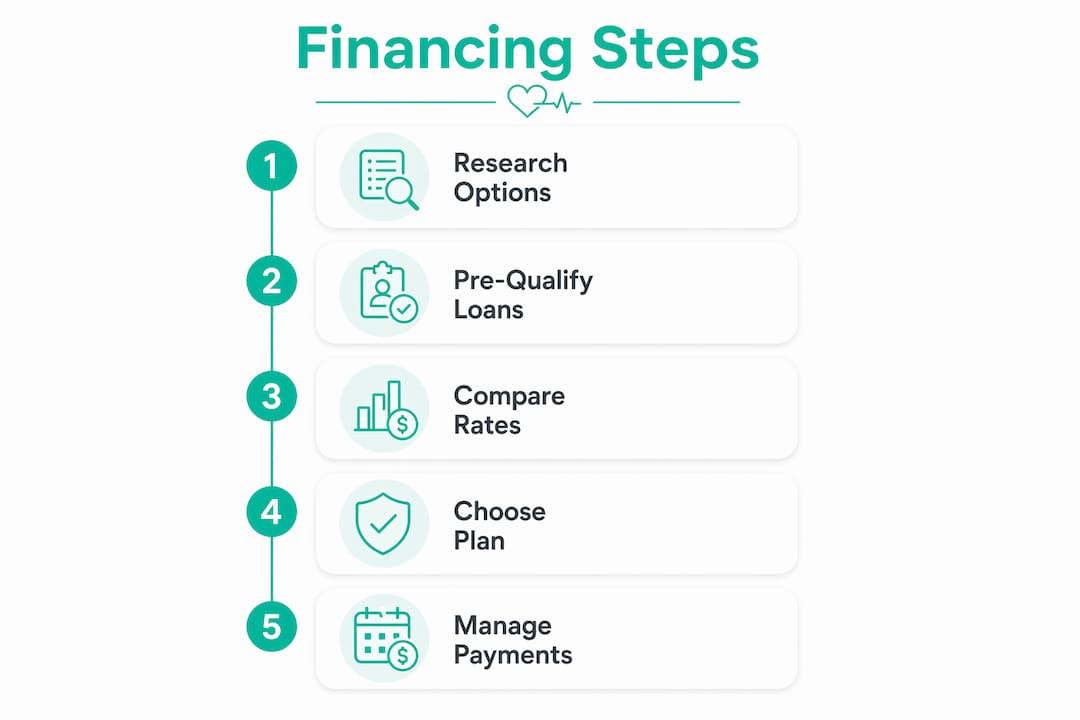
Bariatric surgery financing covers any method a patient uses to pay for weight loss surgery costs over time rather than all at once. The four main categories are medical loans, clinic payment plans, insurance coverage, and tax-advantaged accounts like Health Savings Accounts (HSAs) or Flexible Spending Accounts (FSAs).
Medical loans are the most common route for patients without insurance coverage. Specialized medical lenders often approve bariatric surgery loans with credit scores as low as 580, though the best interest rates go to borrowers with scores of 670 or higher. APRs range from 24%–36% for lower-credit borrowers, which adds thousands of dollars to the total cost of surgery. That gap in interest rates makes improving your credit score before applying one of the highest-return moves you can make.

Clinic payment plans are a second option worth exploring early. Many bariatric clinics partner with specialized financing companies that offer payment plans tailored to bariatric patients, sometimes including promotional deferred interest periods. Deferred interest sounds attractive, but if you carry any balance past the promotional window, the full accumulated interest charges back to day one. Read every term carefully before signing.
HSAs and FSAs let you pay for qualifying medical expenses with pre-tax dollars. Bariatric surgery typically qualifies under IRS rules, so using these accounts effectively reduces your real cost by your marginal tax rate. A co-signer with stronger credit or a secured loan backed by an asset can also unlock better rates if your own credit history is thin.
- Medical loans (credit score 580+, APR varies widely)
- Clinic payment plans (sometimes with deferred interest)
- Insurance coverage (Medicare, Medicaid, employer plans)
- HSAs and FSAs (pre-tax dollars reduce effective cost)
- Co-signer or secured loan arrangements
Pro Tip: Pre-qualify with at least three lenders before committing. Pre-qualification uses a soft credit pull, so it does not affect your score, and comparing offers takes less than an hour.
How does insurance coverage affect bariatric surgery financing?
Insurance coverage is the single biggest variable in what you will actually pay. When it applies, it can eliminate tens of thousands of dollars in out-of-pocket costs. When it does not apply, you carry the full burden yourself.
Medicare covers four primary bariatric procedure types: Roux-en-Y gastric bypass, biliopancreatic diversion with duodenal switch (BPD/DS), laparoscopic adjustable gastric banding, and sleeve gastrectomy. The critical detail is that Medicare coverage is tied to the treatment of comorbid conditions, not obesity alone, under CMS National Coverage Determination NCD 57, updated effective january 9, 2026. That distinction drives enormous documentation complexity. Your surgeon must frame the procedure as treatment for diabetes, hypertension, or another qualifying condition.
Medicaid coverage is broader than many patients expect. Approximately 46 out of 50 state Medicaid programs cover bariatric surgery when patients meet BMI and comorbidity criteria plus preoperative requirements. Eligibility generally requires a BMI of 35 or higher with at least one comorbidity, or a BMI of 40 or higher without one. That coverage, however, still comes with prior authorization requirements and medically supervised weight management documentation.
Employer-sponsored plans present the most unpredictable situation. Up to 40% of employer plans exclude bariatric surgery either contractually or through benefit caps, particularly self-funded ERISA plans. An ERISA plan is one where your employer directly funds the benefits rather than buying a commercial insurance policy. These plans are largely exempt from state insurance mandates, so an employer can legally exclude bariatric coverage even in states that require commercial insurers to cover it.
Here is what to verify before assuming your insurance will pay:
- Call your plan's member services and ask specifically whether bariatric surgery is a covered benefit.
- Request the Summary Plan Description in writing to check for exclusions.
- Confirm the BMI and comorbidity thresholds your plan uses.
- Ask whether prior authorization is required and what documentation your surgeon must submit.
- Get the deductible, copay, and out-of-pocket maximum amounts in writing.
Even with coverage, deductibles and copays mean you will still owe money. Budget for at least $3,000–$6,000 in out-of-pocket costs even under a good commercial plan.
What costs should patients expect, and how can they manage them?
The total cost of bariatric surgery includes surgeon fees, facility fees, anesthesia, the hospital stay, pre-operative testing, and follow-up appointments. Patients frequently underestimate total costs, which underscores the need for early and thorough financial planning before committing to a date.
Cash-pay costs in the United States break down roughly by procedure:
| Procedure | U.S. Cash-Pay Range | Mexico Package Range |
|---|---|---|
| Sleeve gastrectomy | $15,000–$25,000 | $4,500–$6,500 |
| Roux-en-Y gastric bypass | $20,000–$30,000 | $4,500–$6,500 |
| BPD/DS | $25,000–$35,000 | $4,500–$6,500 |
Medical tourism to Mexico can reduce costs by 50%–70% compared to U.S. cash-pay rates. That reduction is significant enough to make the total cost of travel, accommodation, and surgery in Tijuana lower than the deductible alone on some U.S. insurance plans.
Your credit score directly controls how much financing costs you. A $20,000 bariatric loan at 9% APR produces monthly payments of $415 over 60 months. The same loan at 32% APR, which reflects a credit score around 560, produces monthly payments of $660. Over five years, that difference adds up to more than $14,700 in extra interest. Improving your score from 580 to 670 before applying is worth months of effort.
Pro Tip: Ask your surgeon's office whether they offer a self-pay discount for paying in full at the time of service. Many clinics reduce their fee by 10%–20% for cash patients because it eliminates billing overhead.
What steps should patients take to prepare financially?
Financial preparation for bariatric surgery works best when it starts at least three to six months before your target surgery date. Rushing the process leads to worse loan terms and missed insurance opportunities.
- Check your credit report first. Pull free reports from AnnualCreditReport.com and dispute any errors. A single corrected error can raise your score by 20–40 points.
- Gather your medical records. Insurance prior authorization requires documentation of your BMI history, comorbidities, and any previous supervised weight loss attempts. Missing records delay approval by weeks.
- Understand lender approval criteria. Most medical lenders prefer at least two years of steady employment and a debt-to-income ratio under 45%. Know where you stand before applying.
- Ask your surgery provider about financing partners. Clinics that work with specialized lenders often have pre-negotiated rates or faster approval processes than going directly to a bank.
- Read every loan term before signing. Confirm the APR, total repayment amount, prepayment penalties, and what happens if you miss a payment.
- Evaluate your insurance exclusions in writing. Verbal confirmations from member services are not binding. Get the benefit determination in writing.
Reviewing your bariatric surgery candidacy criteria alongside your financial preparation helps you approach both your surgeon and your lender with complete documentation from the start.
Key Takeaways
Bariatric surgery financing requires comparing loans, insurance eligibility, and payment plans early because credit scores, employer plan exclusions, and procedure costs vary enough to change your total expense by tens of thousands of dollars.
| Point | Details |
|---|---|
| Credit score drives loan cost | Improving your score from 580 to 670+ can save over $14,000 in interest on a $20,000 loan. |
| Insurance coverage is not guaranteed | Up to 40% of employer plans exclude bariatric surgery; verify your benefits in writing before planning. |
| Mexico reduces costs by 50%–70% | Accredited Tijuana providers offer sleeve and bypass packages for $4,500–$6,500 vs. $15,000–$30,000 in the U.S. |
| Deferred interest plans carry risk | Promotional financing reverts to full accumulated interest if any balance remains at the period's end. |
| Early preparation improves outcomes | Starting financial planning three to six months out gives you time to improve credit and gather insurance documentation. |
What I've learned about financing bariatric surgery that most guides skip
Most financing articles tell you to "shop around" and "check your credit." That advice is correct but incomplete. Here is what actually matters in practice.
The deferred-interest trap is more dangerous than most patients realize. Products that advertise "no interest if paid in full" are not the same as zero-interest loans. If you owe even $1 at the end of the promotional period, the full interest from day one gets added to your balance. On a $10,000 balance at 26.99% APR over 18 months, that retroactive charge can exceed $3,000. Patients who budget to the dollar and then face an unexpected expense during recovery get hit hardest.
Insurance framing matters more than most people expect. The CMS NCD 57 update makes clear that Medicare covers bariatric surgery as treatment for comorbidities, not for obesity itself. That is not just a technicality. It means your surgeon's documentation must lead with the comorbidity diagnosis, not the weight loss goal. Surgeons experienced with insurance authorization know this. Surgeons who primarily do self-pay cases sometimes do not. Ask your surgeon directly how many insurance-covered cases they handle per year.
Medical tourism deserves a serious look, not a dismissive one. The cost difference between a U.S. cash-pay sleeve gastrectomy and an accredited Tijuana provider is not marginal. It is often $12,000–$18,000. That gap funds years of follow-up care, nutritional support, and lifestyle coaching. The key is verifying accreditation, not assuming all international providers are equivalent. Weightlosssurgeryguide evaluates providers specifically on accreditation standards and outcomes data so you are not making that assessment alone.
Start the financing conversation before you start the surgical consultation. Knowing your credit profile and insurance situation before you sit across from a surgeon means you can have a real conversation about what is actually affordable, not just what is medically possible.
— Ariel
Planning your bariatric surgery finances with Weightlosssurgeryguide
Bariatric surgery is one of the most significant financial decisions you will make alongside one of the most significant health decisions. Getting both right at the same time requires current, verified information.
Weightlosssurgeryguide publishes independently verified provider rankings for Tijuana so US patients can compare accredited surgeons and facilities on cost, credentials, and outcomes in one place. The site's payment options guide breaks down financing structures by weekly and monthly payment estimates, making it easier to match a surgery plan to your actual budget. For patients who want to understand the full cost picture before their first consultation, the bariatric financial planning guide covers cost estimates, insurance documentation, and savings strategies specific to US patients in 2026.
FAQ
What is the minimum credit score for a bariatric surgery loan?
Specialized medical lenders approve bariatric surgery loans with credit scores as low as 580, though borrowers with scores of 670 or higher receive significantly better interest rates and lower APRs.
Does Medicare cover bariatric surgery in 2026?
Medicare covers four bariatric procedures under CMS NCD 57, updated effective january 9, 2026, but coverage requires that surgery treats qualifying comorbid conditions such as diabetes or hypertension, not obesity alone.
How much does bariatric surgery cost without insurance?
U.S. cash-pay costs range from $15,000 for a sleeve gastrectomy to $35,000 or more for a BPD/DS procedure. Accredited providers in Tijuana, Mexico offer comparable procedures for $4,500–$6,500.
Why do employer insurance plans sometimes exclude bariatric surgery?
Self-funded ERISA employer plans are largely exempt from state insurance mandates, which allows employers to legally exclude bariatric surgery from their benefit package. Up to 40% of employer plans contain this exclusion.
Can I use an HSA or FSA to pay for bariatric surgery?
Bariatric surgery qualifies as a medical expense under IRS rules, so you can use HSA or FSA funds to cover surgery costs. Using pre-tax dollars effectively reduces your real out-of-pocket cost by your marginal income tax rate.
Sources: CMS NCD 57 Coverage Update (2026); Firstcard Medical Financing Research; Weightlossrankings.org Insurance Coverage Evidence Library; Cherry Weight Loss Financing Overview. This article is educational and does not replace personalized medical or financial advice.