Gastric Sleeve Complication Rates in Mexico: 2026 Guide
Published July 18, 2026

Gastric Sleeve Complication Rates in Mexico: 2026 Guide
Medically reviewed by the Weightlosssurgeryguide editorial team | Last reviewed: march 2026
This article is for educational purposes only and does not constitute medical advice. Consult a board-certified bariatric surgeon before making any surgical decisions. See our full medical disclaimer.
Gastric sleeve surgery in Mexico carries a complication rate under 2% at accredited, high-volume centers, making it statistically comparable to outcomes at top US facilities. The 30-day mortality rate at these centers sits at approximately 0.05%, on par with routine gallbladder surgery. What separates a safe outcome from a dangerous one is not the country where surgery happens. It is the surgeon's credentials, the facility's accreditation status, and the quality of pre-operative care. This guide breaks down the specific gastric sleeve complication rates in Mexico, the risk factors that matter most, and the practical steps you can take to protect yourself.
1. What are the gastric sleeve complication rates in Mexico?
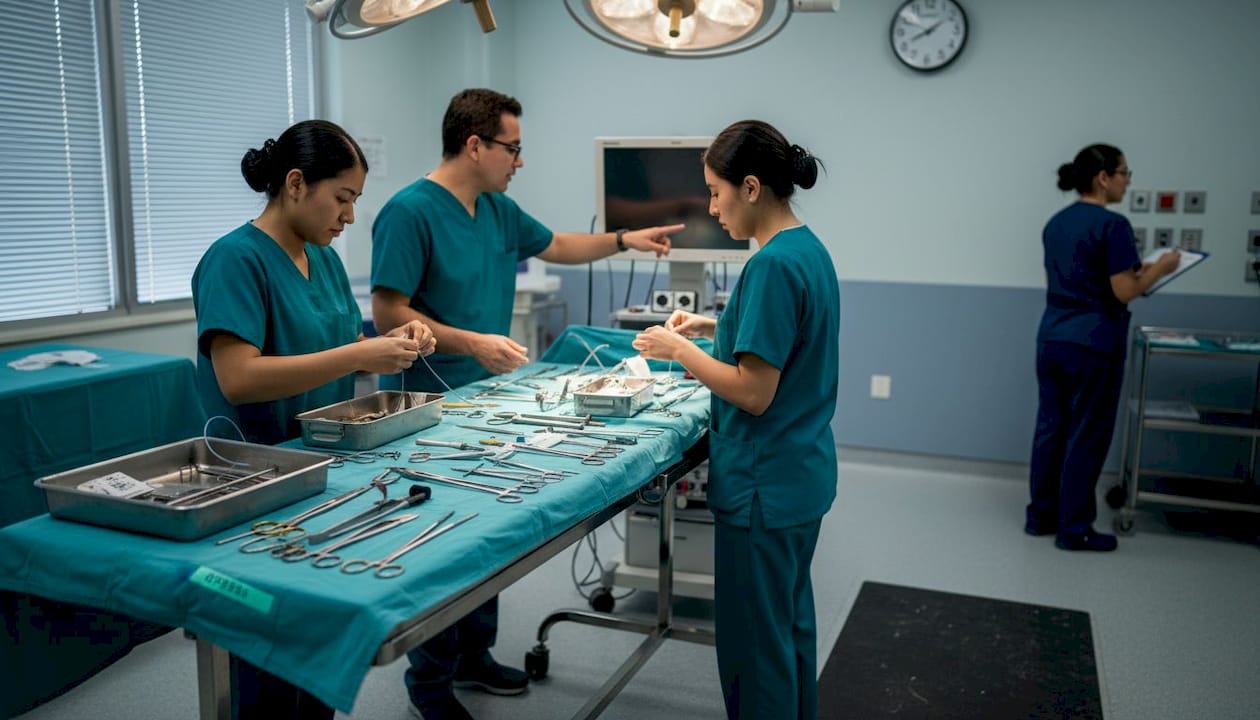
The most feared complication after sleeve gastrectomy is a staple-line leak. At high-volume accredited centers, the staple-line leak rate is approximately 0.17%. That figure reflects advances in surgical technology, including 3-row staplers and intraoperative leak testing with methylene blue dye. Both techniques have driven leak rates down significantly over the past decade.
Other early complications occur at the following rates:
- Bleeding: 1–1.5% of patients experience post-operative bleeding requiring intervention
- Stricture (narrowing of the sleeve): 0.5–1% of patients develop a stricture, usually treatable with endoscopic dilation
- Venous thromboembolism (blood clots): 0.3–0.5%, mitigated by early mobilization and blood thinners
- Wound infection: Under 1% at facilities with proper sterile protocols
These rates come from large registry data and Mexican cohort studies. They apply specifically to accredited, high-volume programs. Patients treated at non-accredited clinics face meaningfully higher risk across every category.
2. Which risk factors affect bariatric surgery complications in Mexico?
Surgeon volume is the single strongest predictor of a safe outcome. Surgeons who perform high annual case volumes develop faster, more consistent technique, which directly reduces bleeding, leak, and conversion rates. This is why surgeon credentials and volume matter more than any other variable when choosing a provider in Mexico.
Facility accreditation is the second critical factor. Certifications from bodies like CMCOEM (Mexico's national bariatric certification board), JCI (Joint Commission International), and SRC (Surgical Review Corporation) signal that a hospital meets defined safety standards. These standards cover ICU capability, emergency protocols, staffing ratios, and equipment. A clinic without these credentials may lack the infrastructure to manage a serious complication if one occurs.
Patient-level factors also influence risk:
- BMI above 50 increases technical difficulty and complication probability
- Uncontrolled type 2 diabetes slows healing and raises infection risk
- Obstructive sleep apnea requires careful anesthesia management
- Prior abdominal surgeries can complicate access and stapling
A multidisciplinary pre-operative evaluation, including nutritional assessment, psychological screening, and metabolic testing, identifies these risks before surgery. Facilities that skip this step are cutting corners that matter.
Pro Tip: Ask any prospective surgeon directly: "How many sleeve gastrectomies do you perform per year, and what is your personal leak rate?" A qualified surgeon will answer both questions without hesitation.
3. How does long-term risk affect quality of life after gastric sleeve surgery?
The most significant long-term complication after sleeve gastrectomy is gastroesophageal reflux disease, commonly called GERD. GERD develops in approximately 16% of sleeve patients by the five-year mark, and esophagitis rates reach 31% at ten years. These numbers are substantially higher than post-bypass GERD rates, which is why patients with moderate-to-severe pre-existing reflux are generally directed toward gastric bypass instead.
A 2025 study found that patients who experienced major post-operative complications had a significantly lower quality of life score at ten years compared to uncomplicated patients, despite achieving similar weight loss results. The BAROS quality of life score was 0.72 for uncomplicated patients versus negative 0.06 for those with major complications. Weight loss alone does not guarantee a good outcome if serious complications go unmanaged.
| Long-term risk | Rate | Clinical implication |
|---|---|---|
| De novo GERD at 5 years | ~16% | May require acid suppression or conversion to bypass |
| Esophagitis at 10 years | ~31% | Requires endoscopic monitoring |
| Quality of life impairment (major complications) | Significant | BAROS score drops from 0.72 to negative 0.06 |
| Mortality at 30 days (accredited centers) | ~0.05% | Comparable to gallbladder surgery |
Pre-operative counseling on these long-term risks is not optional. It is a core part of informed consent. Any facility that glosses over GERD risk or long-term follow-up requirements is not giving you the full picture.
Pro Tip: If you have frequent heartburn now, tell your surgeon before committing to sleeve gastrectomy. That single piece of information may change the recommended procedure entirely.
4. What steps should patients take to choose a safe provider in Mexico?
Choosing a safe gastric sleeve provider in Mexico requires active verification, not just trust. The following steps give you a concrete framework.
-
Verify CMCOEM certification. Mexico's national bariatric certification board sets minimum standards for surgeon training and facility capability. A CMCOEM-certified surgeon has met defined competency benchmarks.
-
Confirm ICU availability. The facility must have an on-site intensive care unit. Facilities without ICU capability cannot safely manage a staple-line leak or major bleed if one occurs.
-
Ask for published outcome data. Reputable programs track and share their complication rates. If a clinic cannot provide this information, treat that as a warning sign.
-
Check for JCI or SRC accreditation. These international certifications require hospitals to meet rigorous safety, staffing, and protocol standards. You can verify accreditation status directly on each organization's public registry. See the full breakdown of bariatric accreditation standards to understand what each certification covers.
-
Evaluate pre-operative protocols. A safe program includes blood work, cardiac clearance, nutritional counseling, and psychological evaluation before surgery. Programs that skip these steps increase your risk.
-
Understand the follow-up plan. Post-operative care does not end at discharge. Confirm that the program offers remote follow-up, dietary support, and a clear protocol for managing complications after you return home.
A 2025 study found that 69% of patients who required US emergency care after bariatric surgery abroad had chosen non-accredited centers. That statistic captures the real cost of prioritizing price over credentials.
Pro Tip: Use the ASMBS Medical Tourism Safety Checklist as a baseline when evaluating any international bariatric provider. It covers the key questions most patients forget to ask.
Key Takeaways
Gastric sleeve surgery in Mexico is safe at accredited, high-volume centers, but patient outcomes depend directly on surgeon credentials, facility standards, and pre-operative evaluation quality.
| Point | Details |
|---|---|
| Mortality rate at accredited centers | Approximately 0.05%, comparable to routine gallbladder surgery. |
| Staple-line leak rate | Reduced to 0.17% with advanced staplers and intraoperative leak testing. |
| Long-term GERD risk | Affects approximately 16% of sleeve patients by five years; higher in those with pre-existing reflux. |
| Accreditation is the key safety variable | CMCOEM, JCI, and SRC certification signals ICU capability and defined safety protocols. |
| Non-accredited centers carry higher risk | 69% of post-op US emergency cases involved patients who chose non-accredited providers abroad. |
Why credentials matter more than country of origin
I have reviewed hundreds of bariatric surgery cases involving US patients who traveled to Mexico, and the pattern is consistent. The patients who had serious complications almost never had them because they went to Mexico. They had them because they chose a provider based on price alone.
The data backs this up. A 0.05% mortality rate at a high-volume accredited center in Tijuana is not a Mexican statistic. It is a volume-and-credentials statistic. The same surgeon performing the same procedure at a non-accredited clinic with no ICU produces a completely different risk profile.
What concerns me most is the GERD conversation. Too many patients are not told clearly that sleeve gastrectomy raises long-term reflux risk. If you already have heartburn, that conversation needs to happen before you book anything. A good surgeon will bring it up without being asked.
My honest recommendation: treat accreditation verification the same way you would treat a background check. It takes 20 minutes and it is the single most protective step you can take. The 2026 Tijuana provider rankings on Weightlosssurgeryguide are a practical starting point. Every listed provider has been evaluated against published safety criteria, not just price.
The surgery itself is not the gamble. Choosing the wrong facility is.
— Ariel
How Weightlosssurgeryguide helps you find safe gastric sleeve care in Mexico
Weightlosssurgeryguide evaluates bariatric providers in Tijuana against published accreditation standards, surgeon credentials, and outcome transparency. The goal is to give US patients the same quality of information they would expect from a top domestic referral.
The 2026 Tijuana Bariatric Surgery Rankings list only providers who meet defined safety criteria, including CMCOEM certification, ICU capability, and documented complication tracking. You can also review the ASMBS Medical Tourism Safety Checklist to prepare the right questions before your first consultation. Every resource on Weightlosssurgeryguide is built around one standard: evidence over marketing.
FAQ
What is the mortality rate for gastric sleeve surgery in Mexico?
The 30-day mortality rate at accredited, high-volume centers in Mexico is approximately 0.05%, which is comparable to routine gallbladder surgery in the United States.
What is the most dangerous complication after gastric sleeve surgery?
A staple-line leak is the most serious early complication. At accredited centers using advanced stapling technology and intraoperative leak testing, the rate is approximately 0.17%.
Does gastric sleeve surgery cause acid reflux long-term?
GERD develops in approximately 16% of sleeve patients by five years and esophagitis affects up to 31% at ten years. Patients with pre-existing moderate-to-severe reflux are generally advised to choose gastric bypass instead.
How do I know if a bariatric surgeon in Mexico is qualified?
Verify CMCOEM board certification, confirm the facility holds JCI or SRC accreditation, and ask the surgeon directly for their annual case volume and personal complication rates. Reputable surgeons provide this information without hesitation.
Is bariatric surgery in Mexico riskier than in the United States?
Safety depends on surgeon volume and facility accreditation, not geography. Accredited high-volume centers in Mexico produce complication rates comparable to top US programs. Non-accredited, low-cost providers in any country carry significantly higher risk.
Sources: gabrielarodriguezmd.com | obesitybajapoint.com | mexicogastricsurgery.com | link.springer.com
This article is educational and does not replace personalized medical advice from a qualified bariatric surgeon.