Tijuana Bariatric Surgery: Canadian Savings Guide 2026
Published June 28, 2026

Tijuana Bariatric Surgery: Canadian Savings Guide 2026
Tijuana bariatric surgery delivers Canadian savings of 60–75% compared to private surgery costs at home, with wait times measured in weeks rather than years. Canadians face public waitlists stretching up to four years for bariatric procedures, while private clinics at home still require 4–8 months of waiting. Tijuana offers accredited hospitals, surgeons who perform hundreds of procedures annually, and all-inclusive packages that cover surgery, hospital stay, hotel recovery, and local transport. The Canadian Medical Expense Tax Credit (METC) may further reduce your net cost when you keep proper documentation. This guide covers every factor that drives those savings.
1. How does Tijuana bariatric surgery cost compare with Canadian prices?
Gastric sleeve surgery in Tijuana typically costs $4,500 to $6,500 USD, compared to $18,000 to $22,000 CAD at private Canadian clinics. That gap represents roughly 70% in savings before you account for travel. For most Canadian patients, the savings cover flights, hotel stays, and post-operative care with money left over.
The price difference is not a sign of lower quality. Lower overhead, less expensive malpractice insurance, and simpler billing drive Tijuana's pricing down, not reduced surgical standards. Canada's complex healthcare administration adds layers of cost that patients ultimately absorb in private clinic fees.

Tijuana pricing also stays stable. Canadian private clinic costs track healthcare inflation, which has risen steadily. Tijuana packages are priced in USD and have remained competitive through 2026.
Pro Tip: Ask any Tijuana clinic for an itemized quote that separates surgeon fees, anesthesia, hospital stay, and aftercare. This makes it easier to compare packages and claim costs under the Canadian METC.
What do all-inclusive packages actually include?
All-inclusive packages in Tijuana typically cover surgery, a two-night hospital stay, a two-night hotel recovery, medications, and local ground transport. That bundling removes the hidden costs that inflate medical travel bills. You know your total spend before you book a flight.
Post-surgery care packages often include hotel stays and ground transportation, which matters more than most patients expect. Recovery logistics are stressful. Having transport and accommodation handled lets you focus on healing rather than logistics.
2. How do wait times in Tijuana compare with Canadian options?
Public system wait times in Canada reach up to four years for bariatric surgery in some provinces. Private Canadian clinics reduce that wait, but patients still face 4–8 months before a surgery date. Tijuana clinics schedule surgery within 2–4 weeks of initial contact.
That difference is not just a convenience. Obesity-related conditions including Type 2 diabetes, sleep apnea, and hypertension worsen over time. Every month of waiting carries real health risk. Getting surgery four years sooner is a medical outcome, not just a scheduling preference.
Here is how the booking process works in Tijuana:
- Submit your medical history and BMI details to the clinic.
- Receive a surgical assessment and package quote within 48–72 hours.
- Confirm your surgery date, typically 2–4 weeks out.
- Book your flight to San Diego or Tijuana International Airport.
- Arrange your travel insurance and pre-operative bloodwork at home.
- Arrive 1–2 days before surgery for final pre-op consultations.
- Complete surgery and begin your hotel recovery stay.
- Return home with a written aftercare plan and follow-up contact details.
Typical Canadian wait times for public bariatric surgery motivate patients to seek alternatives abroad, and Tijuana is the most accessible option for Canadians given its proximity to the border. The drive from San Diego to Tijuana takes under 30 minutes.
3. Which procedures and clinics in Tijuana suit Canadian patients best?
The three most common bariatric procedures performed in Tijuana for Canadian patients are the gastric sleeve, the Roux-en-Y gastric bypass, and the mini gastric bypass. Each targets different patient profiles.
- Gastric sleeve: Removes roughly 80% of the stomach. Best for patients with a BMI of 35–50 who want a straightforward, lower-risk procedure.
- Roux-en-Y gastric bypass: Reroutes the digestive tract for greater weight loss and stronger resolution of Type 2 diabetes. Suited for patients with higher BMI or significant metabolic conditions.
- Mini gastric bypass: A shorter surgical version of the Roux-en-Y with comparable results and slightly reduced operating time.
When evaluating clinics, accreditation is the single most important filter. Look for facilities with Joint Commission International (JCI) accreditation or Consejo de Salubridad General (CSG) certification, which is Mexico's national health quality standard. These designations confirm that a facility meets documented safety and care protocols.
Highly experienced bariatric surgeons in Tijuana perform hundreds of procedures annually, matching skill levels found in Canada and the United States. Surgeon volume matters because high-volume surgeons have lower complication rates across all procedure types. Ask any clinic how many bariatric surgeries their lead surgeon performs per year before you commit.
Pro Tip: Request before-and-after patient outcome data and ask specifically about complication rates. Reputable clinics share this information without hesitation. Clinics that deflect this question are worth avoiding.
Post-operative follow-up is another differentiator. The best Tijuana clinics assign a patient coordinator who stays in contact after you return to Canada. They handle questions about diet progression, supplement protocols, and when to see your Canadian family doctor for bloodwork.
4. How Canadians can use the Medical Expense Tax Credit to reduce net costs
The Canadian Medical Expense Tax Credit (METC) is a non-refundable federal tax credit available under CRA Line 33099. The METC often applies to bariatric surgery costs incurred abroad when the procedure and facility meet specific eligibility criteria. That means a portion of what you spend in Tijuana may reduce your Canadian tax bill.
The key requirements for a successful METC claim include:
- Receipts in English or French: The CRA requires documentation it can read. Request itemized receipts from your Tijuana clinic before you leave.
- Proof of medical necessity: A letter from your Canadian physician confirming that bariatric surgery was medically recommended strengthens your claim.
- Travel expenses: Reasonable travel costs to receive medical care may also qualify under the METC if the nearest equivalent care is not available locally.
- Currency conversion records: Keep your bank statements showing the CAD equivalent of USD payments on the date of each transaction.
- Facility documentation: Retain the clinic's accreditation certificates and surgeon credentials as supporting evidence.
The METC does not cover the full cost of surgery. It reduces the tax you owe based on eligible expenses above a threshold. A Canadian tax professional familiar with cross-border medical claims can calculate your exact benefit before you file.
Canadians with employer-provided Health Spending Accounts (HSAs) should also check whether their plan covers out-of-country surgical procedures. Coverage varies widely by employer, but some plans reimburse a portion of medically necessary surgery abroad.
Key takeaways
Tijuana bariatric surgery is the most cost-effective option for Canadians who need weight loss surgery without a multi-year wait and cannot afford Canadian private clinic prices.
| Point | Details |
|---|---|
| Cost savings of 60–75% | Gastric sleeve in Tijuana costs $4,500–$6,500 USD vs. $18,000–$22,000 CAD at Canadian private clinics. |
| Wait time advantage | Tijuana schedules surgery in 2–4 weeks vs. up to 4 years in Canada's public system. |
| All-inclusive packages | Packages cover surgery, hospital stay, hotel recovery, medications, and local transport. |
| Tax credit eligibility | The Canadian METC may apply to surgery costs abroad with proper CRA documentation. |
| Accreditation matters | Prioritize JCI or CSG-accredited clinics and surgeons who perform hundreds of cases annually. |
Why I think Canadians underestimate Tijuana's quality advantage
The savings story gets all the attention, and I understand why. Saving $12,000 or more on a single procedure is hard to ignore. But after reviewing dozens of patient outcomes and clinic profiles, I think the wait time reduction is actually the bigger story for most Canadians.
Four years is a long time to live with the health consequences of severe obesity. Patients who wait that long often arrive at surgery with more advanced metabolic disease, which complicates recovery. Getting surgery in Tijuana within weeks does not just save money. It changes the medical trajectory.
The quality concern I hear most often is about surgeon skill. That concern is legitimate, but it is also addressable. Tijuana surgeons who perform hundreds of bariatric procedures annually have more hands-on experience than many Canadian surgeons who split their time across multiple procedure types. Volume builds skill. That is true in any surgical specialty.
My honest advice: do not choose a clinic based on price alone. Choose based on accreditation, surgeon volume, and the quality of post-operative support. The savings will still be there. What you want to avoid is saving money on surgery and then spending it on complications from a clinic that cut corners on aftercare. Use a resource like Weightlosssurgeryguide to compare verified providers before you decide.
— Ariel
How Weightlosssurgeryguide helps Canadians find the right Tijuana provider
Choosing a bariatric surgeon in another country requires verified information, not just clinic websites. Weightlosssurgeryguide publishes the 2026 Tijuana bariatric surgery rankings with up-to-date provider comparisons built specifically for patients traveling from Canada and the United States.
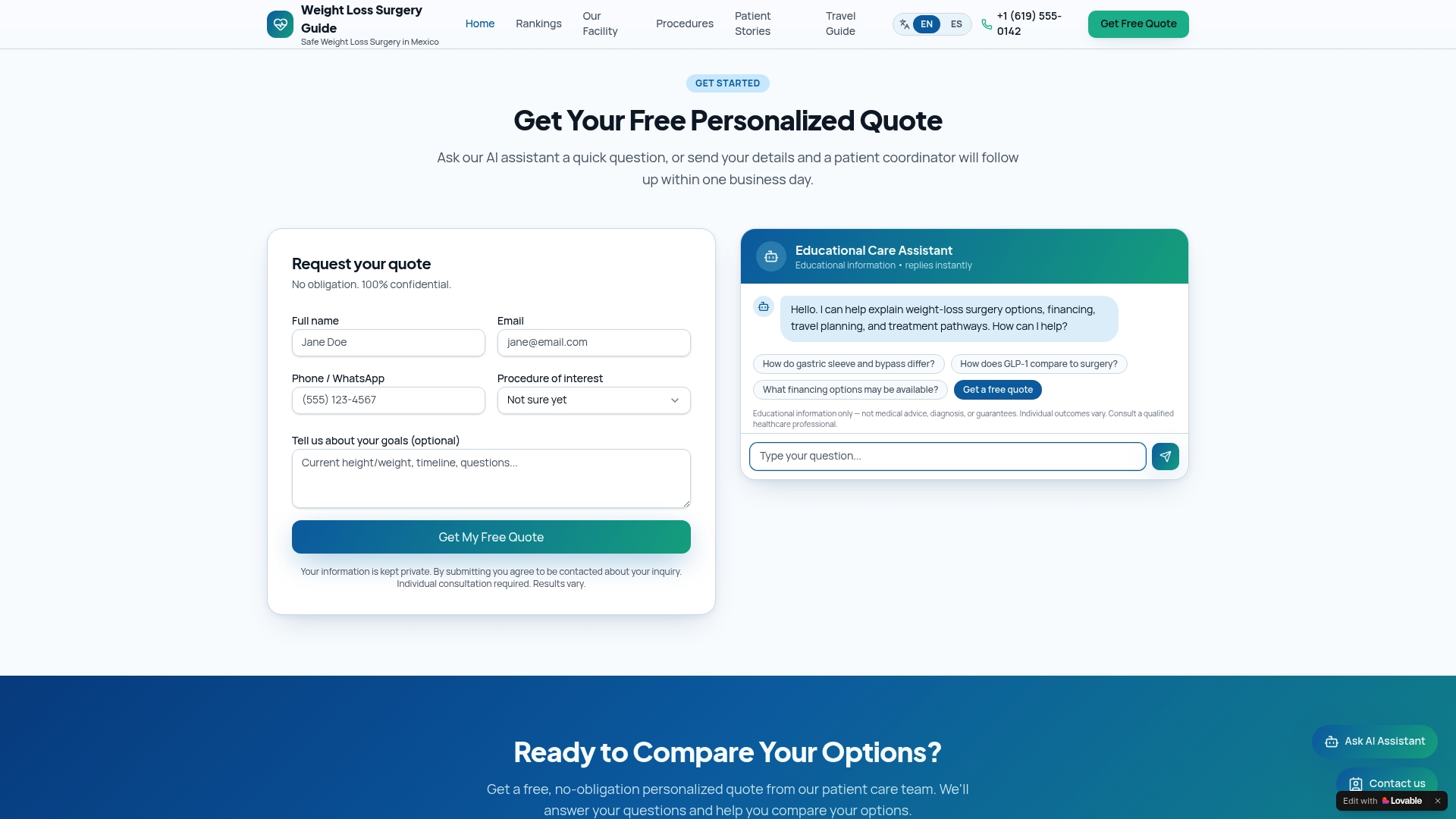
The rankings cover accreditation status, surgeon credentials, procedure options, package pricing, and patient outcome data. You can also review the bariatric accreditation standards that separate credible clinics from those worth avoiding. Weightlosssurgeryguide gives you the information you need to make a confident, well-documented decision before you book a flight.
FAQ
How much can Canadians save on bariatric surgery in Tijuana?
Canadians typically save 60–75% compared to Canadian private clinic prices. Gastric sleeve surgery costs $4,500–$6,500 USD in Tijuana versus $18,000–$22,000 CAD at private Canadian clinics.
Is bariatric surgery in Tijuana safe for Canadian patients?
Surgery at JCI or CSG-accredited Tijuana clinics meets documented international safety standards. Surgeons at top Tijuana facilities perform hundreds of bariatric procedures annually, which correlates with lower complication rates.
Can Canadians claim bariatric surgery in Mexico on their taxes?
The Canadian Medical Expense Tax Credit under CRA Line 33099 may apply to surgery costs incurred abroad when the procedure meets eligibility criteria. Keep itemized receipts, currency conversion records, and a physician referral letter to support your claim.
How long does it take to schedule surgery in Tijuana?
Most accredited Tijuana clinics schedule surgery within 2–4 weeks of initial contact, compared to up to four years in Canada's public system.
What does a Tijuana bariatric surgery package typically include?
All-inclusive packages generally cover surgery, hospital stay, hotel recovery, medications, and local ground transport. Some packages also include pre-operative consultations and a post-operative follow-up coordinator.