3 Accompaniment Options for Tijuana Surgery: How to Check 24/7 Nursing
Published September 5, 2026
3 Accompaniment Options for Tijuana Surgery: How to Check 24/7 Nursing
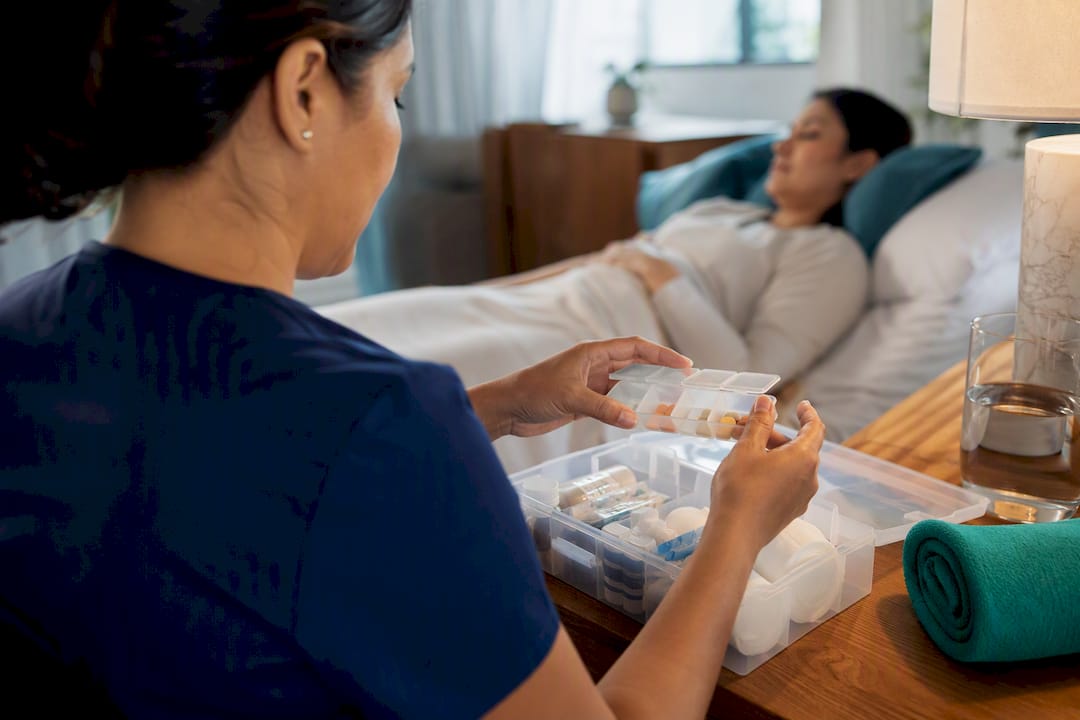
You have three real options for accompaniment during surgery in Tijuana: bring a personal companion, book a recovery house with licensed nursing, or hire a private nurse or medical escort. For bariatric surgery or any complex procedure, a recovery house with 24/7 nursing is usually the safer choice, since a personal companion alone cannot manage wound care, medication timing, or a medical emergency. A companion can work well for lower-risk cosmetic procedures with short recovery windows. The sections below cover how to verify each option, what logistics to lock down, and what packages typically cost.
TL;DR:
- Recovery houses with 24/7 licensed nursing provide the safest option for complex surgeries like bariatric procedures, while companions are suitable for low-risk, short-recovery cosmetic surgeries.
- Verify nursing credentials, bilingual staff, and the hospital transfer protocol in writing before booking any recovery service, rather than relying on marketing claims.
- Ensure your transportation is coordinated through your surgical team and lock down logistics such as medication plans, prescriptions, and contact information before crossing the border.
- Costs vary based on staffing level, room type, and bundled services, with red flags including vague transport or billing practices and hidden extra fees.
- Most US and Canadian insurance plans do not cover elective Mexican surgeries or associated recovery services, so consider travel insurance and request documented care plans for liability clarity.
Table of Contents
- What Does Each Accompaniment Option Actually Provide?
- How Do You Choose the Right Option and Provider?
- What Logistics Should You Lock Down Before You Travel?
- What Do Accompaniment Services Typically Cost?
- What Insurance and Liability Should You Understand Before Booking?
- What Cultural and Communication Factors Matter in Tijuana?
- Publisher Perspective: Common Mistakes and What to Prioritize
- How online resources can help you verify recovery options in Tijuana
- Sources
What Does Each Accompaniment Option Actually Provide?
The three options are not interchangeable, and confusing them is where most planning mistakes start.
A recovery house functions like a step-down medical facility rather than a hotel room with a nurse dropping by. Facilities in Tijuana typically staff 24/7 nursing, wound care, medication management, meal preparation, and transport to post-op appointments, covering the hours right after surgery when complications are most likely to show up. Some, like Cocoon Recovery, add lymphatic drainage massage and nutritionist-designed meal plans on top of the medical basics, though those extras are supplementary, not a substitute for clinical monitoring.
A personal companion (a spouse, adult child, or friend) provides real value: emotional support, help getting to the bathroom, keeping track of instructions, and simply being present. Their limits matter just as much. A companion should not be handling wound dressing changes, injectable medications, or judging whether a fever or swelling pattern is normal versus dangerous. Asking an untrained companion to do clinical work puts the patient at risk and puts unfair pressure on someone who came along to help, not to practice medicine.
A private nurse or medical escort sits between the two. These are licensed professionals, often working set shifts (8 or 12 hours), who handle medication administration, vital sign checks, and wound care either in a hotel room or at a recovery house. Ask directly about licensure and shift coverage:
- Is the nurse licensed in Mexico, and can the provider show credentials on request?
- Does coverage run around the clock, or only for scheduled shifts with gaps overnight?
- Who takes over if the assigned nurse is unavailable on a given day?
How Do You Choose the Right Option and Provider?
Run through a short verification checklist before booking anything, rather than choosing based on a glossy website alone. Verification should focus on clinician credentials and a documented handoff from your surgeon, not marketing language about comfort and luxury rooms.
- Confirm licensed nursing staff. Ask for the credentials of the nurses on duty, not just a claim that "medical staff" are present.
- Confirm bilingual coverage. You need staff who can understand your symptoms in English and communicate clearly with your surgical team in Spanish.
- Get the physician handoff in writing. Your surgeon should document what the recovery team is watching for and when to call.
- Ask about the emergency escalation plan. Find out exactly which hospital they transfer to, how far it is, and who makes that call.
- Confirm proximity to your operating hospital. A recovery house fifteen minutes from your hospital is a very different risk profile than one an hour away.
Operationally, ask about nurse-to-patient ratio (one nurse covering two patients is different from one covering eight), whether a physician does daily rounds, what transport is included, and what is explicitly excluded from the base rate.
Pro Tip: Ask the recovery house to name the exact hospital they transfer to in an emergency, then confirm that hospital is accredited and within a short drive. A vague answer like "a nearby hospital" is a red flag.
If you are training a personal companion instead, keep their role to mobility assistance, medication reminders (not administration), and tracking symptoms to report. Anything requiring a license belongs to a nurse.
What Logistics Should You Lock Down Before You Travel?
Most accompaniment failures are not medical. They are logistical: a missed transfer, a forgotten prescription, a companion who did not know the address of the recovery house.
Start with timing. Follow your surgeon's specific instructions on the no-fly window after your procedure. Bariatric and other major surgeries often call for a longer buffer than facial or minor body procedures, so do not assume a generic timeline applies to your case. Some Tijuana surgical practices recommend traveling with an adult companion for the first 5 to 7 days after certain procedures, and arrange recovery-house nursing when a companion is not available.
Handle transport through your surgical coordinator rather than a random taxi or rideshare booked last minute. Facilitators recommend coordinating airport, clinic, and hotel transport through your medical team so you have access to medical-grade transfers if your condition requires one on short notice.
Before you cross the border, pack:
- A written pain management and medication plan, ideally reviewed with your surgeon
- Physical copies of your prescriptions and surgical consent forms
- Contact details for your surgeon, the recovery house or nurse, and the hospital
- Any mobility equipment you will need at home; a hospital bed for home recovery is worth arranging before you leave, not after
If a companion is staying with you, ask the recovery house about rooming policies, visitor hours, and whether their stay is included in your package or billed separately.
What Do Accompaniment Services Typically Cost?
Prices vary based on a few clear factors: whether staffing is an RN or a lower-tier assistant, private versus shared rooms, how many nights you stay, and whether transport and physician visits are bundled in or billed as add ons.
Named providers such as Baja Premium Care, Cocoon Recovery, Palmas Recovery, and Recovery House Tijuana each package these differently, so a like-for-like comparison means asking the same questions of each one rather than comparing sticker prices alone. Recovery houses commonly bundle private rooms, certified nursing, transport, and supportive therapies into a single nightly rate, which tends to run higher than a bare-bones room with occasional nurse check-ins but lower than paying for a dedicated private nurse around the clock.
Watch for these red flags in low quotes:
- Transport listed as "available" rather than included
- No mention of physician visits, only "nursing staff"
- Taxes or border fees added after the quoted price
- Extra nursing hours billed separately if your stay runs longer than planned
Ask every provider for a full breakdown, not a single nightly figure, before comparing options.
What Insurance and Liability Should You Understand Before Booking?
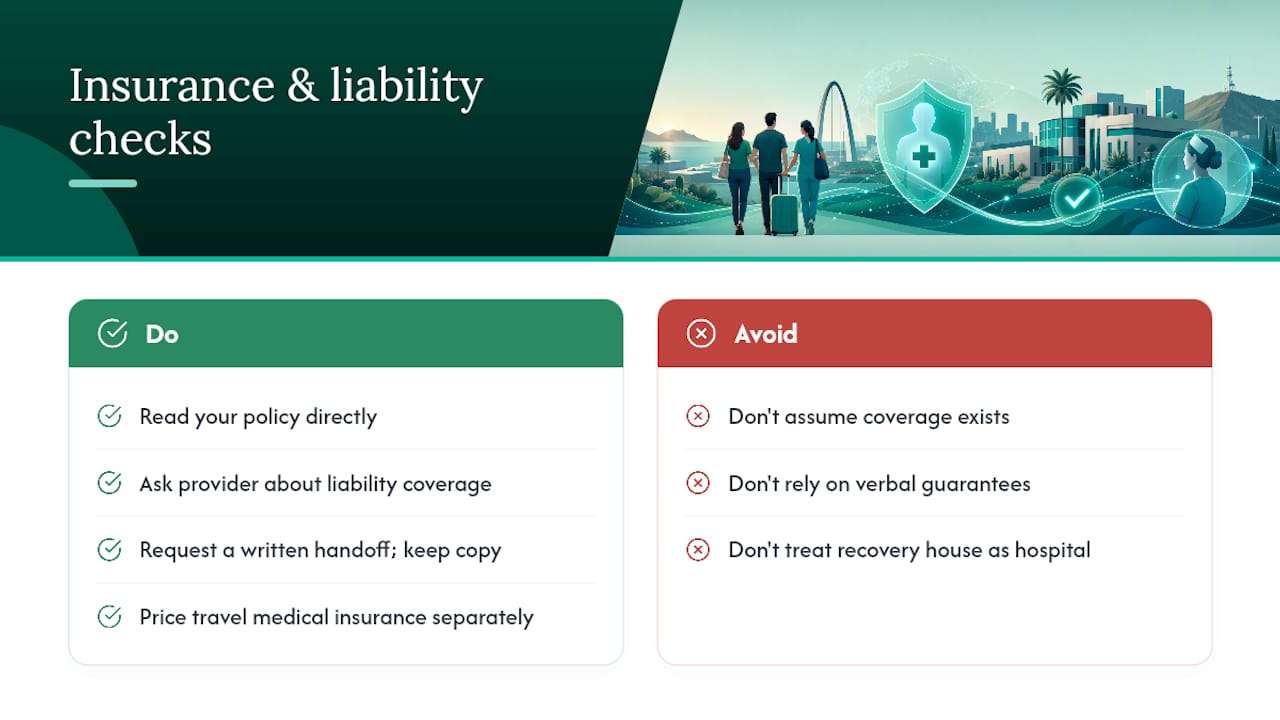
Most US and Canadian health insurance plans do not cover elective surgery performed in Mexico, and that gap usually extends to any accompaniment or recovery-house services booked around it. Read your policy directly rather than assuming coverage exists, and ask any Mexico-based provider what liability coverage they carry for care delivered in their facility.
Recovery houses and private nurses in Tijuana operate as licensed but independent providers, not as extensions of the hospital where you had surgery. That distinction matters for accountability: a documented handoff between your surgeon and the recovery house creates a paper trail that clarifies who is responsible if a problem arises during your stay. Ask for that handoff in writing and keep a copy.
Travel medical insurance built for cross-border surgery exists and is worth pricing out separately from your regular health plan, since it can cover complications, extended stays, or emergency transfer costs that a recovery house's base package will not. If a provider offers any kind of guarantee or complication coverage, get the specific terms in writing rather than relying on a verbal assurance, since claims like that vary enormously in what they actually cover.
What Cultural and Communication Factors Matter in Tijuana?
Tijuana's medical tourism sector is used to English-speaking patients, but staff bilingual ability varies by role and by shift. A front-desk coordinator may be fully fluent while an overnight nursing assistant speaks limited English, so confirm bilingual coverage specifically for the hours you will need it most, not just during business hours when a manager is present.
Mexican medical culture tends to be warm and personal, and companions sometimes read that informality as less rigorous than what they expect at home. It is not. Ask direct questions anyway. Politeness on the provider's side should never stop you from asking for credentials, a written care plan, or a hospital transfer protocol.
If your companion does not speak Spanish, write down key phrases related to pain level, allergies, and emergency needs before you arrive, and confirm the recovery house has a translator or bilingual nurse reachable at all hours. Simple written notes reduce the chance that a symptom gets lost in translation at 2 a.m.
Publisher Perspective: Common Mistakes and What to Prioritize
The mistake we see most often is trusting a warm welcome over a paper trail. Insist on documented nursing credentials and a written handoff from your surgeon, not just a friendly tour of the facility. For the first 48 to 72 hours after major surgery, and for any bariatric case, a recovery house with round-the-clock nursing beats a well-meaning companion every time; that window is when complications actually surface. Use a provider directory and accreditation resources to check hospitals and recovery centers before you commit, rather than relying on reviews alone.
— Ariel
How online resources can help you verify recovery options in Tijuana
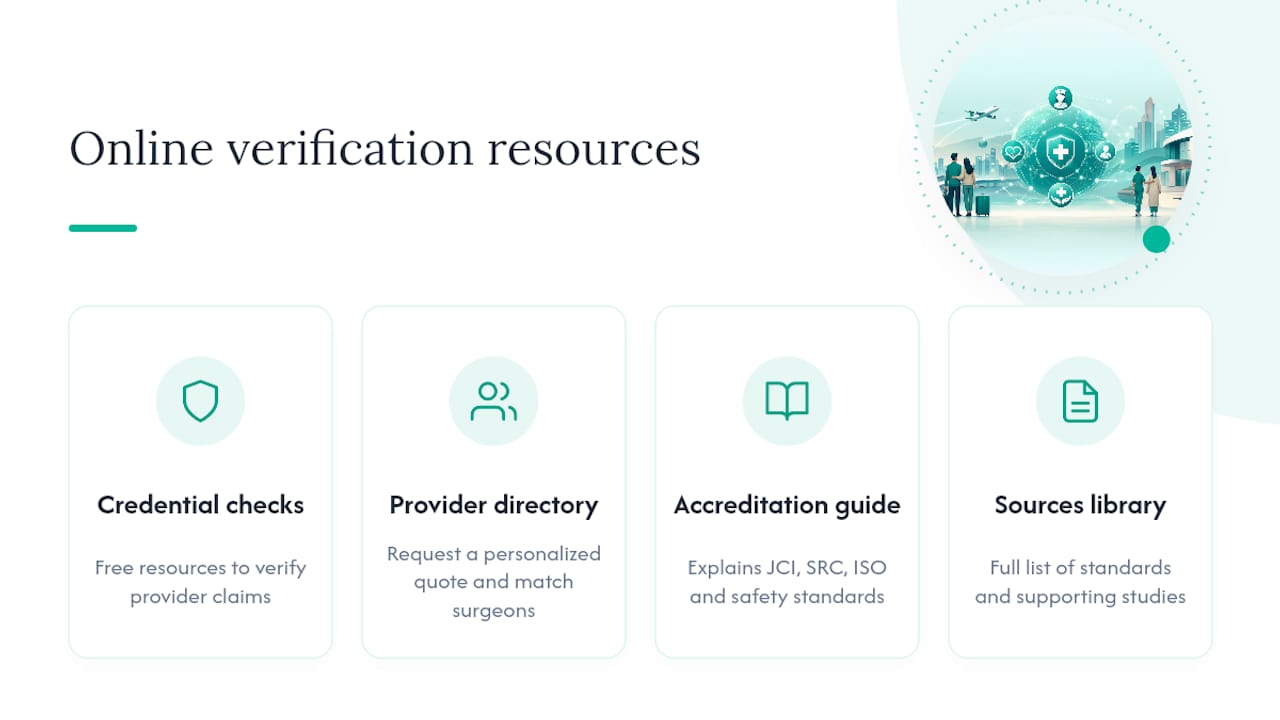
There are resources available that aim to close the gap between a recovery house's marketing claims and the actual credentials behind them, at no cost to patients comparing options. Instead of guessing which provider's "certified nursing staff" claim is accurate, patients can consult these resources to understand hospital and surgeon accreditation and what standards like JCI, SRC, and ISO mean for safety.
If you are still finalizing your surgeon and want that decision coordinated with your recovery plan from the start, our provider directory for bariatric surgeons in Tijuana lets you request a personalized quote and get help matching a surgeon whose hospital handoff process fits the recovery option you choose. You can also review our accreditation guide to understand exactly what those certifications mean before you sign anything. Request your free personalized quote today to get that verification working for you before you book flights.
Medical reviewer: Dr. Alejandro Reyes, Bariatric Surgery Advisory Board, Weightlosssurgeryguide Last reviewed: January 2026
Sources: Baja Premium Care, Baja Health Cluster — Plan Your Medical Trip to Tijuana, Postoperative Recovery in Tijuana – Baja Premium Care, Recovery House Tijuana, Cocoon Recovery. For a full list of the standards and studies we rely on, visit our Sources & Verification library.
This article is for educational purposes and reflects independent research into publicly available provider information. It is not medical advice and does not replace a consultation with your surgeon or a licensed healthcare provider. Weightlosssurgeryguide connects patients with vetted providers, including our affiliated partners at Obesitycontrolcenter.com and CYNTAR.mx, and any decision about accompaniment, recovery care, or surgery itself should be made with your surgical team's direct guidance.