Why Obesity Comorbidities Qualify You for Weight Loss Surgery
Published July 9, 2026

Why Obesity Comorbidities Qualify You for Weight Loss Surgery
Obesity comorbidities are defined as medical conditions caused or worsened by excess body weight that directly qualify individuals for bariatric surgery under current clinical guidelines. Conditions like type 2 diabetes, hypertension, and obstructive sleep apnea are not side effects to manage separately. They are the primary medical justification for surgical intervention. The American Society for Metabolic and Bariatric Surgery (ASMBS) recognizes these conditions as central to obesity surgery eligibility, not secondary concerns. Understanding why obesity comorbidities qualify surgery is the first step toward making an informed decision about your health.
Medically reviewed for accuracy. Last reviewed: 2026. This article is for educational purposes only and does not constitute medical advice. Consult a qualified bariatric surgeon or physician to evaluate your individual situation.
Why obesity comorbidities qualify surgery: the clinical case
Bariatric surgery is not simply a weight loss tool. It is a metabolic treatment for a cluster of diseases that obesity drives. Clinical guidelines from the ASMBS recommend surgery for patients with a BMI of 35 or higher regardless of comorbidities, and for patients with a BMI of 30–34.9 who have type 2 diabetes or other metabolic conditions that do not respond to non-surgical treatment. That lower threshold exists because the comorbidities themselves represent life-threatening risk, independent of weight alone.

The logic is straightforward. A patient with a BMI of 32 and uncontrolled type 2 diabetes faces a substantially higher risk of cardiovascular disease, kidney failure, and early death than a patient with the same BMI and no metabolic disease. Surgery addresses both the weight and the disease simultaneously. That dual impact is what makes comorbidities the cornerstone of surgical candidacy, not just a checkbox on an intake form.
What are the key comorbidities that qualify for weight loss surgery?
Six conditions appear most consistently in clinical eligibility criteria for bariatric surgery. Each one carries measurable health risk and responds well to surgical intervention.
| Comorbidity | Primary health risk | Surgery impact |
|---|---|---|
| Type 2 diabetes | Cardiovascular disease, kidney failure | High remission rates post-surgery |
| Hypertension | Stroke, heart attack | Significant blood pressure reduction |
| Dyslipidemia | Atherosclerosis, heart disease | Improved cholesterol profiles |
| Obstructive sleep apnea | Oxygen deprivation, heart strain | Reduced apnea events post-op |
| Metabolic dysfunction-associated steatotic liver disease (MASLD) | Liver fibrosis, cirrhosis | Reduced disease progression |
| Osteoarthritis | Joint destruction, disability | Reduced mechanical load on joints |
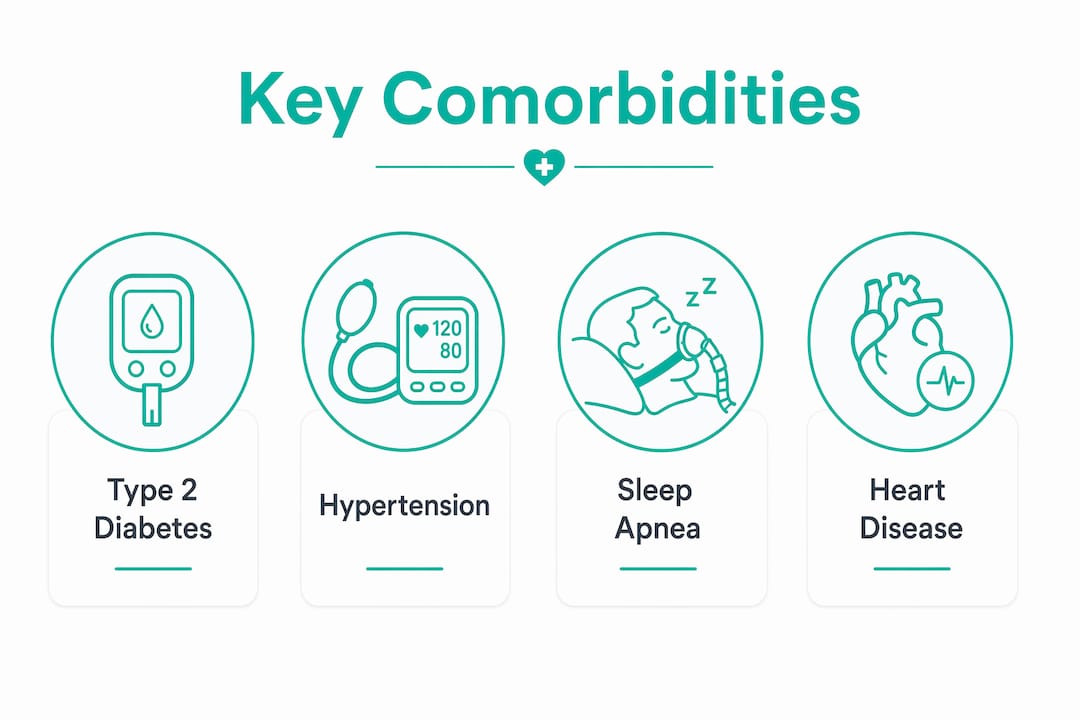
Type 2 diabetes carries the most weight in eligibility decisions. Uncontrolled blood sugar accelerates damage to the kidneys, eyes, nerves, and heart. Hypertension compounds that risk by straining the cardiovascular system around the clock. Sleep apnea adds a third layer by depriving the body of oxygen during sleep, which stresses the heart and raises blood pressure further.
What makes this list clinically significant is that these conditions interact. A patient with diabetes, hypertension, and sleep apnea does not simply have three separate problems. Each condition worsens the others. That compounding effect is precisely why surgeons and guidelines treat multiple comorbidities as a stronger argument for surgery, not a reason to delay it.
How do BMI and comorbidities together determine surgery eligibility?
BMI alone does not determine who qualifies for bariatric surgery. The current eligibility criteria combine BMI thresholds with comorbidity burden to create a more accurate picture of surgical need.
The standard thresholds work as follows:
- BMI of 35 or higher: Surgery is recommended regardless of whether comorbidities are present.
- BMI of 30–34.9 with metabolic disease: Surgery is recommended when conditions like type 2 diabetes or hypertension do not respond to diet, exercise, or medication.
- BMI of 27.5 or higher for Asian patients: The threshold is lower because metabolic risk is higher at lower BMI levels in this population.
Consider two patients. The first has a BMI of 38 with no comorbidities. The second has a BMI of 31 with uncontrolled type 2 diabetes and hypertension that have not improved after two years of medical management. Both qualify for surgery under ASMBS guidelines, but for different reasons. The first qualifies on BMI alone. The second qualifies because the comorbidities represent an urgent, unresolved health threat.
This framework matters because many patients assume they need a BMI above 40 to be considered. That assumption causes people to delay care until their health deteriorates further. The ASMBS and the American Diabetes Association both support surgery at lower BMI thresholds when metabolic disease is present and unresponsive to other treatments.
One important nuance: there is no requirement to delay surgery until a specific HbA1c level is achieved. Uncontrolled diabetes requires closer monitoring, but it does not disqualify a patient from surgery.
Pro Tip: Ask your surgeon specifically about the BMI threshold that applies to your ethnic background and comorbidity profile. The standard 35 cutoff is not universal, and you may qualify at a lower BMI than you expect.
What are the health benefits of weight loss surgery on comorbidities?
Surgery produces measurable, sustained improvements across every major obesity-related comorbidity. The evidence is not preliminary. It comes from large, long-term studies comparing surgical patients to those managed with diet and medication alone.
Bariatric surgery patients had a more than 50% lower risk of developing type 2 diabetes, hypertension, hyperlipidemia, and obstructive sleep apnea over five years compared to patients in weight management programs. That is not a marginal improvement. It represents a fundamental change in disease trajectory.
The specific numbers reinforce this point. The incidence rate of type 2 diabetes was 1.1 per 1,000 person-years in surgical patients versus 4.3 per 1,000 person-years in controls at five years post-surgery. Patients who had surgery also showed a 40.4% lower risk of developing metabolic dysfunction-associated steatotic liver disease compared to those in non-surgical programs.
The cardiovascular benefits extend further than most patients realize. Heart failure incidence was 6.8% over eight years in surgical patients versus 18.9% in controls. Surgery is also associated with a 29% reduction in overall cancer risk. Sleep apnea events dropped by 25.8 per hour after surgery. These are not quality-of-life improvements alone. They are reductions in conditions that kill people.
Surgery also outperforms medication over the long term. Bariatric surgery produces superior long-term remission rates of obesity-related comorbidities compared to caloric restriction and GLP-1 receptor agonists. Medications like semaglutide are effective, but they require continuous use and do not produce the same systemic metabolic changes that surgery does.
Pro Tip: Post-surgery lifestyle changes, including diet quality and physical activity, determine how long remission lasts. Surgery creates the conditions for improvement. Sustained habits lock in the results.
What does the preoperative evaluation involve beyond BMI?
Surgical candidacy is not decided in a single appointment. Preoperative counseling and assessment are critical phases that diagnose the full comorbidity burden and prepare the patient for the physical and psychological changes ahead.
A complete preoperative evaluation covers several distinct areas:
- Medical assessment: Screening for conditions that affect anesthesia risk, including advanced lung disease, heart failure, and uncontrolled diabetes. Existing comorbidities are stabilized before surgery when possible.
- Nutritional evaluation: Identifying deficiencies in iron, vitamin D, B12, and other nutrients that surgery can worsen if not addressed beforehand.
- Psychological readiness: Assessing behavioral patterns, history of eating disorders, depression, and the patient's understanding of what surgery requires long-term.
- Lifestyle factors: Tobacco cessation is required before surgery at most accredited centers. Smoking significantly increases surgical and healing risk.
- Patient education: Setting realistic expectations about weight loss timelines, dietary changes, and the possibility of comorbidity resolution versus improvement.
This interdisciplinary process exists because surgery outcomes depend heavily on what happens before the procedure. A patient who enters surgery with stabilized blood pressure, corrected nutritional deficiencies, and a clear understanding of post-operative requirements has a meaningfully better chance of long-term success.
The comprehensive assessment also evaluates psychological readiness and anesthetic risk, two factors that BMI alone cannot capture. Patients with a history of severe depression or untreated anxiety may need additional support before surgery is appropriate. This is not a barrier. It is a safeguard that improves outcomes.
Despite strong evidence for surgery's benefits, only 0.5% to 1.0% of eligible patients actually receive bariatric surgery. Lack of awareness about safety, effectiveness, and access are the primary reasons. That gap represents millions of people living with preventable disease progression.
Key Takeaways
Obesity comorbidities are the primary medical justification for bariatric surgery, and surgery produces measurable, sustained reductions in disease risk that medication and diet alone cannot match.
| Point | Details |
|---|---|
| Comorbidities drive eligibility | Type 2 diabetes, hypertension, and sleep apnea qualify patients at BMI 30–34.9 when unresponsive to treatment. |
| BMI thresholds vary by population | Asian patients qualify at BMI 27.5 due to higher metabolic risk at lower body weight. |
| Surgery cuts disease risk sharply | Surgical patients had more than 50% lower risk of developing major comorbidities over five years versus controls. |
| Pre-op evaluation is comprehensive | Medical, nutritional, and psychological assessments all determine candidacy and improve outcomes. |
| Surgery outperforms medication long-term | Bariatric surgery produces superior comorbidity remission rates compared to GLP-1 receptor agonists and caloric restriction. |
What I've learned about comorbidities and surgery candidacy
Most patients I speak with assume their BMI is the only number that matters. That assumption causes real harm. I've seen people wait years, watching their diabetes worsen and their blood pressure climb, because they believed they weren't "heavy enough" to qualify. The clinical guidelines do not support that belief.
The more accurate framing is this: surgery is a metabolic intervention that happens to produce weight loss, not a weight loss procedure that happens to improve metabolism. When you look at it that way, the role of comorbidities in qualifying patients makes complete sense. A patient with uncontrolled type 2 diabetes and hypertension at a BMI of 31 has a more urgent medical case for surgery than a patient with a BMI of 42 and no metabolic disease.
The other misconception I encounter regularly is that surgery is the "easy way out." The preoperative process alone, which includes psychological evaluation, nutritional correction, and lifestyle preparation, requires real commitment before a single incision is made. Patients who go through that process seriously tend to get the best outcomes. Surgery creates the conditions for change. The patient has to show up for the rest.
If you have been told you do not qualify, or if you have been managing comorbidities with medication for years without resolution, a formal evaluation with a bariatric surgeon is worth pursuing. The eligibility criteria are broader than most people realize, and the health stakes of waiting are real.
— Ariel
Considering surgery? Here is where to start
Patients researching surgical options for obesity often spend months gathering information before taking a concrete step. Weightlosssurgeryguide exists to make that process faster and more reliable.

Weightlosssurgeryguide publishes annually updated rankings of accredited bariatric surgery providers in Tijuana, Mexico, where US patients can access internationally accredited care at 60–75% lower cost than domestic pricing. The 2026 provider rankings include verified credentials, patient outcome data, and procedure-specific information for gastric bypass, sleeve gastrectomy, and other surgical options. If you are ready to compare vetted providers and understand your options, the 2026 provider rankings are the most direct place to begin.
FAQ
What BMI qualifies you for weight loss surgery with comorbidities?
A BMI of 30–34.9 qualifies for surgery when metabolic comorbidities like type 2 diabetes or hypertension do not respond to non-surgical treatment. For Asian patients, the threshold is 27.5 due to higher metabolic risk at lower BMI levels.
Can uncontrolled diabetes disqualify you from bariatric surgery?
Uncontrolled diabetes does not disqualify a patient from surgery. There is no requirement to reach a specific HbA1c level before operating, though closer monitoring is required during the perioperative period.
How much does surgery reduce the risk of type 2 diabetes?
Bariatric surgery patients had a type 2 diabetes incidence rate of 1.1 per 1,000 person-years at five years post-surgery, compared to 4.3 per 1,000 person-years in non-surgical controls. That represents a reduction of more than 50%.
What conditions are evaluated in a bariatric surgery preoperative assessment?
The assessment covers medical conditions affecting anesthesia risk, nutritional deficiencies, psychological readiness, tobacco use, and the patient's understanding of post-operative lifestyle requirements. All major comorbidities are identified and stabilized when possible before surgery proceeds.
Is bariatric surgery more effective than GLP-1 medications for comorbidities?
Surgery produces superior long-term remission rates for obesity-related comorbidities compared to GLP-1 receptor agonists and caloric restriction. Medications require continuous use and do not replicate the systemic metabolic changes that surgery creates.
This article is educational and does not replace personalized medical advice. Consult a qualified bariatric surgeon to evaluate your specific eligibility and health needs.
Recommended
- Weight Loss Surgery Candidacy Criteria: 2026 Guide | Weight Loss Surgery Guide
- Bariatric Surgery Candidacy Explained for 2026 | Weight Loss Surgery Guide
- Surgical Weight Loss Definition: What You Need to Know | Weight Loss Surgery Guide
- Weight Loss Surgery Checklist for Americans: 2026 Guide | Weight Loss Surgery Guide