Weightlosssurgery.ca Alternatives: Best Options in 2026
Published July 23, 2026

Weightlosssurgery.ca Alternatives: Best Options in 2026
Medically reviewed by the Weightlosssurgeryguide editorial team | Last reviewed: March 2026
This article is for educational purposes only and does not constitute medical advice. Always consult a qualified healthcare provider before making any treatment decisions.
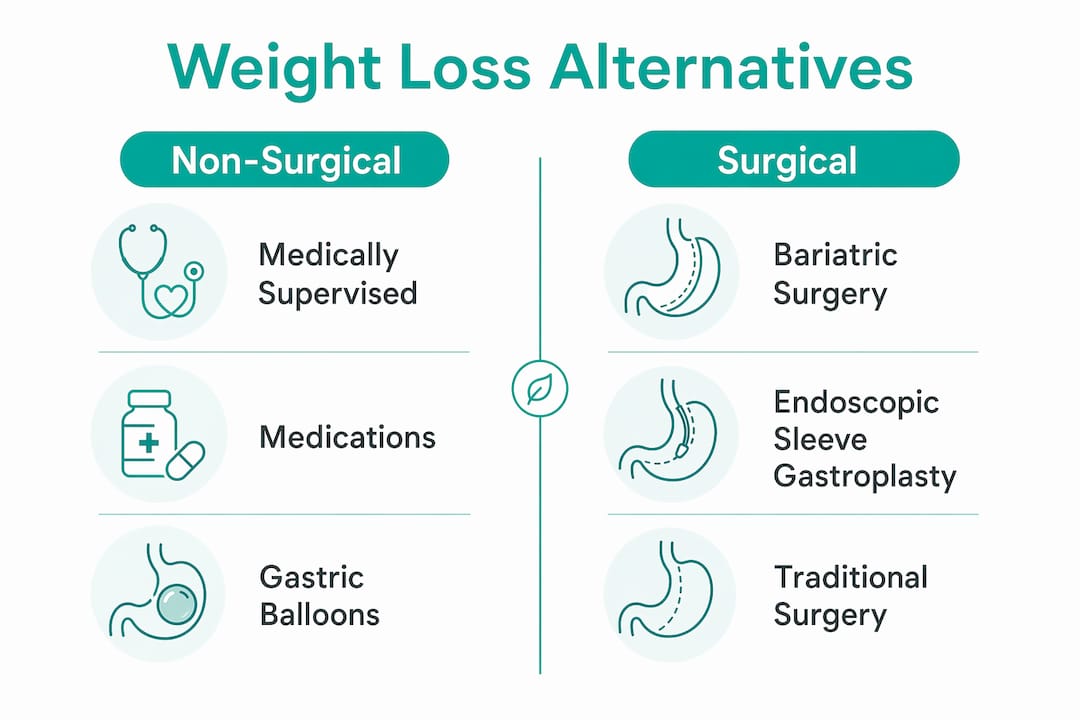
If you've been researching weightlosssurgery.ca alternatives, the short answer is that you have real options, and several of them are available right now in the US without a long public waitlist. The main categories worth knowing:
- Medically supervised diets and lifestyle programs: Structured plans led by dietitians, behavioral therapists, and exercise specialists. Expect gradual, sustained weight loss with metabolic improvements over months.
- FDA-approved weight loss medications: Phentermine-Topiramate (Qsymia), Liraglutide (Saxenda), and Orlistat (Alli/Xenical) are the three most commonly prescribed options. Each works differently and carries a distinct side-effect profile.
- Gastric balloon procedures: Orbera, Reshape, and Obalon are temporary, minimally invasive devices placed in the stomach to reduce hunger and portion size. None require incisions.
- Endoscopic Sleeve Gastroplasty (ESG): A newer endoscopic procedure that sutures the stomach from the inside, reducing its volume without any surgical cuts. ESG achieves 15–20% total body weight loss in appropriate candidates.
- Surgical alternatives available in the US: Gastric bypass, sleeve gastrectomy, and duodenal switch remain the gold standard for maximum weight loss, available through US hospitals or through accredited providers abroad.
Each path has a different cost, risk level, and long-term commitment. The sections below break down exactly what you need to know about each one.

Medically supervised diets and lifestyle programs
Medically supervised programs are often the first line of treatment for obesity, and for good reason. They address the metabolic and behavioral factors that drive weight gain, not just the number on the scale. Clinical perspectives from obesity medicine consistently emphasize that metabolic and behavioral interventions form the foundation of any lasting weight loss plan, whether or not surgery is eventually involved.
A well-structured program typically includes:
- Dietitian-led meal planning: Calorie targets, macronutrient balance, and meal timing tailored to your metabolic profile
- Behavioral therapy: Cognitive behavioral techniques to address emotional eating, food relationships, and habit formation
- Exercise programming: Supervised physical activity plans adjusted for current fitness level and any mobility limitations
- Medical monitoring: Regular labs, blood pressure checks, and metabolic panels to track progress and catch complications early
- Medication supplementation: Some programs incorporate pharmacotherapy when diet and exercise alone plateau
The multidisciplinary model matters because no single provider can address all the drivers of obesity. A dietitian sees what a physician misses; a behavioral therapist catches what a dietitian can't fix. Programs that combine all three consistently outperform single-discipline approaches in long-term weight maintenance.
Pro Tip: When evaluating a medically supervised program, ask specifically how long the monitoring phase lasts after you hit your goal weight. Programs that end at goal weight, rather than continuing for 12–24 months of maintenance, have significantly higher relapse rates.
FDA-approved weight loss medications you should know about
Prescription weight loss medications are a legitimate, evidence-backed alternative to surgery for patients who don't qualify for or don't want an invasive procedure. Three options dominate clinical practice in the US right now.
| Medication | Mechanism | Typical weight loss | Common side effects | Approximate annual cost (US) |
|---|---|---|---|---|
| Phentermine-Topiramate (Qsymia) | Appetite suppression + satiety enhancement | 15–20% total body weight | Dry mouth, insomnia, cognitive effects | — |
| Liraglutide (Saxenda) | GLP-1 receptor agonist; slows gastric emptying | 5–8% total body weight | Nausea, vomiting, diarrhea | $12,000 |
| Orlistat (Alli/Xenical) | Blocks dietary fat absorption in the gut | 3–5% total body weight | Oily stools, GI cramping, fat-soluble vitamin loss | — |
A few things worth knowing beyond the table. Liraglutide belongs to the same GLP-1 class as Wegovy (semaglutide), which has received significant attention for its weight loss results. The FDA approved Liraglutide for chronic weight management in adults and adolescents aged 12 and older. Insurance coverage for these medications varies widely. In Canada, for context, Wegovy costs roughly $5,066 annually and public plans don't currently cover it for obesity treatment. US commercial insurance coverage is inconsistent, and many patients pay out of pocket. You can estimate your long-term GLP-1 costs using Weightlosssurgeryguide's GLP-1 cost calculator before committing to a medication plan.
Key limitations to keep in mind:
- Weight loss from medications typically plateaus and may reverse if the medication is stopped
- None of these drugs are appropriate for patients with certain cardiovascular conditions or thyroid disorders
- Orlistat requires strict adherence to a low-fat diet or side effects become severe
- Long-term data beyond two years is limited for most agents
Gastric balloon procedures: Orbera, Reshape, and Obalon compared
Gastric balloons sit in a category of their own: minimally invasive, temporary, and reversible. They work by occupying space in the stomach, which reduces hunger signals and limits how much you can eat at one sitting. No incisions, no general anesthesia for most placements, and no permanent anatomical changes.

| Feature | Orbera | Reshape | Obalon |
|---|---|---|---|
| Insertion method | Endoscopic (swallowed deflated, inflated in stomach) | Endoscopic (dual balloon system) | Swallowed as a capsule; inflated via catheter |
| Duration in stomach | 6 months | 6 months | Up to 6 months |
| Number of balloons | Single | Dual | Up to 3 balloons placed over time |
| Procedure setting | Outpatient endoscopy | Outpatient endoscopy | Office-based |
| Approximate US cost | — | — | — |
| FDA clearance | Yes | Yes | Yes |
The FDA cleared Orbera for use in adults with a BMI of 30–40 who have not responded to diet and exercise alone. The Reshape dual balloon received similar clearance. Obalon's swallowable capsule design is the most patient-friendly of the three in terms of placement experience, though all three require removal at the six-month mark.
Common risks and suitability considerations:
- Nausea and vomiting are common in the first 1–2 weeks after placement
- Balloon deflation and migration, though rare, can be serious
- Not suitable for patients with prior stomach surgery, esophageal disorders, or active GI bleeding
- Lifestyle changes must accompany the balloon period; weight regain after removal is common without them
- Best candidates have a BMI of 30–40 and at least one obesity-related condition
For a deeper look at how balloons fit into a broader treatment plan, Weightlosssurgeryguide's gastric balloon procedure guide covers eligibility, preparation, and what to expect after removal.
Endoscopic sleeve gastroplasty (ESG) as a non-surgical alternative
ESG is the most procedure-like option that doesn't require a single incision. A flexible endoscope is passed through the mouth into the stomach, and a suturing device stitches the stomach wall from the inside, reducing its volume by roughly 70–80%. The result is a smaller, sleeve-shaped stomach that limits food intake and slows gastric emptying.
According to the Mayo Clinic, ESG achieves 15–20% total body weight loss, which puts it in the same range as some surgical procedures while carrying significantly lower risk. No incisions means no wound complications, no hernia risk, and a much faster return to normal activity.
Who is a good candidate for ESG:
- BMI of 30–40, ideally with at least one obesity-related condition such as type 2 diabetes or hypertension
- No prior stomach surgery that would complicate endoscopic access
- Willingness to commit to a post-procedure diet and behavioral program
- Patients who want a less invasive option before considering traditional surgery
Typical side effects include nausea, reflux, and abdominal discomfort in the first few weeks. Serious complications are uncommon but include bleeding and leaks at the suture sites. Follow-up requirements are real: most programs expect monthly check-ins for the first six months, then quarterly visits for at least a year. ESG without a structured aftercare program produces noticeably worse long-term results than ESG paired with dietary and behavioral support.
How do non-surgical alternatives compare to traditional bariatric surgery?
The honest answer is that surgery still wins on total weight loss. But the gap is narrower than most people expect for the right candidates, and the tradeoffs in risk and recovery are significant.
| Option | Type | Expected weight loss | Key risks | Approximate US cost | Long-term support needed |
|---|---|---|---|---|---|
| Medically supervised diet + medication | Non-surgical | 5–15% total body weight | Medication side effects, weight regain | $3,000/year | Ongoing, indefinite |
| Gastric balloon (Orbera/Reshape/Obalon) | Minimally invasive | 10–15% total body weight | Nausea, balloon migration, weight regain | — | 6–12 months active program |
| ESG | Endoscopic (no incision) | 15–20% total body weight | Bleeding, suture leaks, reflux | $12,000 | 12–24 months structured follow-up |
| Sleeve gastrectomy | Surgical | — | Leaks, GERD, nutritional deficiencies | $15,000 (US) | Lifelong nutritional monitoring |
| Gastric bypass | Surgical | 30–40% total body weight | Dumping syndrome, nutritional deficiencies | — | Lifelong nutritional monitoring |
| Duodenal switch | Surgical | — | Highest complication rate, severe malnutrition risk | — | Lifelong, intensive monitoring |
Non-surgical options generally yield less total weight loss than traditional bariatric surgery but carry fewer complications and faster recovery times. Reversibility is another factor: balloons and medications can be stopped; a sleeve gastrectomy cannot be undone. For patients with a BMI under 35 or those with medical conditions that raise surgical risk, non-surgical paths are often the more appropriate starting point. Patients who eventually need surgery after trying non-surgical options are not "failing." They're following a logical clinical progression.
Benefits and risks of non-surgical alternatives
The appeal of non-surgical weight loss options comes down to a few concrete advantages over traditional surgery.
Key benefits:
- No general anesthesia required for most non-surgical procedures
- No surgical incisions, which eliminates wound infection and hernia risk
- Faster return to work and normal activity (often days rather than weeks)
- Reversible or stoppable if side effects are unacceptable
- Lower upfront cost for most options compared to US surgical pricing
- Suitable for patients who don't meet surgical eligibility criteria or have elevated operative risk
Risks and side effects by category:
- Medications: Cardiovascular effects with stimulant-based drugs like Phentermine, GI distress with GLP-1 agents and Orlistat, and the near-certainty of weight regain if medication is discontinued without lifestyle changes in place
- Gastric balloons: Nausea and vomiting in the early weeks, rare but serious balloon deflation and migration, and moderate weight regain after removal without behavioral support
- ESG: Reflux, abdominal pain, and a small risk of bleeding or suture-site leaks; outcomes depend heavily on the skill of the endoscopist
- Medically supervised diets: Low direct risk, but metabolic adaptation can slow weight loss over time, and programs without behavioral components have high dropout rates
Weight loss sustainability is the central challenge across all non-surgical options. Surgery creates a physical constraint that persists; non-surgical interventions require ongoing behavioral and sometimes pharmacological support to maintain results. Non-surgical approaches with integrated programs and pharmacotherapy provide a promising middle ground for patients who are ineligible for or hesitant about surgery, but the word "integrated" is doing a lot of work in that sentence. A balloon alone, or a medication alone, without a structured lifestyle program, rarely produces durable results.
Cost overview of non-surgical weight loss options in the US
Cost is one of the most common reasons patients start looking at alternatives in the first place. Here's where the numbers land for the main non-surgical options.
| Option | Upfront cost (US) | Ongoing annual cost | Insurance coverage likelihood |
|---|---|---|---|
| Medically supervised diet program | — | — | Partial (varies by plan) |
| Orlistat (Alli/Xenical) | — | — | Rarely covered |
| Phentermine-Topiramate (Qsymia) | — | — | Rarely covered |
| Liraglutide (Saxenda) | — | $12,000 | Inconsistent; often denied |
| Gastric balloon (Orbera/Reshape/Obalon) | — | — | Rarely covered |
| ESG | $12,000 | — | Rarely covered |
A few things the table doesn't capture. Geographic variation in the US is real: ESG in New York City costs more than ESG in Phoenix, sometimes by $3,000–$5,000. Program fees for medically supervised diets vary enormously depending on whether you're seeing a hospital-based obesity medicine clinic or a private wellness center. And the ongoing cost column matters more than most patients initially realize. A gastric balloon that costs $8,000 upfront but includes a 12-month behavioral program is a better deal than one priced at $6,500 with no follow-up support, because the follow-up is what determines whether the weight stays off.
For patients considering surgical options and wanting to understand the full financial picture, Weightlosssurgeryguide's financial planning guide covers cost structures, financing options, and what to watch for in package pricing. Private bariatric surgery in Canada runs $18,000–$30,000 CAD, which is why many patients look south of the border or to accredited international providers for better value.
Why personalized aftercare determines long-term success
Surgery or no surgery, the aftercare phase is where most weight loss outcomes are won or lost. Studies show that comprehensive aftercare including multidisciplinary teams reduces weight regain and complications, improving both patient satisfaction and long-term success rates. That finding holds whether the initial treatment was a gastric balloon, ESG, or a full sleeve gastrectomy.
What a genuine multidisciplinary aftercare program includes:
- Registered dietitian visits: At minimum monthly for the first six months, then quarterly
- Behavioral health support: Ongoing access to a therapist or counselor who specializes in eating behavior
- Medical monitoring: Regular labs covering nutritional markers, metabolic panels, and any procedure-specific indicators
- Exercise guidance: Structured progression from early recovery activity to a sustainable long-term fitness routine
- Nursing or care coordinator access: Someone you can call between appointments when symptoms or concerns arise
The gap between programs that include all of this and those that don't is not subtle. Leading surgeons and obesity medicine specialists consistently point out that many lower-cost surgical packages lack comprehensive long-term aftercare, which drives higher eventual patient costs despite the lower upfront fee. A $12,000 package with no dietitian follow-up often costs more over three years than a $18,000 package that includes it, once you account for the complications, revision procedures, and weight regain management that follow.
Pro Tip: Before committing to any weight loss program or procedure, ask for a written breakdown of what aftercare is included in the price and for how long. If the answer is vague or the follow-up period is under 12 months, treat that as a red flag and factor the missing support into your total cost estimate.
For patients who want to understand what sustainable weight loss actually requires behaviorally, the research is consistent: the behavioral component of aftercare is not optional. It's the mechanism by which any procedure, surgical or not, produces lasting results.
Weightlosssurgeryguide's US doctor coordination guide covers how to set up a local support team after any weight loss procedure, which is particularly useful for patients who travel for surgery and need to establish care back home.
Key Takeaways
Non-surgical weight loss alternatives are most effective when paired with structured, long-term behavioral and medical support rather than used as standalone interventions.
| Point | Details |
|---|---|
| ESG leads non-surgical procedures | ESG achieves 15–20% total body weight loss with no incisions, making it the closest non-surgical match to bariatric outcomes. |
| Medications require ongoing commitment | GLP-1 agents and other prescription drugs produce results only while taken; stopping without lifestyle changes in place typically leads to weight regain. |
| Aftercare determines durability | Comprehensive multidisciplinary follow-up reduces weight regain and complications across all treatment types, surgical and non-surgical alike. |
| Cost comparisons must include follow-up | A lower upfront price without included aftercare often costs more over three years than a higher-priced package with full support. |
| Surgery remains the highest-efficacy option | Gastric bypass and sleeve gastrectomy produce 25–40% total body weight loss, which non-surgical options currently cannot match for severe obesity. |
Disclaimer: This content is provided for educational purposes only and does not constitute medical advice, diagnosis, or treatment recommendations. Weight loss outcomes vary by individual. Consult a board-certified physician or obesity medicine specialist before beginning any weight loss program or procedure.
Sources: Mayo Clinic, FDA, PubMed, CDC, and clinical references available at Weightlosssurgeryguide's evidence library.