What Is Bariatric Surgery? Your 2026 Complete Guide
Published July 7, 2026

What Is Bariatric Surgery? Your 2026 Complete Guide
Bariatric surgery is defined as a group of surgical procedures that modify the stomach or intestines to treat obesity and related metabolic disorders such as type 2 diabetes and hypertension. The American Society for Metabolic and Bariatric Surgery (ASMBS) recognizes these procedures as evidence-based, long-term treatments for severe obesity, not quick fixes. When diet, exercise, and medication have failed to produce lasting results, surgery addresses the biological root causes of weight gain. Bariatric surgery outperforms pharmacologic therapies like GLP-1 receptor agonists in long-term weight loss and remission of obesity-related conditions.
Medically reviewed by the Weightlosssurgeryguide editorial team | Last reviewed: January 2026
This article is for educational purposes only and does not constitute medical advice. Consult a qualified bariatric surgeon before making any medical decisions.
What is bariatric surgery and how does it work?
Bariatric surgery works by physically changing the digestive system to reduce how much you can eat, how nutrients are absorbed, or both. The word "bariatric" comes from the Greek word baros, meaning weight, and iatros, meaning physician. The field of bariatrics covers the full medical care of patients with obesity, including specialized equipment and clinical protocols designed for larger-sized patients.
Surgery triggers powerful hormonal shifts that go far beyond simply making your stomach smaller. These changes affect hunger signals, insulin release, and fat metabolism at a biological level. That is why bariatric surgery produces results that diet and medication alone rarely match over the long term.
What are the main types of bariatric surgery?
Sleeve gastrectomy and Roux-en-Y gastric bypass account for approximately 90% of all bariatric procedures performed today. Both are performed using minimally invasive laparoscopic or robotic-assisted techniques, which reduce pain and shorten recovery compared to open surgery. Understanding the differences between procedures helps you ask better questions during your surgical consultation.

| Procedure | Primary mechanism | Invasiveness | Typical use case |
|---|---|---|---|
| Sleeve gastrectomy | Hormonal and restrictive | Laparoscopic | First-line for most patients |
| Roux-en-Y gastric bypass | Hormonal, restrictive, and malabsorptive | Laparoscopic or robotic | Strong diabetes remission needed |
| Duodenal switch (SADI-S) | Malabsorptive and hormonal | Laparoscopic | Severe obesity, high BMI |
| Gastric balloon | Mechanical, temporary | Endoscopic | Lower-risk, short-term option |
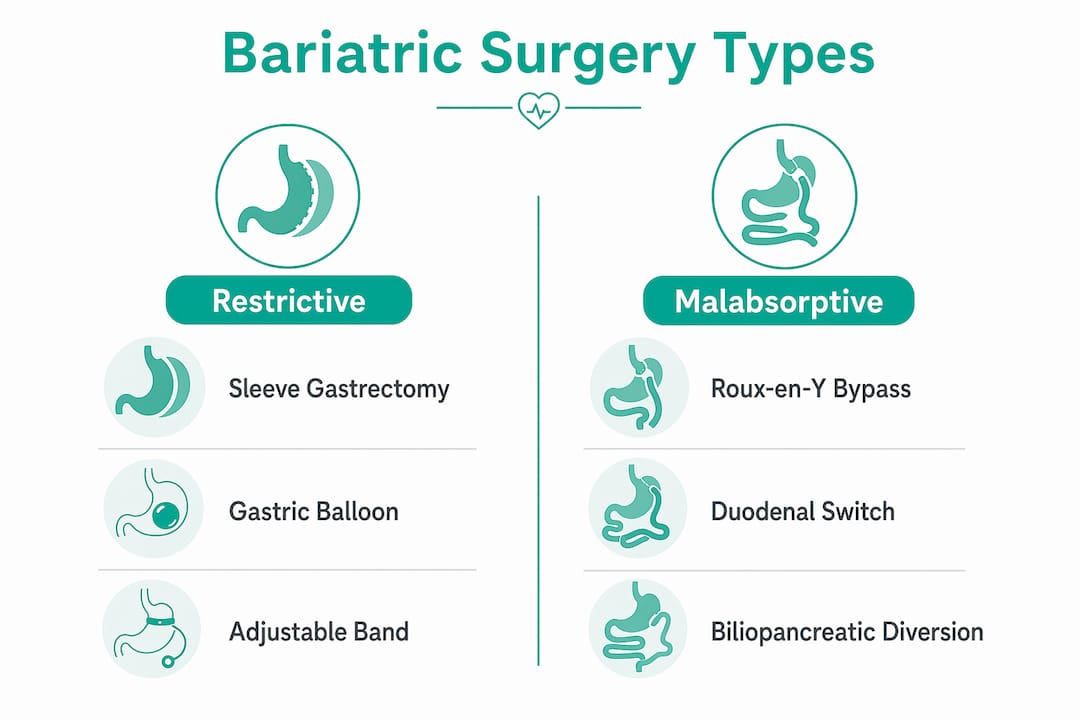
The duodenal switch produces the most dramatic weight loss but carries higher nutritional risks. The gastric balloon is a non-surgical, endoscopic option that places a saline-filled balloon in the stomach temporarily. Endoscopic options like intragastric balloons represent less invasive alternatives with generally lower risk, though they typically produce less dramatic results than surgical procedures.
Pro Tip: Ask your surgeon specifically whether they perform robotic-assisted procedures. Robotic surgery offers greater precision in tight anatomical spaces and is increasingly available at accredited centers in Tijuana.
How does bariatric surgery cause weight loss and improve metabolism?
The traditional labels of "restrictive" and "malabsorptive" surgery are an oversimplification of how these procedures work. Most procedures induce complex metabolic and hormonal changes that go well beyond reducing stomach capacity. Bariatric surgery is better understood as a metabolic intervention that improves insulin sensitivity and hormonal function.
The key mechanisms include:
- Ghrelin reduction: Sleeve gastrectomy removes the stomach fundus, which produces ghrelin, the primary hunger hormone. Less ghrelin means less appetite.
- Incretin effect: Surgery enhances the release of GLP-1 and other gut hormones that improve insulin sensitivity and promote satiety after meals.
- Hormonal changes: Increased insulin release post-surgery drives rapid remission of type 2 diabetes, often before significant weight loss occurs.
- Gut microbiome shifts: Changes in the digestive tract alter the bacterial environment, which influences energy metabolism and inflammation.
- Bile acid signaling: Rerouting the digestive tract changes bile acid flow, which activates metabolic pathways that regulate blood sugar and fat storage.
Sleeve gastrectomy, despite being called restrictive, primarily induces weight loss through hormonal changes that increase satiety and improve insulin action. The stomach size reduction is a secondary factor. This distinction matters because it explains why bariatric surgery resolves diabetes so quickly, often within days of the procedure.
What outcomes and health benefits can patients expect?
Patients typically experience rapid weight loss in the first two years after surgery, with sustained improvements in weight and metabolic health over the long term. The benefits extend well beyond the scale.
Bariatric surgery significantly reduces risks of cardiovascular disease, obstructive sleep apnea, arthritis, and some cancers. For diabetic patients with obesity, surgery can improve life expectancy by up to 9 years. That figure reflects how deeply obesity-related diseases shorten lives, and how effectively surgery addresses them.
Documented remission rates are high across multiple conditions:
- Type 2 diabetes: Remission occurs in the majority of patients, often within weeks of surgery.
- Hypertension: Blood pressure normalizes in a large proportion of patients, reducing or eliminating medication needs.
- Obstructive sleep apnea: Most patients see significant improvement or full resolution.
- Joint pain and arthritis: Reduced body weight directly lowers mechanical stress on joints.
Psychosocial benefits are equally significant. Patients report improved self-esteem, better mobility, and greater participation in daily activities. Depression and anxiety linked to obesity often improve alongside physical health.
Pro Tip: Set a realistic expectation before surgery: the first 12–18 months are the highest-loss window. Patients who commit to protein-focused nutrition and regular follow-up appointments consistently maintain better long-term results.
Who qualifies for bariatric surgery?
Candidacy for bariatric surgery follows established clinical guidelines. Patients typically qualify with a BMI over 40 kg/m², or over 35 kg/m² when obesity-related health conditions such as diabetes, hypertension, or sleep apnea are present. These thresholds reflect decades of clinical research on when surgical risk is justified by expected benefit.
The standard evaluation process includes:
- Medical assessment: A physician reviews your full health history, current medications, and obesity-related conditions to confirm surgical candidacy.
- Psychological evaluation: A mental health professional assesses your readiness for the lifestyle changes surgery requires and screens for eating disorders.
- Nutritional counseling: A registered dietitian establishes your baseline eating patterns and prepares you for post-surgical dietary requirements.
- Cardiac and pulmonary clearance: Patients with heart or lung conditions receive specialist evaluations to confirm they can safely tolerate anesthesia.
- Multidisciplinary team review: All findings are reviewed together before a surgical date is confirmed.
Patients who do not meet BMI criteria or prefer a non-surgical path may consider endoscopic options like the gastric balloon or pharmacologic therapies such as GLP-1 receptor agonists. Surgery remains the most effective long-term option for qualifying patients, but the decision requires honest input from a full medical team. Review the ASMBS safety checklist if you are considering surgery abroad, as it covers the key questions to ask any international provider.
Key Takeaways
Bariatric surgery is a metabolic intervention that modifies the digestive system to produce lasting weight loss and remission of obesity-related diseases through hormonal, not just mechanical, changes.
| Point | Details |
|---|---|
| Core definition | Surgery modifies the stomach or intestines to treat obesity and metabolic conditions like diabetes. |
| Dominant procedures | Sleeve gastrectomy and gastric bypass account for approximately 90% of all bariatric surgeries. |
| Metabolic mechanism | Hormonal changes, not stomach size alone, drive weight loss and diabetes remission after surgery. |
| Health benefits | Surgery reduces cardiovascular risk, resolves sleep apnea, and can extend life expectancy by up to 9 years. |
| Candidacy criteria | A BMI over 40, or over 35 with comorbidities, is the standard clinical threshold for surgical eligibility. |
Bariatric surgery is not what most people think it is
I have spent years reviewing bariatric surgery outcomes, talking to patients, and reading the clinical literature. The single biggest misconception I encounter is that bariatric surgery is a stomach-shrinking procedure. Patients come in thinking the surgery just makes them eat less. That framing sets them up for disappointment when hunger returns or weight plateaus.
The real story is hormonal. The gut is an endocrine organ. When you reroute or resize it, you change the hormonal signals it sends to the brain and pancreas. That is why type 2 diabetes resolves in many patients before they have lost significant weight. No diet does that.
What I find most underappreciated is the role of the multidisciplinary team. Surgery is the tool. The team, including the dietitian, the psychologist, and the follow-up physician, is what determines whether a patient uses that tool well. Patients who engage fully with their care team consistently outperform those who treat surgery as a standalone event.
My honest view: bariatric surgery is one of the most evidence-backed interventions in modern medicine for severe obesity. The hesitation most patients feel is understandable, but it is often based on outdated information. The procedures are safer, faster, and more effective than they were even a decade ago. If you qualify, the question is not whether surgery works. The question is whether you are ready to commit to the process that makes it work.
— Ariel
Trusted bariatric surgery resources for 2026
Choosing a bariatric surgeon is one of the most consequential medical decisions you will make. Weightlosssurgeryguide evaluates accredited hospitals and surgeons in Tijuana so that US patients can compare providers with confidence, not guesswork.

The 2026 Tijuana provider rankings on Weightlosssurgeryguide compare surgeons by accreditation, procedure volume, and patient outcomes. Each listing is verified against international accreditation standards including JCI, SRC, and ISO. Patients traveling from the US save 60–75% compared to domestic pricing while accessing the same surgical techniques used in American hospitals. Browse the full procedures guide to compare sleeve gastrectomy, gastric bypass, duodenal switch, and non-surgical options side by side.
Sources: This article draws on peer-reviewed research from StatPearls (NCBI), the Merck Manual (Consumer and Professional editions), and Wikipedia's bariatrics entry. Full references are available in the Weightlosssurgeryguide evidence library.
Disclaimer: This content is for educational purposes only. It does not replace professional medical advice, diagnosis, or treatment. Always consult a qualified bariatric surgeon or physician before making any health decisions.
FAQ
What does bariatric mean?
"Bariatric" refers to the medical treatment of obesity, derived from the Greek words for weight and physician. The term covers both surgical and non-surgical care for patients with obesity.
What is restrictive bariatric surgery?
Restrictive bariatric surgery limits how much food the stomach can hold, as seen in sleeve gastrectomy. However, most procedures also trigger hormonal changes that reduce hunger and improve metabolism beyond simple restriction.
What is FDA-approved bariatric surgery?
The FDA has cleared several bariatric procedures, including laparoscopic sleeve gastrectomy, Roux-en-Y gastric bypass, and adjustable gastric banding. Endoscopic devices like intragastric balloons also carry FDA clearance as less invasive options.
How long does weight loss last after bariatric surgery?
Most patients experience rapid weight loss in the first two years, with sustained results over the long term when combined with dietary changes and regular medical follow-up.
Who is a good candidate for weight loss surgery?
Patients with a BMI over 40, or over 35 with conditions like type 2 diabetes or sleep apnea, typically meet clinical criteria. A multidisciplinary evaluation confirms medical, psychological, and nutritional readiness before surgery is approved.
Recommended
- How Bariatric Surgery Causes Weight Loss: 2026 Guide | Weight Loss Surgery Guide
- Bariatric Surgery Candidacy Explained for 2026 | Weight Loss Surgery Guide
- Bariatric Surgery Savings for US Patients: 2026 Guide | Weight Loss Surgery Guide
- What to Expect from Bariatric Surgery | Weight Loss Surgery Guide