Verify CMCPER and COFEPRIS Before Post Bariatric Surgery in Tijuana
Published September 26, 2026

Verify CMCPER and COFEPRIS Before Post Bariatric Surgery in Tijuana
Tijuana offers the full range of post-bariatric body-contouring procedures, from abdominoplasty to brachioplasty, at a fraction of U.S. and Canadian prices. The safe path requires waiting roughly 12 months after major weight loss until your weight stabilizes, confirming your surgeon's CMCPER certification and the hospital's COFEPRIS license, and then requesting a vetted quote rather than booking the first offer you find online.
TL;DR:
- Post-bariatric patients should wait at least 12 months after weight loss and ensure their weight is stable before scheduling body contouring procedures.
- Combining multiple procedures in one operation increases the risk of complications, so staging surgeries over separate visits is safer.
- Verifying surgeon credentials with CMCPER certification, hospital licensing through COFEPRIS, and a valid professional license is essential to minimize risks.
- Costs for procedures like breast reduction in Tijuana range from $3,500 to $7,000, but significantly lower quotes may indicate compromised standards or hidden fees.
- Recovery typically involves a hospital stay of one to two nights, strict activity restrictions for several weeks, and up to a year for scars to fully fade.
Table of Contents
- What Procedures Treat Excess Skin After Bariatric Surgery in Tijuana?
- When Are You Ready for Post-Bariatric Surgery in Mexico?
- How Do You Verify a Surgeon Is Safe and Properly Credentialed?
- What Does Post-Bariatric Plastic Surgery Cost in Tijuana?
- What Happens During Recovery From Post-Bariatric Surgery?
- Why Do Surgeons Stage Procedures Instead of Combining Them?
- Prioritizing Accreditation Over Convenience
- Get a Vetted Quote for Post-Bariatric Surgery in Tijuana
- Sources
- FAQ
What Procedures Treat Excess Skin After Bariatric Surgery in Tijuana?
Massive weight loss reshapes the body unevenly, and no single operation addresses all of it. Surgeons in Tijuana performing post-bariatric plastic surgery typically draw from a defined menu of procedures, each targeting a specific area of loose skin or lost volume.
- Abdominoplasty (tummy tuck) removes excess abdominal skin and tightens the muscle wall. A related but distinct procedure, panniculectomy, removes the hanging apron of skin (the pannus) primarily for functional reasons, such as chronic rashes or hygiene issues, rather than cosmetic tightening.
- Brachioplasty addresses loose upper-arm skin that often persists no matter how much strength training a patient does.
- Thigh lift tightens skin along the inner or outer thigh, an area with thin skin that responds poorly to weight loss alone.
- Mastopexy (breast lift) repositions sagging breast tissue, while breast reduction or augmentation adjusts volume, either removing excess tissue or restoring lost fullness with implants.
- Gluteal contouring, including autologous fat transfer where donor tissue allows, restores shape to a flattened backside. Patients with very little remaining fat may need alternative approaches since traditional Brazilian butt lift techniques depend on adequate donor fat.
- Liposuction refines contour in areas with stubborn fat pockets, often layered onto another procedure rather than performed alone.
The functional-versus-aesthetic distinction matters for how a case gets planned and, sometimes, how it gets justified medically. A panniculectomy that eliminates recurring skin infections is a different conversation than a tummy tuck aimed purely at a flatter silhouette, even though the incision looks similar.
Surgeons commonly pair a tummy tuck with liposuction, or combine a breast procedure with an arm lift during the same recovery window to reduce total time under anesthesia across multiple surgeries. The tradeoff is real: stacking four or more anatomical zones into a single operating session raises the risk profile substantially, a point covered in more detail further down.
When Are You Ready for Post-Bariatric Surgery in Mexico?
Timing drives outcomes as much as surgical skill does. Waiting at least one year after bariatric surgery, or until your weight has been stable for several months, gives your body the chance to settle before you introduce new incisions and tissue trauma. Operating too early, while weight is still dropping, tends to produce less predictable results and a higher chance of needing revision work later.
Weight stability matters more than hitting a specific number on the scale. A body mass index in a reasonable, stable range signals your metabolism has adjusted, which supports better wound healing and more durable contouring results.
Before any post-bariatric procedure, expect your surgical team to run through several checks:
- Internal medicine evaluation to confirm your major organ systems can tolerate elective surgery.
- Anesthesia clearance, particularly important if you carry residual comorbidities from your bariatric history.
- Nutritional labs, since deficiencies are common after gastric bypass or sleeve gastrectomy.
- A psychological screen to confirm realistic expectations and readiness for a demanding recovery.
If you currently use a GLP-1 medication like semaglutide or tirzepatide, tell your surgical team before scheduling anything. Patients losing weight through medication rather than surgery often present with different tissue quality, and individualized surgical planning that accounts for pharmacologic weight loss has become a distinct consideration in how surgeons stage these cases.
How Do You Verify a Surgeon Is Safe and Properly Credentialed?
Complications after post-bariatric body contouring cluster around a predictable set of issues: wound healing problems, hematoma or seroma (fluid or blood collecting under the skin), venous thromboembolism (blood clots), and infection. Extensive skin excisions and long operating times raise the odds of all four, which is exactly why credential-checking isn't optional paperwork. It's the difference between a surgeon who manages risk and one who doesn't know how.
Three checks matter more than any review site or before-and-after photo gallery:
- Confirm CMCPER certification. The Consejo Mexicano de Cirugía Plástica, Estética y Reconstructiva is Mexico's recognized certifying body for plastic surgeons, and checking a surgeon's status in the CMCPER directory is one of the most reliable ways to distinguish a certified specialist from a pseudo-specialist operating without proper training.
- Verify hospital licensing through COFEPRIS. Mexico's health regulator publishes an autoverification guide covering the infrastructure, equipment, and licensing standards that facilities offering aesthetic surgery must meet under NOM-016-SSA3-2012 and NOM-004-SSA3-2012, the official standards governing surgical facility safety and clinical record-keeping.
- Check the Registro Nacional de Profesionistas for the surgeon's cédula profesional, the license number confirming their medical degree is registered with the federal government.
Watch for red flags: unsolicited steep discounts, a facility that won't show you a written informed consent document, no clear post-op plan, or a clinic with no visible operating license posted anywhere. Legitimate concern about unqualified practitioners performing surgery in Mexico has prompted regulatory attention precisely because the consequences of skipping these checks can be severe. Weightlosssurgeryguide's provider directory walks through these same verification steps for patients comparing options.
Pro Tip: Ask the clinic to email you a copy or link to the surgeon's CMCPER certificate and the facility's COFEPRIS license before you pay any deposit. A reputable clinic will send this without hesitation; one that stalls or deflects is telling you something.
What Does Post-Bariatric Plastic Surgery Cost in Tijuana?
A post-bariatric breast reduction in Tijuana typically runs between $3,500 and $7,000, a range that illustrates how much variability exists even within a single procedure category. The final number depends on several moving pieces:
- Whether the procedure is staged alone or combined with another surgery in the same session.
- The hospital's accreditation level, since JCI or SRC-accredited facilities carry higher overhead than uncertified clinics.
- Anesthesia time, which scales directly with how many areas you're treating.
- Whether implants, drains, or specialized dressings are part of your case.
- Follow-up visits and whether aftercare is bundled into the quoted price or billed separately.
A quote sitting far below what comparable clinics charge deserves scrutiny rather than excitement. Surgery priced dramatically under market rate usually means something is being cut: anesthesia standards, facility accreditation, surgeon experience, or aftercare support. The cheapest option and the safest option are rarely the same clinic.
What Happens During Recovery From Post-Bariatric Surgery?
Recovery follows a fairly predictable arc, though the specifics shift depending on which procedures you had done.
- Hospital stay and first two weeks. Most patients stay one to two nights post-op, often with surgical drains in place to prevent fluid buildup. Drains typically come out within one to two weeks once output drops low enough.
- Activity restrictions. Compression garments are standard for four to six weeks to control swelling and support healing tissue. Heavy lifting and strenuous exercise stay off-limits for at least a month, sometimes longer for procedures like a full abdominoplasty.
- Scar maturation. Scars remain red and raised for several months before flattening and fading, a process that can take up to a year to fully resolve.
- Return to work. Desk jobs generally allow a return within two to three weeks; physically demanding work needs six weeks or more. Seek urgent care immediately for fever, spreading redness, or sudden swelling in one leg, a possible sign of a blood clot.
International patients should plan to stay in the Tijuana area for at least the initial follow-up window rather than flying home the day drains come out. Coordinating that timeline with your surgical team before you book, including a written pain-management plan, prevents the scramble of figuring out aftercare logistics mid-recovery.
Why Do Surgeons Stage Procedures Instead of Combining Them?
The instinct to get everything done in one trip is understandable when you're traveling for surgery, but the data argues against it. Retrospective research on massive weight loss patients found that treating four or more anatomical areas in a single session significantly increases blood-transfusion rates and overall complication risk, while combining two or three procedures did not carry the same elevated risk. That's why experienced surgeons often stage extensive cases across two visits rather than cramming everything into one long operation.
Post-bariatric patients frequently show deficiencies in vitamin D, iron, and B12, and low postoperative protein intake correlates with higher rates of wound complications, according to research on nutritional optimization before body contouring.
Thiamine deficiency and low albumin levels specifically track with higher hematoma and wound-complication rates in post-bariatric patients, which is why nutritional labs belong in your pre-op workup, not as an afterthought. Before your surgery date, ask your team for:
- A full preoperative lab panel including protein and micronutrient markers.
- A specific daily protein target for the weeks before and after surgery.
- A written thromboprophylaxis plan, meaning the specific steps taken to prevent blood clots during and after your procedure.
Patients dealing with loose skin that doesn't require surgical correction sometimes explore topical approaches to skin quality as a complement to, not a replacement for, surgical contouring.
Prioritizing Accreditation Over Convenience

Cross-border medical care works when patients treat credential-checking as seriously as they'd treat choosing a surgeon at home. The temptation to book the first clinic with a slick website and a low quote is understandable, especially after years of managing a bariatric journey that already demanded patience. But the CMCPER certificate and the COFEPRIS license aren't bureaucratic formalities. They're the two data points that tell you whether the person holding the scalpel actually trained for this.
Weightlosssurgeryguide's approach reflects that priority: verify first, compare second, book third. If a provider can't produce those documents quickly and without pushback, that's your answer before you even get to pricing.
— Ariel
Get a Vetted Quote for Post-Bariatric Surgery in Tijuana
This service offers an alternative to cold-calling clinics off a Google search. Instead of guessing which Tijuana provider actually holds current CMCPER and COFEPRIS credentials, patients get educational comparisons built around accreditation status, board-certified surgical teams, and facilities that meet JCI and SRC standards, plus help coordinating travel and aftercare on top of surgery itself.
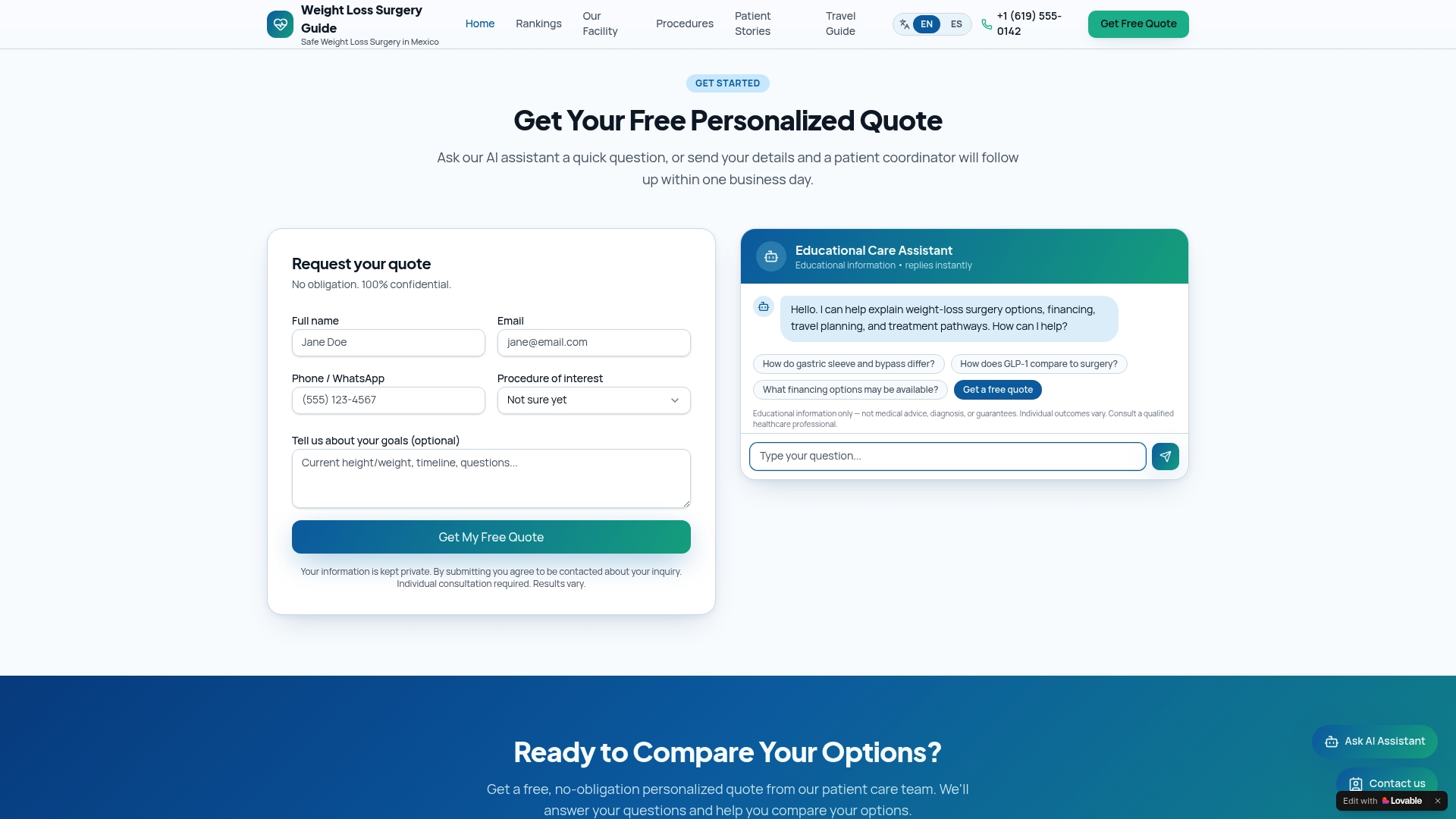
Rather than requesting five separate quotes from five clinics with no way to compare them apples-to-apples, you submit one inquiry and get a personalized quote built around vetted, accredited options. That single step replaces weeks of independent research with a shortlist you can actually trust. Start by reviewing the educational guide to bariatric and post-bariatric care in Mexico and request your personalized quote when you're ready to compare real options.
Sources
- Complications in post-bariatric body contouring surgery using a practical treatment regime to optimise the nutritional state
- Investigating the Safety of Multiple Body Contouring Procedures in Massive Weight Loss Patients
- Evolving Body Contouring Strategies for Patients After Massive Weight Loss: Insights from Bariatric and Pharmacologic Interventions
- Para Cirujanos – Consejo Mexicano de Cirugía Plástica Estética y Reconstructiva, A.C.
Medical reviewer: This article was reviewed for clinical accuracy in coordination with the surgical standards referenced at Obesitycontrolcenter.com and CYNTAR.mx affiliated care teams. Last reviewed: February 2026.
This article is for educational purposes only and does not constitute medical advice. Consult a licensed physician or board-certified plastic surgeon regarding your individual candidacy for post-bariatric surgery.
This article is general information, not a substitute for advice from a qualified doctor. Consult a qualified healthcare professional about your own circumstances before acting on anything here.
FAQ
What is the price of a tummy tuck in Tijuana?
Prices vary based on whether the procedure is combined with liposuction or another surgery, the hospital's accreditation, and anesthesia time. Post-bariatric breast reduction alone runs $3,500 to $7,000, and abdominal procedures typically fall into a comparable or somewhat higher range depending on complexity; current pricing for specific procedures is available through a personalized quote request.
How much weight do you lose with 360 liposuction?
Liposuction is a body-shaping procedure rather than a weight-loss tool, and it typically removes a modest volume of fat rather than producing significant scale weight change. Patients considering it should already be at a stable weight following bariatric surgery or medical weight loss, since liposuction refines contour rather than replacing the work of losing weight.
Who is the best plastic surgeon in Tijuana?
There's no single "best" surgeon for every patient. The right choice depends on your specific procedure, your medical history, and confirming that whoever you choose holds current CMCPER certification and operates in a COFEPRIS-licensed facility. Comparing vetted, accredited providers through a directory built around those criteria is safer than relying on review scores alone.
What is post-bariatric surgery?
Post-bariatric surgery refers to body-contouring procedures performed after major weight loss, typically following gastric bypass, sleeve gastrectomy, or significant GLP-1 medication-assisted loss, to remove excess skin and restore body shape. It includes procedures like abdominoplasty, brachioplasty, thigh lift, and breast surgery, usually recommended after your weight has stabilized for about a year.