Peppermint Oil for Weight Loss: What the Science Says
Published August 8, 2026
Peppermint Oil for Weight Loss: What the Science Says
Medically reviewed by the Weightlosssurgeryguide editorial team. Last reviewed: 2026. This article is for educational purposes only and does not constitute medical advice. Always consult a qualified healthcare provider before starting any supplement.
Peppermint oil is not a proven weight-loss treatment. It can modestly reduce appetite in some short-term studies and may serve as a low-risk adjunct for appetite control when used correctly, but no strong clinical evidence shows it produces meaningful fat loss on its own. The National Center for Complementary and Integrative Health (NCCIH) recognizes peppermint oil primarily for IBS symptom relief, and the European Medicines Agency's HMPC classifies its oral use under well-established and traditional indications for gut symptoms, not weight reduction.
The short version:
- The evidence for peppermint oil as a weight-loss tool is limited: small trials, short durations, and mostly indirect effects on appetite rather than body composition.
- Oral use requires enteric-coated formulations to avoid reflux and esophageal irritation.
- People with GERD, pregnant women, nursing mothers, and young children should avoid oral peppermint oil without medical guidance.
If you want to try it as a low-cost, low-risk adjunct to a caloric deficit, there is a reasonable case for inhalation or enteric-coated capsules before meals. If you are looking for a primary weight-loss strategy, this is not it.
Table of Contents
- How might peppermint oil actually affect appetite and digestion?
- What do the clinical studies actually show?
- How do people use peppermint oil for appetite control?
- Who should avoid peppermint oil, and what are the risks?
- So when is peppermint oil actually worth trying?
- Key Takeaways
- A practitioner's perspective on peppermint oil in weight management
- Useful sources and further reading
How might peppermint oil actually affect appetite and digestion?
There are a few plausible pathways, though none are fully confirmed in large human trials.
Olfactory and sensory modulation. Inhaling peppermint's menthol vapor appears to send signals through the olfactory system that may dampen appetite cues in the central nervous system. The effect is transient and subjective, but it is the most commonly cited mechanism in aromatherapy research.
GI smooth-muscle relaxation. WebMD's clinical overview notes that peppermint oil relaxes stomach and intestinal muscles, partly through interference with calcium-channel activity. This is the mechanism behind its recognized use for IBS cramping and dyspepsia. Reduced bloating and abdominal discomfort can make people feel less driven to eat, which is an indirect appetite effect rather than a direct metabolic one.
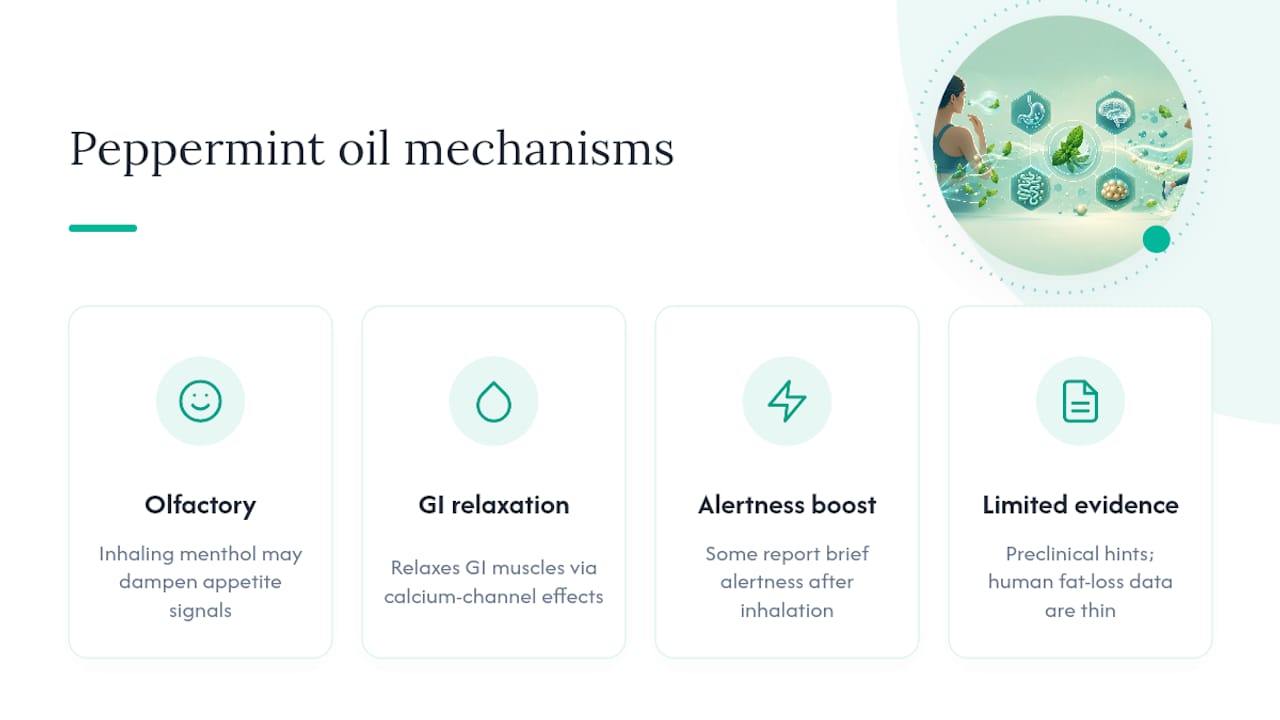
Menthol-mediated sensory satiety. Menthol creates a cooling sensation that may temporarily reduce the palatability of subsequent food, cutting the urge to keep eating after a meal or snack.
Indirect energy effects. Some people report a brief alertness boost from peppermint inhalation, which could theoretically support light physical activity. This is speculative and not well-supported by controlled data.
A peer-reviewed review published on PMC found that certain essential oils show potential anti-obesity effects in preclinical and early clinical studies, but the overall evidence remains limited and heterogeneous. Peppermint is among the oils studied, but the human data specifically for fat loss is thin.
What do the clinical studies actually show?
The honest answer: not much, at least for weight loss specifically.
| Study | Participants | Dose / Formulation | Duration | Key Result |
|---|---|---|---|---|
| Birjand RCT (exercise + peppermint) | 48 overweight men | peppermint extract in water | several weeks | Exercise reduced body fat; peppermint extract added no significant independent effect on lean mass or nesfatin-1 |
| UHRA Herts RCT summary | Small sample | Low µL doses (e.g., low doses administered twice daily) | Short-term | No statistically significant weight or body-composition changes |
| NCCIH 2022 review (IBS focus) | over a thousand participants across multiple studies | Enteric-coated oral capsules | Variable | Improved IBS symptoms vs. placebo; increased mild side effects; no weight-loss outcome measured |
| PMC essential oils review | Preclinical and early clinical | Various essential oils | Variable | Potential anti-obesity signals in animals; limited, inconsistent human evidence |
The Birjand randomized trial is the clearest example of what the data looks like in practice. Exercise drove body-composition changes; the peppermint extract at a low measured dose in 500 ml water contributed nothing measurable on its own over six weeks. The UHRA Herts clinical RCT summary reinforces this: trials using low microliter doses generally fail to show statistically significant weight or body-composition changes.
Limitations across the evidence base:
- Sample sizes are small, typically under 100 participants.
- Study durations rarely exceed 8 weeks, too short to assess real weight change.
- Formulations vary widely: enteric-coated capsules, non-coated oil, tea, and inhaled vapor are not interchangeable.
- Outcome measures differ (appetite scores, body weight, body fat percentage, hormones like nesfatin-1), making comparisons across studies unreliable.
- Risk of bias is high in most trials, with limited blinding and no standardized dosing.
The overall evidence quality for peppermint oil as a weight-loss aid is low to moderate at best. No large, well-controlled human trial has shown that peppermint oil alone produces clinically meaningful fat loss.
How do people use peppermint oil for appetite control?
There are three methods with any research backing, and they are not equivalent in concentration or effect.
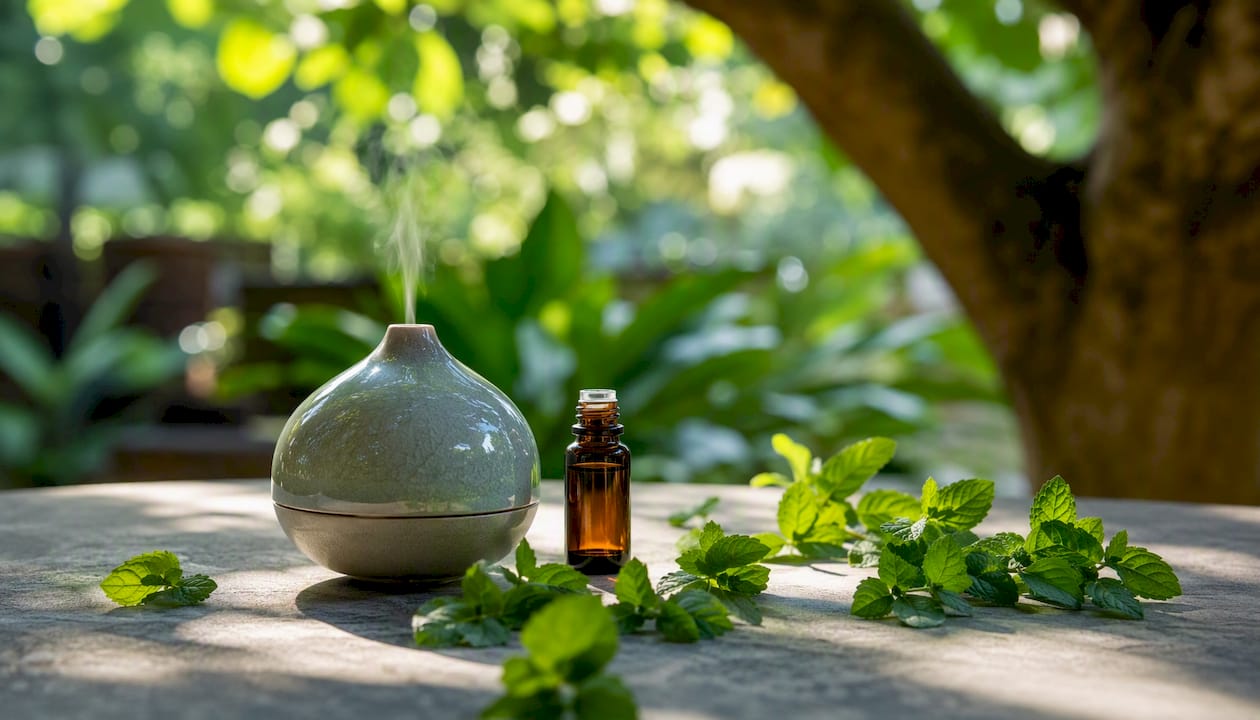
Inhalation (diffuser or tissue) The lowest-risk method. Add a small amount to a diffuser or place one drop on a tissue and inhale before meals. Some small studies suggest this may briefly reduce appetite cues. The effect is mild and short-lived, but the risk profile is also minimal for most adults.
Enteric-coated oral capsules This is how most clinical trials delivered peppermint oil orally. Enteric coating is not optional for tolerability: peppermint relaxes the lower esophageal sphincter, and without coating, the oil reaches the esophagus before the intestines, causing heartburn and reflux. Trials have used doses in the low microliter range, typically around low microliter-range dosing, though formulations vary by product. Do not attempt to replicate trial dosing with raw essential oil in water at home; use a commercially prepared enteric-coated supplement and follow the label.
Peppermint tea Healthline's review of peppermint tea makes the key distinction clearly: tea is calorie-free and may reduce snacking or satisfy sweet cravings, but the studies that showed appetite suppression used concentrated peppermint oil capsules, not tea. Tea is a reasonable calorie-free beverage swap for sugary drinks, but it is not pharmacologically equivalent to the oil preparations used in trials.
Topical application Peppermint oil is applied topically for muscle soreness and headaches. There is no credible evidence it reduces body fat when applied to the skin.
Pro Tip: When choosing an oral peppermint oil supplement, look specifically for "enteric-coated" on the label. This single formulation detail determines whether the oil reaches your intestines intact or causes reflux before it gets there. If you are evaluating supplement claims more broadly, assessing dietary supplements carefully before purchasing can save you from products that overpromise.
Consult a pharmacist or clinician before starting oral peppermint oil, particularly if you take prescription medications or have any GI condition.
Who should avoid peppermint oil, and what are the risks?
Peppermint oil is concentrated and not risk-free. The NCCIH is explicit on this point, and the side-effect profile is worth knowing before you start.
Common side effects:
- Heartburn and acid reflux (especially with non-enteric-coated oral forms)
- Nausea
- Dry mouth
- Allergic skin reactions with topical use
- Perianal burning with high oral doses
Specific contraindications and cautions:
- GERD: Peppermint relaxes the lower esophageal sphincter, which worsens reflux. People with GERD should avoid oral peppermint oil entirely unless a gastroenterologist advises otherwise.
- Pregnancy and nursing: The HMPC/EMA guidance does not support oral peppermint oil use during pregnancy or breastfeeding due to insufficient safety data.
- Children: The EMA's HMPC summary provides age-specific guidance; oral peppermint oil is generally not recommended for young children, and menthol-containing products should not be applied near the face of infants or toddlers due to risk of respiratory distress.
- Medications: Menthol may affect the metabolism of certain drugs. If you take cyclosporine, antacids, or medications for acid reflux, check with a pharmacist before adding peppermint oil.
- Gallstones: Peppermint oil may worsen symptoms in people with gallstones or bile duct obstruction.
Warning: Never apply undiluted peppermint essential oil directly to skin or mucous membranes. Never ingest raw essential oil from an aromatherapy bottle; these are not formulated for internal use and concentrations are not standardized for consumption.
Stop use and consult a clinician if you develop new or worsening GI symptoms, skin reactions, or respiratory irritation.
So when is peppermint oil actually worth trying?
Think of it as a minor tool in a larger strategy, not the strategy itself.
What makes sense:
- Inhalation before meals is low-risk and may take the edge off appetite for some people. It costs almost nothing and has a minimal side-effect profile for healthy adults.
- Enteric-coated capsules are the only oral form worth considering if you want to replicate what trials tested. Use a reputable brand, follow label dosing, and do not expect dramatic results.
- Peppermint tea works as a calorie-free replacement for sugary drinks or snacks. That substitution effect is real and useful, even if the tea itself is not pharmacologically suppressing appetite.
What to expect on the timeline:
Any appetite-related effect from inhalation or capsules, if you notice one at all, tends to be immediate and short-lived. Meaningful weight loss requires a sustained caloric deficit over weeks to months. Peppermint oil alone will not get you there. Evidence-based weight management consistently points to dietary change, physical activity, and behavioral support as the drivers of durable results.
When to see a clinician:
- You have persistent reflux or new GI symptoms after starting peppermint oil.
- You are pregnant, nursing, or considering use for a child.
- You take prescription medications that could interact with menthol.
- You have significant weight to lose and want to understand medically supervised options. For readers in that situation, comparing evidence-based medical options is a more productive starting point than adjunct supplements.
Key Takeaways
Peppermint oil may modestly reduce appetite in some short-term studies, but no clinical trial has shown it produces meaningful weight loss on its own.
| Point | Details |
|---|---|
| Not a weight-loss treatment | Peppermint oil has no strong evidence for fat loss; its recognized use is IBS and gut symptom relief. |
| Enteric coating is required | Oral use without enteric coating causes reflux; always choose coated capsules for internal use. |
| Tea ≠ concentrated oil | Peppermint tea is calorie-free and useful as a drink swap, but it is not equivalent to the capsule doses used in appetite trials. |
| Adjunct only | Any appetite benefit is modest and short-lived; durable weight loss requires a sustained caloric deficit through diet and exercise. |
| Avoid in GERD, pregnancy, children | These groups face real risks from oral peppermint oil and should consult a clinician before use. |
A practitioner's perspective on peppermint oil in weight management
The gap between what people hope peppermint oil will do and what the research actually shows is wider than most wellness content admits. That gap matters, because people who spend months trying low-evidence adjuncts often delay the dietary changes or medical consultations that would actually move the needle.
Peppermint oil has a legitimate role in integrative care, but it is narrow. The NCCIH and EMA both recognize it for GI symptom relief. The appetite-suppression angle is plausible mechanistically, but the human trial data is genuinely thin: small samples, short durations, and no study that has shown clinically meaningful fat loss from peppermint oil alone. The Birjand trial is instructive precisely because it was designed to test the combination of exercise and peppermint extract together, and even then, the extract contributed nothing measurable to body composition over six weeks.
What practitioners tend to recommend in practice: if a patient wants to try peppermint oil inhalation before meals as a behavioral cue to eat more mindfully, that is reasonable and low-risk. Enteric-coated capsules are acceptable for patients without GERD who want to try the oral form, with realistic expectations. But for anyone with meaningful weight to lose, the conversation should quickly move toward evidence-based weight management principles and, where appropriate, medically supervised options.
For U.S. patients considering bariatric surgery, Weightlosssurgeryguide provides educational comparisons of accredited providers in Tijuana and a guide to bariatric surgery for U.S. patients that covers procedure options, accreditation standards, and how to evaluate a program. These resources are educational, not a substitute for consultation with a qualified bariatric surgeon.
This article is educational content. It does not constitute medical advice. Consult a licensed healthcare provider before making decisions about supplements, diet, or medical procedures. For Weightlosssurgeryguide's full approach to evidence and verification, see the evidence library and treatment results disclaimer.
Useful sources and further reading
The following sources were used in preparing this article. Each is linked directly so you can verify claims and read the original material.
-
Peppermint Oil: Usefulness and Safety | NCCIH — The U.S. National Center for Complementary and Integrative Health's overview of peppermint oil, covering safety, formulation guidance (enteric-coated capsules), recognized indications, and a 2022 review of 10 studies in 1,030 participants showing IBS symptom benefit. The primary authoritative source for U.S. readers.
-
The Beneficial Effects of Essential Oils in Anti-Obesity Treatment | PMC — Peer-reviewed review of essential oils and anti-obesity research. Useful for understanding the broader preclinical and early clinical context; concludes that evidence in humans remains limited and heterogeneous.
-
Peppermint Extract + Exercise RCT | Birjand University (JPSBS) — Randomized trial in 48 overweight men testing high-intensity interval and moderate continuous training with and without a low measured dose peppermint extract in water over six weeks. Exercise drove body-composition changes; peppermint extract added no significant independent effect.
-
Peppermint Clinical RCT Summary | UHRA Herts — Practitioner-level RCT summary noting that trials using low microliter doses generally do not produce statistically significant weight or body-composition changes. Supports cautious expectations for peppermint oil supplementation.
Recommended
- Why Surgery Is Better Than Dieting for Lasting Weight Loss | Weight Loss Surgery Guide
- How Bariatric Surgery Causes Weight Loss: 2026 Guide | Weight Loss Surgery Guide
- Weightlosssurgery.ca Alternatives: Best Options in 2026 | Weight Loss Surgery Guide
- The Role of Anesthesiologist in Weight Surgery | Weight Loss Surgery Guide