Tijuana Recovery for US Patients: Private Hospital Room or Care Hotel
Published September 17, 2026
Tijuana Recovery for US Patients: Private Hospital Room or Care Hotel
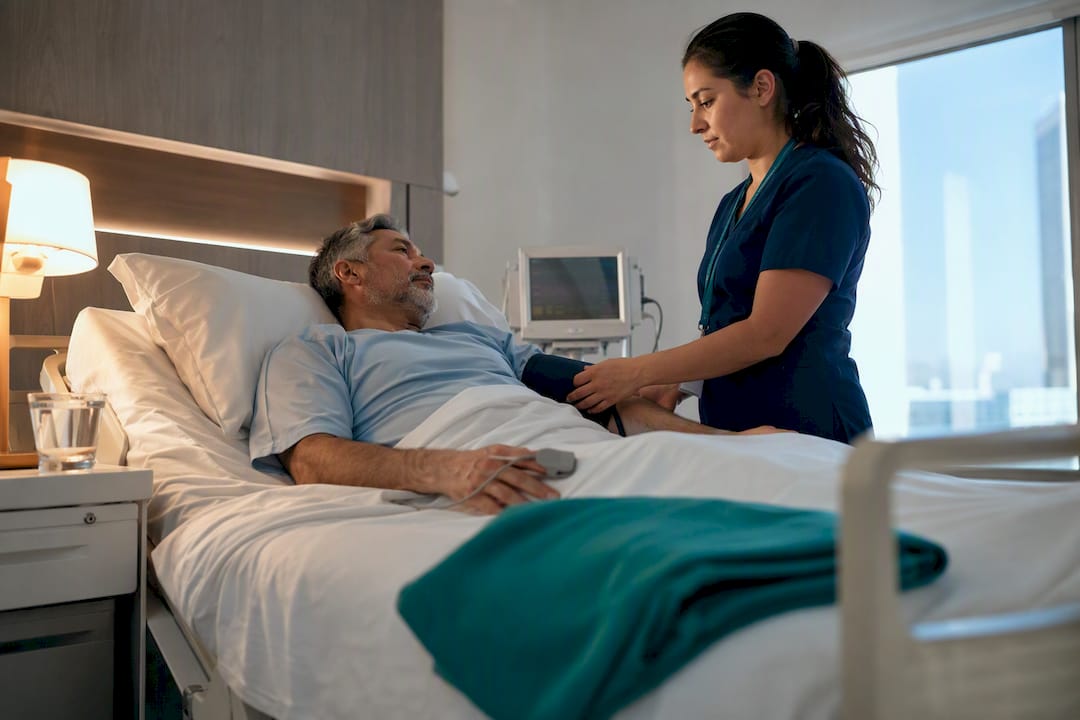
Choosing where to recover after surgery in Tijuana comes down to one clinical question: do you need hospital-level monitoring, or are you stable enough for supervised rest? A private hospital room, like those at Hospital del Prado or Hospital Blue, is built for patients who need oxygen access, nurse-call systems, and rapid escalation. A medically staffed care room, like Grand Hotel Tijuana's Grand Care suites or Quartz Hotel & Spa's Care Rooms, suits stable patients who just need comfortable, supervised recovery.
TL;DR:
- Private hospital rooms in Tijuana offer immediate access to nurses, advanced monitoring equipment, private bathrooms, and personalized meal services.
- Care rooms in hotels provide 24/7 nursing, vital-sign checks every four hours, and basic wound care, suitable for low-risk postoperative patients.
- Confirm accreditation, emergency transfer protocols, included services, and hygiene practices before booking any recovery option to ensure safety and quality.
- Recovery durations vary based on procedure complexity, with some patients requiring multiple nights in a hospital and additional hotel stays for optimal healing.
- For safety, prioritize clinical stability over comfort, and thoroughly verify clinical staff credentials and infection control standards, especially when choosing a care hotel.
Table of Contents
- What to Expect Inside a Private Hospital Room in Tijuana
- What Hotel "Care Rooms" Offer for Post-Op Recovery
- Questions to Ask Before You Book a Room
- Typical Pricing and What Changes the Cost
- How to Book and What to Bring as an International Patient
- Safety and Postoperative Tips That Actually Matter
- How Long Should You Plan to Stay in a Private Room?
- Post-Operative Support Available Inside the Room
- Checking Cleanliness and Infection Control Before You Book
- WeightLossSurgeryGuide Perspective: Prioritize Certified Support Over Comfort
- Get a Personalized Recovery Plan From WeightLossSurgeryGuide
- Sources
- FAQ
What to Expect Inside a Private Hospital Room in Tijuana
A habitación privada hospital de Tijuana setup is designed around one priority: getting a nurse or physician to your bedside within seconds, not minutes. That changes what the room looks like compared to a hotel suite, even a nice one.
Hospital del Prado's private hospitalization rooms include oxygen outlets, electric hospital beds, and nurse-call systems built directly into the wall, alongside full private bathrooms and concierge-style room service. Hospital Blue follows a similar model, pairing clinical infrastructure with hotel-like comfort touches so patients are not staring at bare walls and beeping monitors all day.
Typical amenities and equipment you'll find in a Tijuana hospital private room:
- Adjustable electric bed with a separate companion bed or reclining chair for a family member
- Private bathroom, flat-screen TV, Wi-Fi, and climate control
- Wall-mounted oxygen outlets and medical gas access
- Nurse-call button wired directly to the nursing station
- Bedside vital-sign monitoring equipment
- Room service or dietitian-approved meal delivery
Visiting hours tend to be more structured than at a care hotel. Most Tijuana hospitals allow one overnight companion in a private room but restrict additional visitors to set daytime windows, partly for infection control and partly because the floor is shared with patients who need quiet. If a family member plans to stay the full recovery period, confirm the companion-bed policy before arrival. Not every private room includes one standard. It's worth checking directly with the hospital rather than assuming it matches what you saw advertised for a different facility, since accreditation standards and room configurations vary hospital to hospital.
What Hotel "Care Rooms" Offer for Post-Op Recovery
Grand Hotel Tijuana and Quartz Hotel & Spa built an entire category around a simple idea: most bariatric and plastic surgery patients don't need an ICU. They need a quiet room with a trained nurse checking on them.
Grand Hotel Tijuana's Grand Care rooms include 24/7 certified nursing, vital-sign checks at regular intervals, daily wound care, motorized beds on request, a companion bed, and an on-site pharmacy. The hotel markets these rooms as COFEPRIS-compliant, Mexico's regulatory equivalent to the U.S. FDA for health facility standards.
Vital-sign checks every four hours is the baseline clinical rhythm Grand Care advertises for stable post-op patients, close to what many hospital floors run for non-critical cases.
Quartz Hotel & Spa takes a similar approach inside NewCity Medical Plaza, offering motorized adjustable beds, assistance buttons, and accessible bathrooms with support bars, plus direct proximity to the medical center for follow-up visits.
Care rooms work well for:
- Patients cleared by their surgeon as low risk for complications
- Recoveries that need monitoring but not oxygen support or IV management
- Families who want a quieter, hotel-grade environment during the first week
They are not a substitute for a hospital floor when a patient is unstable or high risk.
Questions to Ask Before You Book a Room
Run through this checklist before you commit money to either option:
- Ask for proof of COFEPRIS accreditation and copies of nursing certifications, not just a verbal assurance.
- Confirm exactly what monitoring equipment is on-site and what the emergency transfer protocol to a full hospital looks like, including estimated transfer time.
- Get a written breakdown of what's included in the nightly rate versus billed separately: wound supplies, extra nursing hours, oxygen, medications.
- Clarify payment terms, refund policy if plans change, and whether the facility works with any travel insurance.
Pro Tip: Ask the care room or hospital to name the specific hospital they transfer to in an emergency, and how long that transfer typically takes. A vague answer here is a bigger red flag than any amenity list.
Typical Pricing and What Changes the Cost
Room pricing in Tijuana swings based on the level of clinical service bundled in, not just the square footage or the view.
- Hospital private rooms generally run on a per-day rate that reflects nursing staffing ratios and included procedures. Rates vary meaningfully by hospital and by what's bundled into hospitalization.
- Hotel care-room packages, like Grand Care or Quartz Care Rooms, are usually quoted per night and often bundle nursing checks, meals, and basic wound care into one price.
- Common add-ons across both models: extra nursing hours beyond the standard schedule, wound care supplies, supplemental oxygen, and ambulance transfer fees if needed.
Room and recovery costs are one piece of a larger trip. Total surgery-trip costs for U.S. and Canadian patients traveling to Tijuana typically fall between $4,000 and $12,000, covering the procedure, facility fees, and accommodations together.
How to Book and What to Bring as an International Patient
Booking a recovery room isn't like booking a hotel stay. Start early and route the request through the right person.
- Contact your surgeon's patient coordinator first. They usually handle hospital room reservations directly and can flag if a care room is appropriate instead.
- For hotel care rooms, call the hotel's dedicated care desk rather than the general reservations line.
- Bring physician orders, a current medication list, government ID or passport, and your insurance or payment documentation.
- At booking, ask about nursing-to-patient ratios, the vitals-check schedule, language support availability, and the exact emergency transfer plan.
Confirm driving distance between your recovery room and the surgical facility, since transfer time matters if something goes wrong. Before your return trip, review the June 2026 QR Pass guidance for crossing back into the U.S. after surgery, since border logistics catch a lot of first-time patients off guard.
Safety and Postoperative Tips That Actually Matter
Skip the aesthetics-first mistake. A beautifully decorated care room means nothing if it lacks a certified nurse and a working transfer agreement with a hospital.
Before you decide, run through this acuity checklist: does the patient need oxygen support, IV medication management, or monitoring more frequent than every four hours? If yes, a hospital room is the safer call. If the patient is stable and just needs supervised rest, a care room can work well.
Distinguish clearly between hospital private rooms, designed for patients who need clinical monitoring and rapid escalation, and hotel care rooms, designed for supervised recovery rather than critical care.
Pro Tip: Get a written pain management plan and a list of infection warning signs (fever, spreading redness, unusual discharge) before you leave the hospital, not after you're already back at the hotel.
Ask about accompaniment options and 24/7 nursing verification so a family member knows exactly what role they play versus what the nursing staff covers.
How Long Should You Plan to Stay in a Private Room?
Recovery length depends heavily on the procedure, and it's one of the most common planning mistakes patients make when booking a room for too short a window.
Patients typically stay multiple nights in a hospital private room immediately post-op, followed by additional nights in a care room or hotel setting before flying home. Gastric bypass, being more invasive, tends to sit at the higher end of that range. Duodenal switch procedures, which carry more surgical complexity, often call for several hospital nights plus a longer care-room recovery window.
Post-bariatric plastic surgery, like a tummy tuck or body lift, usually requires a hospital night followed by multiple nights of supervised recovery, since drains and incision care require closer daily attention than a straightforward bariatric procedure.
These are general patterns, not fixed rules. Your surgeon sets the actual discharge timeline based on how the individual procedure went and how you're recovering day to day. Booking a room for the shortest possible window to save money is one of the more common regrets patients report, since flight changes and extended-stay fees often cost more than an extra night or two would have.
Post-Operative Support Available Inside the Room
The room itself is only part of the recovery. What matters more is what level of care comes to you inside it.
Hospital private rooms typically include daily physician visits, nurse-administered medication schedules, and wound checks as part of standard hospitalization. Some hospitals also coordinate bedside physical therapy for mobility exercises, particularly after body-contouring surgery where early movement reduces clot risk.
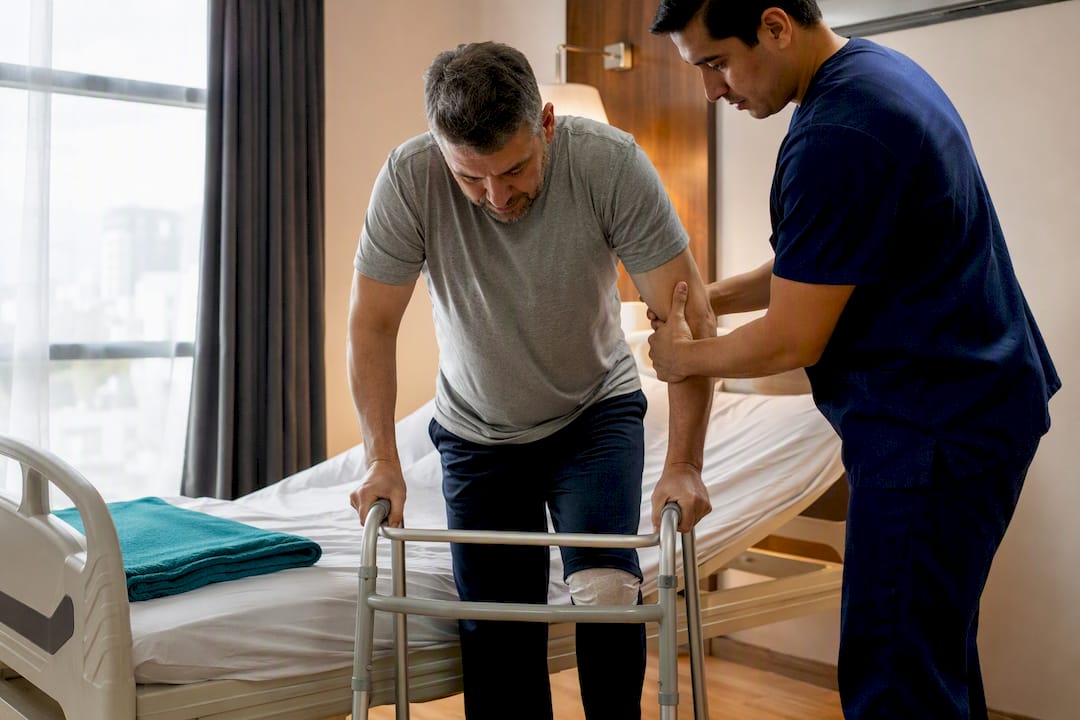
Care rooms like Grand Care and Quartz Care Rooms build similar support into their nightly packages: scheduled vital-sign checks, wound care, and access to an on-site pharmacy for medication refills without leaving the property. The nursing care level is generally lighter than a hospital floor, since these rooms are designed for stable patients rather than those needing constant clinical oversight.
If mobility support or physical therapy is a priority for your specific procedure, ask directly whether it's included or billed as an add-on. Some patients considering adjunctive recovery therapies also look into options like hyperbaric oxygen therapy protocols as a supplement to standard wound healing, though this should always be cleared with your surgeon first rather than arranged independently.
Checking Cleanliness and Infection Control Before You Book
Photos on a hotel or hospital website tell you almost nothing about actual infection control practices. Ask more direct questions instead.
Request information on how often rooms are terminally cleaned between patients and what disinfection protocol is used, particularly for high-touch surfaces like bed rails and call buttons. Ask whether staff follow a documented hand hygiene protocol, since this remains one of the single biggest factors in preventing post-surgical infections in any recovery setting.
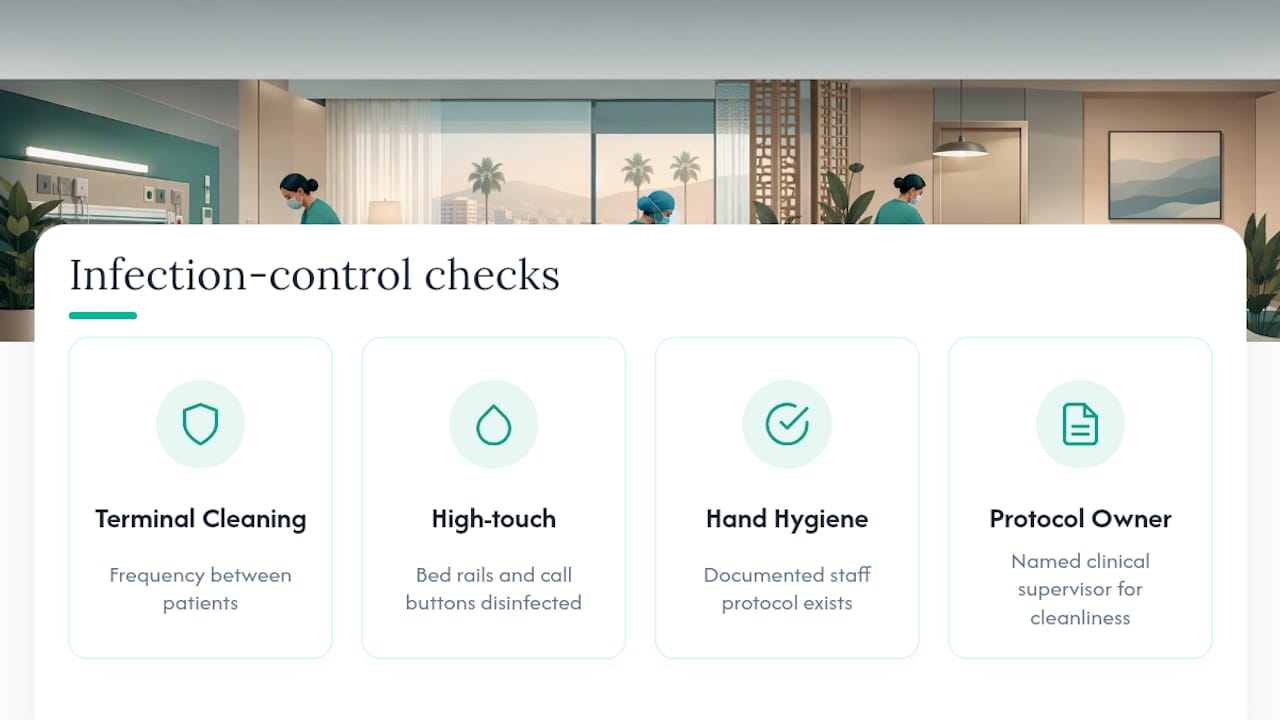
For hospital private rooms, ask whether the facility publishes infection rate data or holds accreditation that includes infection control audits. For hotel care rooms, ask who supervises clinical cleanliness standards, since hotel housekeeping staff and medical-grade sanitation are not the same skill set. A legitimate care-room operator should have a clear answer about who owns that responsibility.
If you're touring in person, look for basic signals: gloves and hand sanitizer stations visible in hallways, staff visibly washing hands between rooms, and a general sense of order rather than clutter. If nobody on-site can explain their cleaning protocol clearly, treat that as a warning sign regardless of how nice the room looks.
WeightLossSurgeryGuide Perspective: Prioritize Certified Support Over Comfort
When the decision is close, choose hospital-level monitoring. Comfort matters, but it's never worth trading away rapid access to a nurse or oxygen if there's any doubt about clinical stability.
Families making this call from another country, often without seeing the room in person, deserve a straightforward path to compare accredited options rather than guessing from a website. Use WeightLossSurgeryGuide's accredited facility comparisons to check credentials before you commit to either a hospital room or a care hotel.
— Ariel
Get a Personalized Recovery Plan From WeightLossSurgeryGuide
WeightLossSurgeryGuide compares accredited Tijuana facilities so you're not choosing a recovery room based on photos and guesswork. Our platform connects you with Hospital Cyntar & The Ariel Center, a JCI- and SRC-accredited facility pairing bariatric and post-bariatric plastic surgery with board-certified surgeons and continuity of aftercare, so your surgery, hospital stay, and recovery room fit into one coordinated plan instead of separate bookings you have to piece together yourself.
If travel logistics are your bigger worry right now, the Bariatric Travel Guide for U.S. Patients walks through border crossings, lodging, and return-trip planning specific to Tijuana. Ready to compare real numbers for your procedure and recovery setup? Request a personalized quote through WeightLossSurgeryGuide and get a facility recommendation matched to your clinical needs, not just your budget.
Sources
- Habitaciones Grand Care | Grand Hotel Tijuana
- Care Rooms and accessibility | Quartz Hotel & Spa
- Hospitalización con servicios integrales | Hospital Del Prado en Tijuana
FAQ
How Much Does Giving Birth Cost in a Private Hospital in Tijuana?
Childbirth costs at private Tijuana hospitals vary by delivery type (vaginal versus cesarean) and length of stay, and pricing is not publicly standardized across facilities. Contact the specific hospital directly for a current quote tied to your case.
How Much Do Private Hospitals in Mexico Charge Per Day?
Per-day rates depend heavily on the hospital, room type, and what's bundled into hospitalization, such as nursing care and physician visits. Rates for hospital private rooms and hotel care-room packages should always be confirmed directly with the facility since they change and vary by included services.
What Is a Hospital Room Called?
In a medical setting, a private room is typically called a "private hospital room" or "habitación privada," distinct from a shared ward. In Tijuana's medical tourism market, a related but separate category is the "care room," a medically staffed recovery suite located inside a hotel rather than a hospital.
What Is the Most Luxurious Hospital in Mexico?
There's no single official ranking of the "most luxurious" hospital in Mexico, and claims like this vary by source and marketing. Readers researching high-comfort options for bariatric or post-bariatric recovery can compare accredited facilities directly through the 2026 Tijuana Bariatric Surgery Rankings.
Does WeightLossSurgeryGuide Book Hospital Rooms Directly?
WeightLossSurgeryGuide connects patients with accredited facilities and coordinates personalized quotes rather than functioning as a booking agent for individual room nights. Current details on facility options and quotes are available on the facility page.
Medical reviewer: This article was reviewed for medical accuracy by the clinical team at Obesitycontrolcenter.com / CYNTAR.mx. Last reviewed: —
Disclaimer: This article is for educational purposes only and does not constitute medical advice. Decisions about hospitalization, recovery setting, or clinical care should always be made in consultation with a licensed physician or surgeon familiar with your specific case. WeightLossSurgeryGuide provides comparisons and educational resources; it does not diagnose, treat, or replace the guidance of a qualified medical professional.