Post-Operative Bariatric Care: What Patients Need to Know
Published July 6, 2026

Post-Operative Bariatric Care: What Patients Need to Know
Post-operative bariatric care is the structured medical and lifestyle management that begins immediately after weight loss surgery and continues for life. It covers hospital recovery, dietary progression, nutritional supplementation, physical activity, and ongoing surveillance for complications. The American Society for Metabolic and Bariatric Surgery (ASMBS) recognizes this care as a core component of surgical success, not an optional add-on. Without it, even technically perfect surgery produces poor long-term outcomes.
Medically reviewed by the Weightlosssurgeryguide editorial team. Last reviewed: 2026.
This article is for educational purposes only and does not constitute medical advice. Always consult your surgeon and care team before making any changes to your recovery plan.
What is post-operative bariatric care?
Post-operative bariatric care is the complete system of medical, nutritional, and behavioral support that follows bariatric surgery. It starts the moment you leave the operating room and does not have a defined end date. The goal is to protect your healing anatomy, prevent nutritional deficiencies, and build the habits that sustain weight loss over years, not just months.
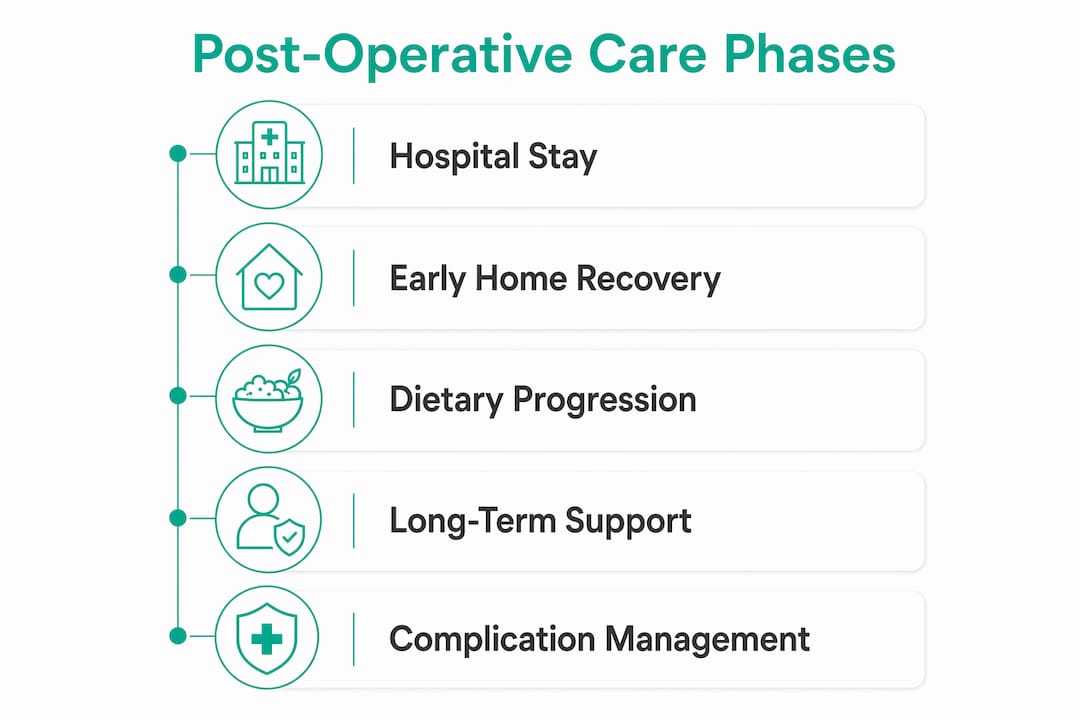
The care framework has three overlapping phases. The first covers the hospital stay and the first two weeks at home. The second covers the structured dietary transition over the first 4–6 weeks. The third is lifelong monitoring and lifestyle management. Each phase requires different actions from you and your care team. Understanding all three before surgery is one of the most underrated bariatric surgery recovery tips you will receive.

Multidisciplinary coordination drives outcomes. Your surgeon, primary care physician, registered dietitian, and in some cases a psychologist all play defined roles. Postoperative care for bariatric patients is a shared responsibility across specialties, not a single-provider task.
What does immediate post-operative care involve after bariatric surgery?
The hospital phase is short but critical. Hospital stays typically last 1–2 days, with early walking encouraged within hours of surgery. That early movement is not optional encouragement. It directly reduces the risk of deep vein thrombosis and pulmonary embolism, two of the most serious post-surgical complications.
During the hospital stay, your care team monitors:
- Vital signs continuously for early signs of bleeding, infection, or anastomotic leak
- Pain levels managed through a multimodal protocol that minimizes opioid use
- Fluid intake to prevent dehydration, since your new stomach pouch holds very little
- Wound sites for redness, swelling, or discharge
- Urine output as a reliable indicator of hydration status
Persistent vomiting after surgery is never normal. CT imaging with oral and IV contrast may be needed to rule out obstruction, leak, or other structural complications. Report it to your surgeon immediately rather than waiting for a scheduled follow-up.
Pro Tip: Pack loose, comfortable clothing for your hospital discharge. Tight waistbands press directly on laparoscopic incision sites and cause unnecessary pain during the drive home.
What are the dietary stages and progression after bariatric surgery?
The post-op bariatric diet is the most detailed and consequential part of your recovery. Advancing too quickly through the stages causes vomiting, stretching of the surgical site, and serious complications. Staged dietary progression is not a suggestion. It is a clinical protocol.
The four standard stages are:
- Clear liquids (days 1–2): Water, broth, sugar-free popsicles, and diluted juice. No carbonation. No caffeine. Sip slowly, never gulp.
- Full liquids and protein shakes (weeks 1–2): Thin protein shakes, low-fat milk, and strained soups. Target 60–80 grams of protein daily during this phase.
- Pureed and soft foods (weeks 3–4): Scrambled eggs, soft fish, mashed legumes, and blended vegetables. Each meal should take 20–30 minutes.
- Solid foods (weeks 5–6): Lean proteins first, then cooked vegetables, then complex carbohydrates. Processed foods, high-sugar items, and carbonated drinks remain off the table.
Daily hydration targets are 64 ounces of non-caffeinated, non-carbonated fluid. Drink between meals, not during them. Drinking with food pushes food through the pouch too quickly and reduces satiety.
| Diet stage | Timeframe | Key focus |
|---|---|---|
| Clear liquids | Days 1–2 | Hydration, zero solids |
| Full liquids and shakes | Weeks 1–2 | Protein intake begins |
| Pureed and soft foods | Weeks 3–4 | Texture tolerance, slow eating |
| Regular solid foods | Weeks 5–6 | Lean protein first, no processed foods |
Avoid using straws during the early weeks. Straws pull air into the stomach pouch, causing gas pain that is disproportionately intense given the small pouch size. Use a teaspoon rather than a regular spoon to naturally limit bite size and slow your eating pace.
Pro Tip: Set a timer for 20 minutes when you sit down to eat. Patients who time their meals consistently report far fewer episodes of vomiting and dumping syndrome in the first three months.
How does long-term post-operative care support sustained health and weight loss?
Long-term post-surgery weight loss care is where most patients underinvest. The surgery changes your anatomy. The lifestyle changes determine what you do with it. Neurohormonal changes after bariatric surgery affect appetite regulation, digestion, and how your body absorbs and processes medications. These changes require ongoing clinical adjustment, not a one-time prescription review.
The core pillars of long-term care include:
- Nutritional supplementation: Vitamins A, D, E, and K, folate, calcium, iron, and trace minerals are standard lifelong requirements. Deficiencies develop silently and cause serious harm before symptoms appear.
- Protein intake: Targets are 60–80 grams daily for the first six months, increasing to 80–120 grams as diet expands. Protein preserves lean muscle mass during rapid weight loss.
- Physical activity: The ASMBS recommends 150–300 minutes of moderate activity weekly. Start with walking and progress to resistance training to protect bone density.
- Bone health: High bone turnover post-surgery increases fracture risk. Calcium and vitamin D supplementation, combined with weight-bearing exercise, are the primary defenses.
- Gallstone prevention: Rapid weight loss raises gallstone risk. Ursodiol is commonly prescribed in the first six months to reduce gallstone formation.
- Medication review: Many blood pressure, diabetes, and cholesterol medications need dose reductions as weight drops. Your primary care physician must track these changes closely.
Understanding how bariatric surgery causes weight loss at a physiological level helps patients make sense of why these long-term protocols exist. The surgery is not just restriction. It rewires metabolic signaling.
What are common complications and how does post-operative care address them?
Complications after bariatric surgery are manageable when caught early. The most common ones are predictable, and your care team will screen for them at every follow-up.
Dumping syndrome occurs when food moves too quickly from the stomach pouch into the small intestine. Early dumping causes nausea, cramping, and diarrhea within 30 minutes of eating. Late dumping causes sweating, dizziness, and low blood sugar 1–3 hours after a meal. Dietary adjustments, particularly eliminating high-sugar foods and eating protein first, resolve most cases.
Nutritional deficiencies are the most common long-term complication. Iron deficiency anemia, vitamin B12 deficiency, and vitamin D deficiency each carry serious consequences if untreated. Universal supplementation and periodic blood monitoring are the standard of care. Do not skip your lab work appointments.
Alcohol use disorder is a documented risk that most patients do not anticipate. Altered alcohol metabolism post-surgery means you reach higher blood alcohol levels faster and stay intoxicated longer. Research shows that 7% of patients develop new high-risk alcohol use within a year of surgery. This is not a character flaw. It is a pharmacokinetic reality that requires awareness and, when needed, professional support.
Watch for these warning signs and contact your surgeon promptly:
- Persistent vomiting beyond the first two weeks
- Severe abdominal pain or fever
- Difficulty swallowing that worsens over time
- Rapid heart rate after eating
- Hair loss beyond the expected three-to-six month window
- Numbness or tingling in the hands or feet
"The patients who struggle most after bariatric surgery are rarely those with surgical complications. They are the ones who stop attending follow-up appointments after the first year, believing the hard work is done. Long-term post-operative care is not maintenance. It is active management of a permanently altered metabolic system."
Coordinating your US-based physician with your surgical team is especially relevant if you had surgery abroad. US doctor coordination after bariatric surgery ensures your primary care provider has the surgical records, protocol details, and supplement recommendations needed to manage your care at home.
Key Takeaways
Post-operative bariatric care is a lifelong, multidisciplinary commitment that begins in the hospital and requires active management of diet, supplementation, activity, and medical monitoring to sustain results and prevent complications.
| Point | Details |
|---|---|
| Hospital phase is brief but critical | Stays last 1–2 days; early walking and close monitoring prevent serious complications. |
| Diet stages are non-negotiable | Progress from clear liquids to solids over 4–6 weeks; advancing too fast causes real harm. |
| Lifelong supplements are required | Vitamins A, D, E, K, iron, calcium, and folate must be taken indefinitely and monitored by blood work. |
| Long-term activity targets matter | Aim for 150–300 minutes of moderate exercise weekly to protect muscle mass and bone density. |
| Complications are manageable with early action | Dumping syndrome, deficiencies, and alcohol sensitivity are predictable and treatable when caught early. |
Why post-operative commitment is the real surgery
I have reviewed hundreds of bariatric surgery outcomes, and the pattern is consistent. The patients who achieve lasting results are not necessarily those who had the most experienced surgeon or the most advanced procedure. They are the ones who treated the post-operative protocol with the same seriousness they gave to the surgery itself.
The hardest part of this to communicate is that the first six months feel like success regardless of what you do. Weight comes off. Energy improves. Chronic conditions start to resolve. That momentum creates a false sense that the work is done. It is not. The neurohormonal changes, the bone density shifts, the medication adjustments, and the dietary discipline all require active attention well past the point where most patients feel they need it.
The other thing I would push back on is the idea that post-operative care is primarily about food rules. It is really about building a relationship with your own body that you probably did not have before surgery. Learning to recognize hunger versus thirst, understanding how your energy responds to protein intake, noticing early signs of a deficiency before it becomes a crisis. These are skills, and they take time to develop.
My honest advice: find a care team you trust before surgery, not after. The best post-op support bariatric programs are the ones that schedule your first follow-up before you leave the hospital and keep you accountable at 1 month, 3 months, 6 months, and every year after that. If your program does not offer that structure, ask for it explicitly.
— Ariel
Planning your care with Weightlosssurgeryguide
Weightlosssurgeryguide evaluates accredited bariatric surgery providers in Tijuana for US patients, with a focus on safety, credentials, and post-operative support quality.
If you are comparing providers or preparing for surgery, the 2026 provider rankings give you a side-by-side look at accredited facilities and their care protocols. For patients who want to verify the quality standards behind their chosen program, the accreditation guide explains JCI, SRC, and ISO certifications in plain language. Post-operative care quality is one of the most important factors in long-term outcomes. Weightlosssurgeryguide helps you evaluate it before you commit.
This article is educational and does not replace personalized medical advice from your surgeon or care team.
Sources: Weightlosssurgeryguide References Library
FAQ
What is post-operative bariatric care?
Post-operative bariatric care is the structured medical, nutritional, and lifestyle management that follows weight loss surgery, covering hospital recovery, dietary progression, supplementation, and lifelong monitoring for complications.
How long does the post-op bariatric diet take to progress?
The post-op bariatric diet follows a 4–6 week timeline, moving from clear liquids to full liquids, then pureed foods, and finally solid foods.
What vitamins do bariatric patients need for life?
Bariatric patients require lifelong supplementation with vitamins A, D, E, and K, folate, calcium, iron, and trace minerals, with regular blood work to catch deficiencies early.
What is dumping syndrome after bariatric surgery?
Dumping syndrome occurs when food moves too quickly into the small intestine, causing nausea, cramping, diarrhea, or low blood sugar. It is managed primarily through dietary changes, including eliminating high-sugar foods and eating protein first.
Can bariatric surgery affect how alcohol affects you?
Yes. Altered alcohol metabolism after surgery means higher blood alcohol levels from smaller amounts. Research shows 7% of patients develop new high-risk alcohol use within a year, making awareness and monitoring a standard part of post-operative care.
Recommended
- US Doctor Coordination After Bariatric Surgery | Weight Loss Surgery Guide
- Bariatric Surgery Consultation Checklist: 2026 Guide | Weight Loss Surgery Guide
- The Role of Anesthesiologist in Weight Surgery | Weight Loss Surgery Guide
- How Bariatric Surgery Causes Weight Loss: 2026 Guide | Weight Loss Surgery Guide