Signs You Qualify for Bariatric Surgery: 2026 Guide
Published August 1, 2026

Signs You Qualify for Bariatric Surgery: 2026 Guide
You likely qualify for bariatric surgery if your BMI is 40 or higher, or 35–39.9 with a serious obesity-related condition such as type 2 diabetes, obstructive sleep apnea, or severe hypertension. Select patients with a BMI of 30–34.9 may also qualify, particularly those with uncontrolled type 2 diabetes, per ASMBS and NIDDK/NIH guidance. Two additional requirements almost always apply: documented proof that non-surgical weight-loss efforts have failed, and a willingness to commit to lifelong follow-up care. MBSAQIP-accredited programs use a multidisciplinary team to confirm all three before approving surgery. If those signs apply to you, the immediate next step is calculating your BMI and scheduling a conversation with your primary care physician or a bariatric program.
- High BMI alone may qualify in some cases
- Moderate BMI with at least one serious obesity-related condition
- Some patients with lower BMI and uncontrolled type 2 diabetes may qualify
- Documented failed attempts at physician-supervised weight loss
- Presence of qualifying comorbidities (T2D, OSA, hypertension, NASH, severe osteoarthritis)
- Psychological readiness and ability to follow lifelong post-op protocols
Table of Contents
- 1. How clinicians determine whether you're a bariatric candidate
- 2. Weight-related medical conditions that commonly qualify you
- 3. What counts as a documented failed non-surgical attempt
- 4. Contraindications and red flags that can delay or prevent approval
- 5. Insurance preauthorization and MBSAQIP accreditation
- 6. What happens during a bariatric surgery evaluation
- 7. Practical next steps if the signs apply to you
- Key Takeaways
- What the BMI-first framing gets wrong
- Considering accredited options beyond your local network
- Authoritative sources and further reading
1. How clinicians determine whether you're a bariatric candidate
Candidacy is not a gut call. Surgeons and program coordinators rely on objective measurements, medical records, and diagnostic tests to build a complete picture before any approval.
BMI thresholds and what each requires
| BMI Range | Typical Requirement |
|---|---|
| ≥40 kg/m² | BMI documentation alone; no comorbidity required |
| 35–39.9 kg/m² | At least one serious obesity-related comorbidity documented in medical records |
| 30–34.9 kg/m² | Uncontrolled type 2 diabetes or another significant metabolic condition; ASMBS guidance supports consideration for select patients |

To calculate your own BMI: divide your weight in pounds by your height in inches squared, then multiply by 703. At 5'9" and 220 lb, that is (220 ÷ 3,249) × 703 = 47.6. Any result at or above 40 clears the first threshold without a comorbidity.
Documents and tests programs typically request
- Recent height and weight records (ideally from a physician's office, not a home scale)
- A1C levels and fasting glucose for diabetes screening
- Blood pressure readings over time
- Liver function tests (ALT, AST) to screen for NASH/NAFLD
- Sleep study results, or a referral for one if obstructive sleep apnea is suspected
- Complete medication list, including any weight-loss medications tried
- Records from prior supervised weight-loss programs
Bring all of this to your first bariatric consult. Programs that see a complete file move faster, and insurers expect the same documentation when reviewing preauthorization requests.
2. Weight-related medical conditions that commonly qualify you
A comorbidity is not just a checkbox. Each condition below independently worsens long-term health outcomes and, crucially, often improves dramatically after surgery, which is exactly why obesity comorbidities carry so much weight in the candidacy decision.
- Type 2 diabetes. The most metabolically compelling indicator. Bariatric surgery produces remission or significant improvement in glycemic control in a large share of patients, sometimes before meaningful weight loss even occurs.
- Obstructive sleep apnea (OSA). Frequently undiagnosed. If you snore loudly, wake up gasping, or feel exhausted despite a full night's sleep, you may have OSA. Programs often require a sleep study, and undiagnosed OSA is one of the most common hidden comorbidities in surgical candidates.
- Severe hypertension or cardiovascular disease. Persistent high blood pressure that requires multiple medications, or a history of cardiac events, qualifies as a serious comorbidity under standard guidelines.
- Nonalcoholic steatohepatitis (NASH) or NAFLD. Fatty liver disease that has progressed to inflammation (NASH) is a recognized qualifying condition. Liver function tests and sometimes imaging are used to document it.
- Severe osteoarthritis. Joint degeneration that limits your mobility and daily function, particularly in the knees or hips, meets the threshold at most programs.
Pro Tip: If you snore heavily or feel chronically tired, ask your PCP for a sleep study referral before your bariatric consult. A confirmed OSA diagnosis strengthens your candidacy file and may be required anyway during the evaluation.
ASMBS and NIDDK/NIH guidelines now support earlier consideration for patients with metabolic disease, meaning a BMI just above 30 paired with uncontrolled diabetes can be enough to open the door.
3. What counts as a documented failed non-surgical attempt
This is the part most patients underestimate. Insurers and programs do not just want to hear that you "tried dieting." They want a paper trail.
A qualifying attempt typically means a physician-supervised lifestyle program, a formal dietitian-led program, a structured exercise regimen, or a trial of prescription weight-loss medication. The NIDDK/NIH notes that insurers and programs commonly expect a period of documented supervised intervention before approving surgery. That window is not about proving willpower. It is about demonstrating that conventional approaches have been genuinely tried and have not produced sustainable results.
What your documentation should include:
- Signed clinical notes from a physician or registered dietitian confirming participation
- Program enrollment and attendance records
- Weight logs showing progress (or lack of it) over the supervised period
- Medication start and stop dates for any prescription weight-loss drugs, with prescribing physician noted
If your records are incomplete, contact your PCP's office now. Gaps in documentation are one of the most common reasons insurance preauthorization gets delayed, not denied, but delayed by weeks.
4. Contraindications and red flags that can delay or prevent approval
Most red flags are modifiable. Knowing them in advance gives you time to address them before your evaluation.
- Untreated substance use disorder. Active alcohol or drug dependence is a standard contraindication. The path forward is completing a treatment program and demonstrating sustained sobriety, typically for at least one year, before surgery is reconsidered.
- Uncontrolled severe psychiatric illness. Untreated major depression, active psychosis, or severe eating disorders can interfere with post-op adherence. A psychiatric stabilization plan, not permanent disqualification, is usually the required step.
- Active pregnancy. Surgery is deferred until postpartum. Programs generally recommend waiting 12–18 months after delivery before proceeding.
- Unstable cardiac disease. Uncontrolled heart failure or a recent cardiac event requires medical stabilization and cardiology clearance before surgery can be scheduled.
- Inability or unwillingness to follow lifelong follow-up. This one is non-negotiable. Post-op vitamin supplementation and routine monitoring are permanent requirements. Surgeons assess this willingness directly during the psychiatric and behavioral evaluations.
One point worth knowing: age alone is not a contraindication. ASMBS guidance recommends individualized assessment for older adults based on frailty and comorbidity burden, not a fixed age cutoff. A healthy 68-year-old with well-controlled conditions may be a stronger candidate than a younger patient with multiple unstable comorbidities.
For a fuller picture of what can go wrong post-operatively, the bariatric surgery complications guide is worth reading before your consult.
5. Insurance preauthorization and MBSAQIP accreditation
Insurance approval in the U.S. follows a predictable pattern once you know what to expect. Most commercial plans and Medicare require:
- Documented BMI measurements from a physician's records
- Medical records confirming qualifying comorbidities
- Evidence of failed supervised non-surgical weight-loss attempts over a documented period
- Pre-op testing results (labs, sleep study, cardiac clearance if indicated)
MBSAQIP accreditation signals that a center meets defined quality and safety standards. Many insurers prefer or require surgery at an MBSAQIP-approved facility, so verifying accreditation before you commit to a program can prevent a coverage denial later. You can confirm a center's status through the ASMBS website or by asking the program coordinator directly.
One thing the guidelines are clear on: arbitrary insurer-mandated preoperative weight-loss requirements are not supported by strong evidence and can create harmful delays. If your insurer demands a pre-op weight-loss target, ask your surgeon's office to submit a letter of medical necessity citing current guidelines.
Pro Tip: Call your insurer before your first appointment. Ask specifically: Does my plan cover bariatric surgery? Is prior authorization required? Must I use an in-network surgeon or MBSAQIP-accredited facility? Get a case ID for every call.
For patients who are self-pay or whose insurance does not cover bariatric surgery, accredited international options in Tijuana can reduce costs significantly. The U.S. patient guide covers what to verify before considering that route.
6. What happens during a bariatric surgery evaluation
The evaluation is not a single appointment. It is a sequence of assessments that typically runs 4–12 weeks from initial consult to surgical approval.
- Initial surgical consult. The surgeon reviews your BMI, comorbidities, and prior weight-loss history. This is also where you discuss procedure options (gastric sleeve, gastric bypass, adjustable gastric band, or duodenal switch) and how each aligns with your specific conditions.
- Medical clearance. Your primary care physician or an internist reviews cardiovascular risk, medication management, and any conditions that need stabilization before surgery.
- Nutritional assessment. A registered dietitian evaluates your current eating patterns, nutritional deficiencies, and readiness to follow post-op dietary protocols. This visit also introduces the lifelong supplementation plan.
- Mental health evaluation. A psychologist or licensed clinical social worker screens for untreated psychiatric conditions, eating disorder history, and realistic expectations about outcomes.
- Sleep study. Ordered if screening questions suggest OSA. Results feed directly into surgical risk assessment and anesthesia planning.
- Lab work and imaging. Complete metabolic panel, A1C, lipid panel, thyroid function, and abdominal ultrasound are standard. Some programs add an upper GI series or endoscopy.
A realistic timeline: initial consult in week one, assessments and labs completed by weeks 4–8, insurer preauthorization submitted by week 8–10, approval (or request for additional documentation) within 2–6 weeks after submission. Total elapsed time from first call to surgery date commonly runs 3–6 months, though it varies by insurer and program volume.
Prepare for each visit by bringing your medication list, prior lab results, and a written summary of your weight-loss history. Multidisciplinary assessments are associated with better outcomes, so a program that skips any of these steps is worth scrutinizing.
7. Practical next steps if the signs apply to you
If the criteria above match your situation, here is what to do this week.
- Calculate your BMI. Use a reliable online calculator or the formula above. Write the number down with the date and your height and weight source.
- Pull your medical records. Request records from your PCP covering the last 2–3 years, including any weight-loss program notes, lab results, and medication history.
- Contact your PCP. Ask for a referral to a bariatric surgery program and request that your comorbidities be documented clearly in your chart.
- Verify your insurance coverage. Call the member services number on your card and ask the specific questions listed in the pro tip above.
- Find an accredited program. Confirm MBSAQIP status and ask whether the surgeon is board-certified in bariatric surgery. A good program evaluation checklist covers the questions worth asking.
At your first consult, ask: What procedure do you recommend for my specific conditions and why? What does your post-op follow-up schedule look like? What vitamin regimen will I need permanently? What is your program's complication rate?
For general pre-surgery preparation, the guidance at fracture-club.com covers practical recovery logistics that apply broadly to surgical procedures.
Key Takeaways
Qualifying for bariatric surgery requires meeting BMI thresholds, documenting obesity-related comorbidities, and showing that supervised non-surgical weight-loss efforts have failed.
| Point | Details |
|---|---|
| BMI thresholds | ≥40 qualifies alone; ≥35 with a comorbidity; 30–34.9 with uncontrolled type 2 diabetes for select patients. |
| Qualifying comorbidities | Type 2 diabetes, obstructive sleep apnea, severe hypertension, NASH/NAFLD, and severe osteoarthritis are the most commonly accepted conditions. |
| Documentation matters | Insurers expect 3–6 months of supervised non-surgical intervention documented in signed clinical records. |
| Evaluation timeline | The full process from initial consult to surgical approval typically takes several months across medical, nutritional, and psychiatric assessments. |
| Weightlosssurgeryguide | Helps U.S. patients compare accredited programs and explore internationally accredited options in Tijuana, including facilitated quotes and credential verification. |
What the BMI-first framing gets wrong
Most eligibility articles lead with the BMI table and stop there. That framing does patients a disservice. BMI is a screening tool, not a verdict. A person at BMI 34 with uncontrolled type 2 diabetes, worsening fatty liver disease, and sleep apnea that is destroying their quality of life has a stronger clinical case for surgery than someone at BMI 42 with no comorbidities and no documented treatment history. ASMBS guidance is explicit: access should not be denied on rigid BMI cutoffs alone. Metabolic disease and individual risk factors must shape the decision.
The other thing most guides understate is the documentation burden. Patients who arrive at a bariatric program with complete records, a clear comorbidity history, and 3–6 months of supervised weight-loss documentation move through the process in weeks. Patients who arrive with nothing documented spend months reconstructing a paper trail that already existed in their PCP's chart. The surgery itself is the easy part. The preparation is where most delays happen, and almost all of them are preventable.
Surgery is also a tool, not a finish line. Long-term outcomes depend on lifelong supplementation, follow-up appointments, and behavioral adherence. That commitment starts before the first consult, not after.
Considering accredited options beyond your local network
For U.S. patients whose insurance does not cover bariatric surgery, or who face long wait times, Weightlosssurgeryguide compares accredited hospitals and board-certified surgeons in Tijuana, Mexico, where costs run 60–75% lower than U.S. self-pay rates. Every provider in the directory has been evaluated for international accreditation, surgeon credentials, and multidisciplinary program structure.
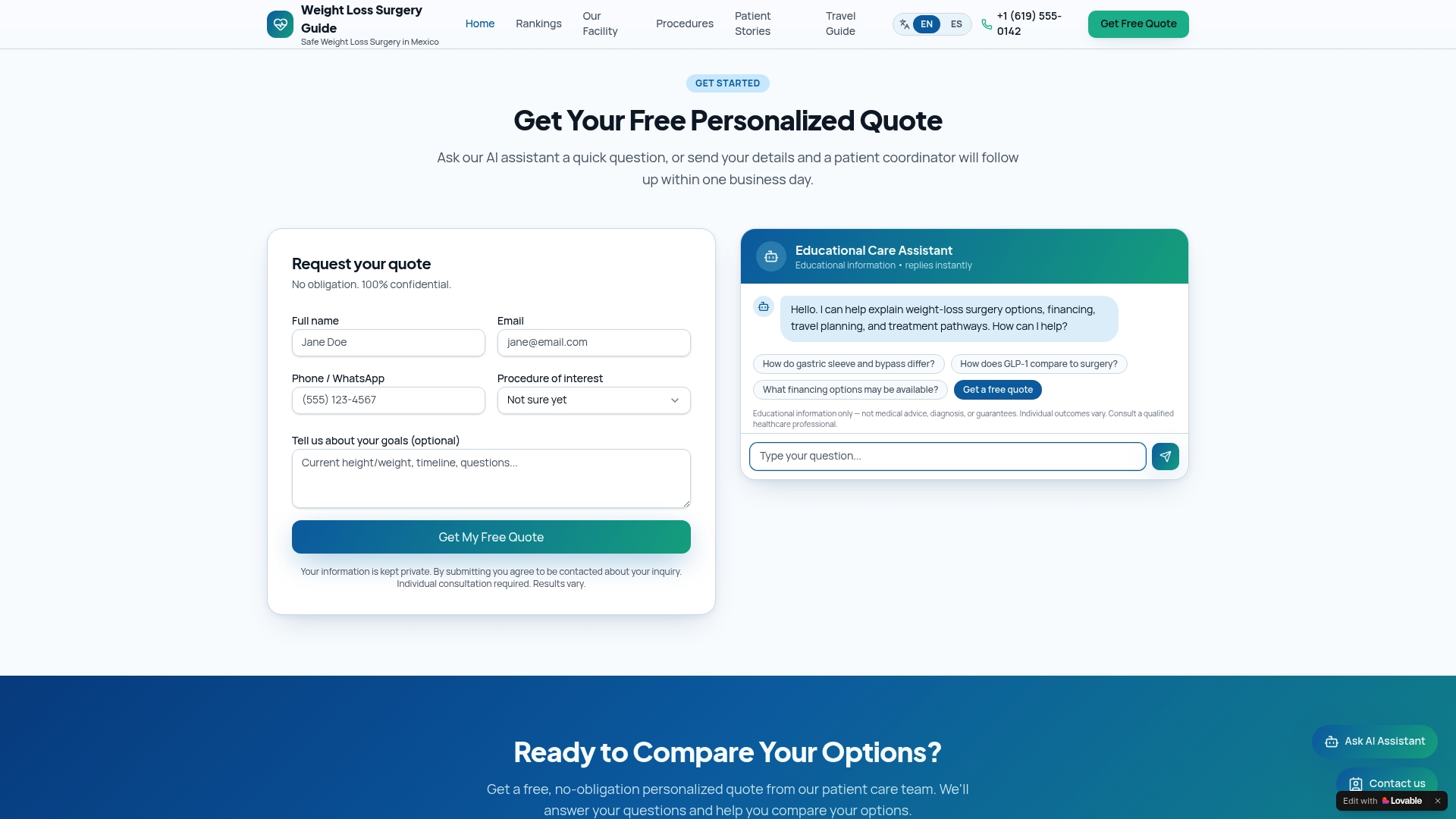
The process starts with a free personalized quote. You share your BMI, comorbidities, and insurance situation; the team matches you with accredited providers and walks you through what documentation you will need. Before booking anything, review the ASMBS medical tourism safety checklist and verify accreditation status through the bariatric accreditation guide. To browse surgeons and programs, visit the provider directory and request a quote directly.
This article is educational and does not constitute medical advice. Confirm your eligibility, insurance coverage, and surgeon credentials with a qualified bariatric physician and your insurer before making any treatment decision. See the full medical disclaimer.
Authoritative sources and further reading
- NIDDK/NIH — Potential Candidates for Weight-loss Surgery: The primary U.S. government reference for candidacy criteria, documentation expectations, and lifelong follow-up requirements.
- ASMBS — Is Metabolic and Bariatric Surgery Right for You?: Patient-facing guidance from the American Society for Metabolic and Bariatric Surgery, including MBSAQIP accreditation information.
- ASMBS/IFSO 2022 Guidelines (PDF): The full clinical guidelines covering BMI thresholds, multidisciplinary assessment, contraindications, and the evidence base for expanded indications.
- Weightlosssurgeryguide — Candidacy Criteria 2026: Practical breakdown of BMI thresholds, insurer criteria, and multidisciplinary assessment for U.S. patients.
- Weightlosssurgeryguide — References & Sources: Consolidated reference list for clinical claims made across the site.
Medically reviewed by a board-certified bariatric specialist. Last reviewed: 2026.
Recommended
- Bariatric Surgery Consultation Checklist: 2026 Guide | Weight Loss Surgery Guide
- Bariatric Surgery Candidacy Explained for 2026 | Weight Loss Surgery Guide
- What Is Bariatric Surgery? Your 2026 Complete Guide | Weight Loss Surgery Guide
- Weight Loss Surgery Checklist for Americans: 2026 Guide | Weight Loss Surgery Guide