What Is Lap Band Surgery? A Clear Guide to How It Works
Published August 25, 2026

What Is Lap Band Surgery? A Clear Guide to How It Works
Lap band surgery, or laparoscopic adjustable gastric banding (LAGB), places a silicone ring around the upper stomach to create a small pouch that limits how much food you can eat at one time. It's adjustable and reversible, but it typically produces slower, smaller weight loss than a sleeve or bypass, and it demands lifelong follow-up visits for band fills.
- Medical background and device details verified against MedlinePlus and Johns Hopkins Medicine.
- For provider comparisons and next steps, Weightlosssurgeryguide maintains detailed resources on accredited bariatric options.
Key Takeaways
Lap band surgery is a reversible, adjustable, purely restrictive procedure that typically produces slower and smaller weight loss than sleeve gastrectomy or bypass, and it requires a lifelong commitment to follow-up fills.
| Point | Details |
|---|---|
| Restrictive, not malabsorptive | The band limits food volume without altering how nutrients are absorbed. |
| Adjustments are ongoing | Fills happen every 4 to 6 weeks in year one, then taper to yearly checkups. |
| Weight loss is gradual, with clinical sources noting moderate total body weight loss over time. | |
| Removal is sometimes necessary | Slippage, erosion, or poor results can require laparoscopic removal or conversion to sleeve or bypass. |
| Provider vetting matters | Weightlosssurgeryguide compares accredited hospitals and surgeons and offers personalized quotes for readers weighing lap band against other bariatric options. |
Table of Contents
- What Is Lap Band Surgery and How Is the Device Built?
- How Does Lap Band Surgery Control Hunger and Weight Loss?
- Who Qualifies for Lap Band Surgery?
- What Happens During the Lap Band Procedure?
- What Does Lap Band Recovery and Follow-Up Look Like?
- What Are the Risks of Lap Band Surgery, and When Is Removal Needed?
- How Much Weight Loss Can You Expect With a Lap Band?
- How Should You Evaluate a Provider for Lap Band Surgery?
- What Surprises Patients Most About Life With a Lap Band?
- How Weightlosssurgeryguide Helps You Compare Safe Options
- Sources
What Is Lap Band Surgery and How Is the Device Built?
The lap band system has three working parts: an adjustable silicone band, an inner inflatable balloon, and a thin tube connecting to an access port placed just under the skin. The band wraps around the top of the stomach, and the balloon inside it can be filled with saline to tighten or loosened to relax the amount of restriction it creates.
Placement happens laparoscopically, meaning the surgeon works through a handful of small incisions rather than one large cut. The procedure typically runs 30 to 60 minutes under general anesthesia, which is shorter than most other weight-loss operations. Unlike gastric bypass, nothing is stapled, cut, or rerouted inside the digestive tract.
- A restrictive silicone band is positioned around the upper stomach to form a small pouch.
- An inflatable balloon lining the inside of the band controls how tight that pouch is.
- Tubing connects the balloon to a port implanted under the abdominal skin for future adjustments.
- The stomach and intestines remain otherwise untouched, so nutrient absorption isn't affected.
That last point matters. Lap band surgery is purely restrictive. It doesn't shorten the intestine or bypass any part of the digestive system the way a gastric bypass does, so vitamin and mineral deficiencies are less common with this approach.
How Does Lap Band Surgery Control Hunger and Weight Loss?
The band creates a small pouch above itself, and food sits there before slowly passing through the narrowed opening into the rest of the stomach. That slower emptying is what triggers a feeling of fullness after a smaller portion, which is the entire mechanism behind the weight loss.
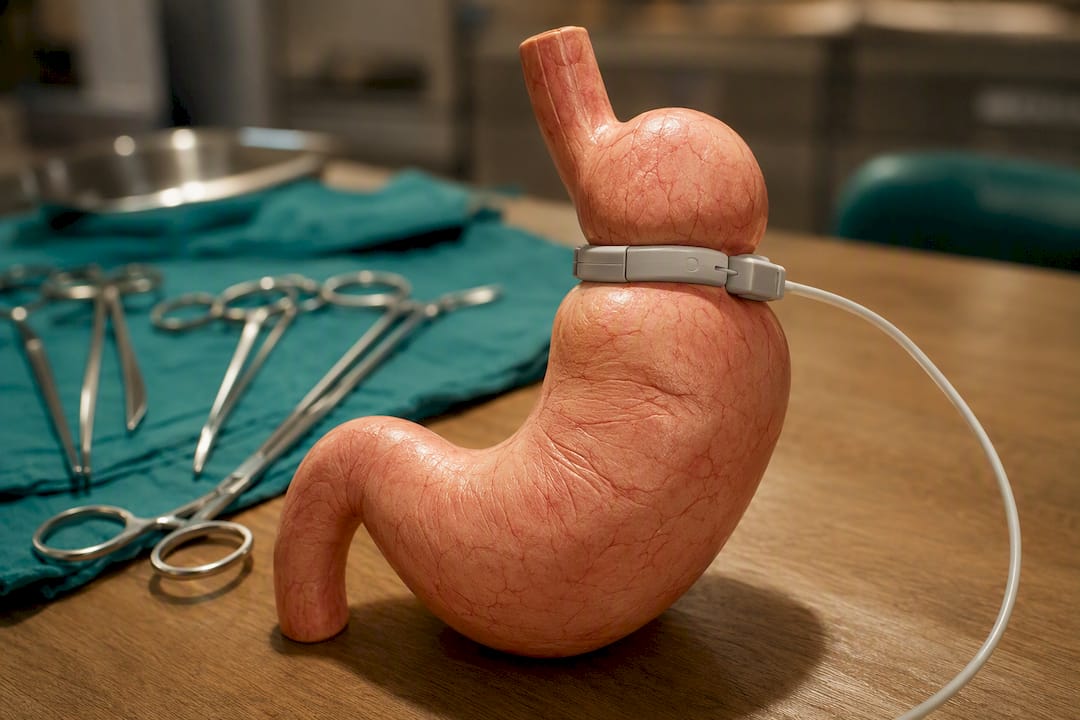
Restriction isn't fixed once the band is placed. Surgeons adjust it during outpatient visits by injecting or withdrawing saline through the access port, usually with a small needle guided by touch or imaging. Add saline, and the band tightens. Remove some, and it loosens.
Getting that balance right takes trial and error, and it's rarely a one-visit process.
- Too tight: frequent regurgitation, difficulty swallowing solid food, and nighttime reflux.
- Too loose: hunger returns quickly and weight loss stalls or reverses.
- Just right: smaller portions feel satisfying without pain or vomiting.
Pro Tip: Keep a simple log of what you eat and how the band feels for a week before each adjustment appointment. Surgeons rely on that pattern, not just how you feel that day, to decide whether to add or remove saline.
Clinical experience consistently shows that success with the band depends heavily on how closely patients stick to dietary guidance and how regularly they show up for adjustments, not just on how the device is calibrated.
Who Qualifies for Lap Band Surgery?
Historically, candidates fell into fairly defined categories, though guidelines have shifted toward individualized decisions rather than rigid cutoffs. The general framework still used by many surgical teams looks something like this:
- A body mass index (BMI) of 40 or higher, or 30 to 39 with a serious weight-related condition like type 2 diabetes or sleep apnea.
- Documented prior attempts at weight loss through diet, exercise, or medication that didn't produce lasting results.
- No untreated eating disorders or substance use issues that would interfere with the aftercare routine.
- Realistic expectations about the pace and scale of weight loss compared to other procedures.
Before scheduling surgery, most programs require medical clearance, a nutritional evaluation, and a psychological assessment to confirm a patient is prepared for the follow-up demands. Full candidacy criteria and evaluation steps vary by program, but the common thread is a willingness to commit to years of monitoring, not just the operation itself.
What Happens During the Lap Band Procedure?
The operation follows a predictable sequence, and most patients go home the same day or after one overnight stay.
- The surgical team administers general anesthesia and inflates the abdomen with gas to create working space for the laparoscope and instruments.
- Surgeons make several small incisions, typically four to six, and insert a camera and specialized tools through them.
- Using the pars flaccida technique, the surgeon wraps the band around the upper stomach in a way that reduces the risk of the band slipping out of place later on.
- The band is locked into position, and the connecting tube is routed to an access port secured under the skin of the abdominal wall, usually near the ribs.
- Incisions are closed, and the patient moves to a recovery area for observation.
Most patients are up and walking within hours, and the entire operation, including anesthesia, generally takes 30 to 60 minutes. Pain is usually mild compared to open surgery, since the incisions are small. Many patients leave the hospital the same day, though some surgical teams prefer overnight monitoring.
What Does Lap Band Recovery and Follow-Up Look Like?
Diet after lap band surgery moves through stages, and rushing them causes most of the early complaints patients report.
- Days 1 to 7: clear and full liquids only, giving the stomach tissue time to heal around the new band.
- Weeks 2 to 4: soft, pureed foods introduced gradually.
- Month 2 onward: regular solid foods, eaten in small portions and chewed thoroughly.
Fills don't start immediately. Surgeons usually wait four to six weeks after placement before the first adjustment, then schedule follow-up visits every four to eight weeks during the first year while dialing in the right amount of restriction. After that, checkups typically drop to once or twice a year, though that can stretch longer once the band is stable.
Pro Tip: If you're traveling for surgery, ask upfront how fills are handled once you're home. Some patients coordinate with a local bariatric surgeon for routine adjustments after the initial healing period, which cuts down on repeat travel.
Nutrition counseling and a consistent exercise routine aren't optional extras here. Because the band only limits volume, not food choice, patients who lean on high-calorie liquids or soft snacks can bypass the restriction almost entirely.

What Are the Risks of Lap Band Surgery, and When Is Removal Needed?
Complications with the band tend to develop gradually rather than showing up immediately after surgery, which is part of why regular follow-up matters even years later.
- Slippage: part of the stomach herniates through or above the band, changing how it sits.
- Erosion: the band gradually wears into the stomach wall over time.
- Port infection: the under-skin access site becomes red, swollen, or painful.
- Reflux and esophageal dilation: chronic over-restriction stretches the esophagus above the band.
Sudden vomiting with every meal, chest pain, fever near the port site, or an inability to keep down liquids all warrant a same-day call to your surgical team, not a wait-and-see approach.
Because so many patients who received bands years ago still carry them today, clinicians continue to need sharp skills in recognizing and managing band-specific complications even as the operation itself has become far less common than sleeve gastrectomy.
When a band fails or causes ongoing problems, removal is typically done laparoscopically and is often combined with conversion to gastric sleeve or bypass in the same operation or a staged follow-up procedure. Surgeons who carefully clear scar tissue during removal make that later conversion considerably easier, which is worth asking about directly if revision surgery is on the table.
How Much Weight Loss Can You Expect With a Lap Band?
Weight loss with the band is real, but it's slower and generally more modest than what sleeve gastrectomy or gastric bypass typically delivers; some patients explore non-surgical alternatives like virtual gastric band hypnosis as part of behavioral weight management.
Typical result: Clinical sources report roughly 15% total body weight loss, or around 25 to 30% excess weight loss, achieved gradually over one to two years rather than the faster drop seen with other procedures.
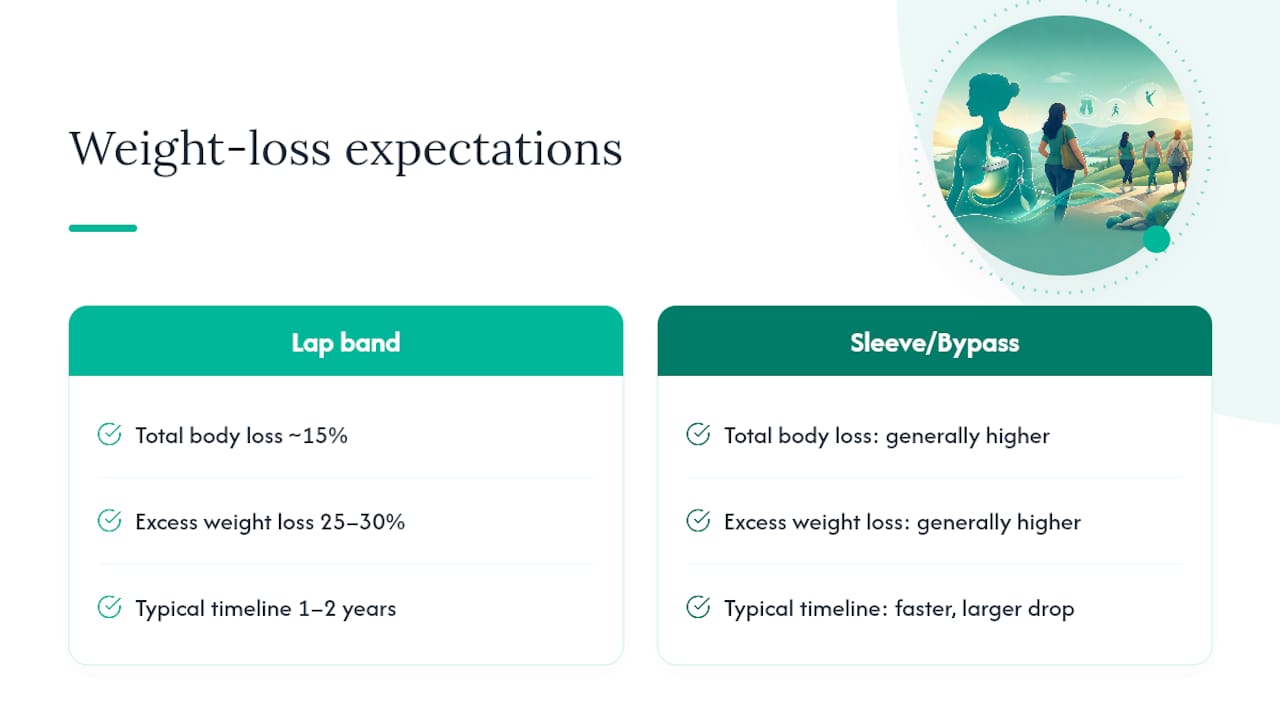
That gap versus sleeve gastrectomy outcomes is one reason the band has become less common in recent years. Outcomes improve noticeably when patients keep up with scheduled fills and stay connected to nutrition and behavioral support rather than treating the band as a set-and-forget device.
How Should You Evaluate a Provider for Lap Band Surgery?
Choosing where to have this surgery matters as much as choosing the procedure itself. Weightlosssurgeryguide evaluates hospitals and surgical teams on hospital accreditation, surgeon board certification and case volume, documented revision and complication protocols, and the strength of postoperative support programs.
Before committing to a surgical team, ask directly:
- What's your personal complication rate with band placements and removals?
- Who handles fills if I can't return to your facility?
- What's your protocol if the band needs to come out?
Weightlosssurgeryguide's provider rankings walk through these criteria in more depth for readers comparing options.
What Surprises Patients Most About Life With a Lap Band?
The follow-up burden catches people off guard more than the surgery itself does. Patients picture one operation and a straight line to their goal weight, not years of fill appointments and the real possibility of needing a revision down the road.
"Reversible" sounds simple, but scar tissue and changes to the stomach can linger after removal. Ask your surgical team directly what happens if the band doesn't work out, before you're the one dealing with it.
— Ariel
How Weightlosssurgeryguide Helps You Compare Safe Options
Weightlosssurgeryguide is the alternative to guessing your way through provider research alone. Instead of piecing together hospital reviews and surgeon bios on your own, you get accredited hospital and surgeon comparisons built around the exact questions this article just raised, plus a free personalized quote based on your specific case.
If lap band, sleeve, or bypass is on your radar, start with the ASMBS medical tourism safety checklist to know what to ask any surgical team before you book. For a broader look at what the process involves for U.S. patients specifically, the bariatric surgery guide for U.S. patients covers provider matching, travel logistics, and cost transparency. None of this replaces a consultation with a licensed surgeon. It's designed to help you walk into that consultation already informed, and ready to request a quote when you're ready to move forward.
Sources
- Laparoscopic gastric banding: MedlinePlus Medical Encyclopedia
- Laparoscopic Adjustable Gastric Banding | Johns Hopkins Medicine
- Gastric Band Surgery (Lap‑Band® Surgery) | Yale Medicine
- Laparoscopic adjusted gastric banding — NCBI Bookshelf
Medical reviewer: Dr. Adriana Solis Montoya, Bariatric Surgery Consultant. Last reviewed: February 2026. This article is for educational purposes and does not substitute for a consultation with a licensed medical professional. Treatment decisions should always be made with a qualified surgeon after individual evaluation.
This article is general information, not a substitute for advice from a qualified doctor. Consult a qualified healthcare professional about your own circumstances before acting on anything here.
Recommended
- How Bariatric Surgery Causes Weight Loss: 2026 Guide | Weight Loss Surgery Guide
- Weight Loss Surgery Process Explained: 2026 Guide | Weight Loss Surgery Guide
- What Is Bariatric Surgery? Your 2026 Complete Guide | Weight Loss Surgery Guide
- GLP-1 vs Bariatric Surgery | Compare Long-Term Weight Loss Options